
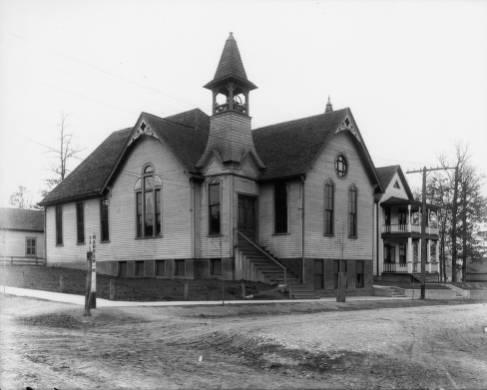
What’s in a name? In the case of the historic neighborhood of Lonsdale, it was a case of doing a mashup on the surnames of the developer’s parents: Martha Ann Lonas and James Marshall Ragsdale. William Baxter Ragsdale was well accomplished but short lived.
Ragsdale owned a 240-acre farm just a few miles northwest of Knoxville. He greatly admired the growth of the Mechanicsville neighborhood immediately south of him, and decided he’d like to take a stab at doing the same thing with his own property. In 1890. He gathered investors and founded the Lonsdale Land Development Company. He also started up the Lonsdale Mill Company, producing White Rose and Sunrise flour to the tune of 200 barrels a day once it was up and running. It’s great idea, building houses and the industry to employ the buyers within walking distance of home.
Born in 1953 here in Knox County, William was one among his parents’ eight children. He married Annie Tomlinson in Grainger County in November of 1881 and the commenced to have four children. Annie’s father, Captain Thomas Tomlinson, was the proprietor of the Tates Springs hotel and resort spa near Bean Station from 1876 until his death in 1909 (which was then passed to his children).
It was at Tate Springs that young Ragsdale came to his untimely end on July 27, 1892. He was there enjoying time with his wife, children, and her family. He’d been feeling under the weather for many days, and newspaper reports at the time said he was known to have heart condition. Even still, his sudden death was said to be an “unexpected shock” to his family and friends. The doctors who immediately tended to him claimed he died of a heart attack brought on by blood poisoning.
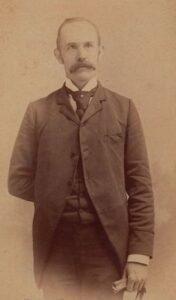
William Baxter Ragsdale
The papers exclaimed his good virtues: he’d been a student of the University of Tennessee, a “highly esteemed Christian gentleman,” he was a member of the Church Street Methodist Episcopal Church-South (now Church Street United Methodist), as well as many local social and civic organizations.
As word of his passing spread through Knoxville, other local real estate men convened a meeting in the rooms of the Knoxville Underwriters. Before his body had even made it back to town nor funeral plans made, Ragsdale’s development comrades gathered to mourn his passing. Speeches were made in eulogistic fashion. Resolutions were drawn up to recognize him as an honorable and upright member of the “real estate fraternity” in the city.
The following day, William’s remains arrived at his father’s home in Lonsdale where the funeral weas held that very day. The gathering proceeded to New Gray Cemetery for his immediate burial. To modern sensibilities, that may feel rushed. But it was late July in the 1890s, a time when burials happened expeditiously. The funeral was managed by the Knights of Pythias, of which William was a prominent member. Hundreds attended and showered the home in flowers, including a seven-foot cross made of white roses. He was greatly and widely mourned.
The neighborhood William Ragsdale put together incorporated in 1907 and existed as its own city for another decade until it was willingly annexed by the City of Knoxville in 1917.
Beth Kinnane writes a history feature for KnoxTNToday.com. It’s published each Tuesday and is one of our best-read features.
Sources: The Knoxville Journal digital archives, East Tennessee History Center – McClung Digital Archives
Follow KnoxTNToday on Facebook and Instagram. Get all KnoxTNToday articles in one place with our Free Newsletter