
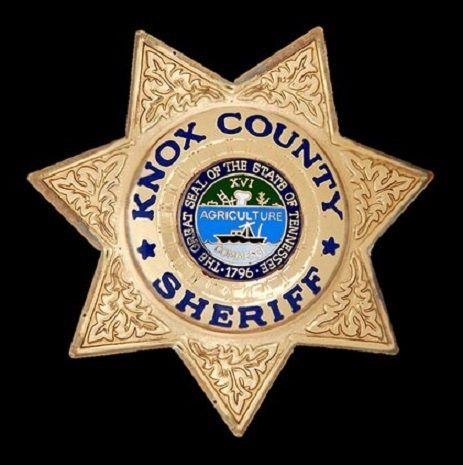
The Tennessee Republican Party’s State Primary Board faced a difficult question Wednesday: Were later indictments and concerns about voter information enough to undo a completed Knox County sheriff primary?
Its answer was unanimous: no.
The board voted to let the 2026 Knox County sheriff primary stand, leaving Brent Gibson as the Republican nominee after a challenge tied to indictments that came after Election Day.
The decision does not resolve every public-trust question surrounding the Knox County Sheriff’s Office.
It does not decide whether anyone charged in the related criminal case is guilty.
It does not erase concerns from voters who believe they lacked important information before casting ballots.
But it does settle the party challenge: The Republican primary result will not be thrown out.
The hearing exposed a tension that reaches beyond one sheriff’s race. Voters need meaningful information before they cast ballots. Elections also need finality after ballots are cast. When those values collide, someone has to decide which principle controls.
On Wednesday, the board chose election finality.
Gibson won the May 5 Republican primary with 44.14% of the vote. No Democrat filed for the office, making the Republican primary the central contest in determining who will likely become Knox County’s next sheriff.
The four Republican candidates were Gibson, David Amburn, Mike Davis and former Sheriff Jimmy “J.J.” Jones.
Days after the election, Jones and Amburn were among those indicted in a case connected to the Knox County Sheriff’s Office. An indictment is not a conviction, and everyone charged remains presumed innocent unless proven guilty in court.
That presumption shaped much of Wednesday’s discussion.
Davis argued voters lacked material information
Davis, who finished third in the four-way primary, challenged the result.
His attorney, Lance Baker, argued the primary was unfair because voters did not know before Election Day that two candidates on the ballot would soon be indicted.
Baker said Davis was not asking to be declared the winner. Instead, he asked the board to vacate the primary and allow the August general election to proceed without a Republican nominee. Under that approach, Gibson and Davis could attempt to qualify as write-in candidates.
Baker argued that no Democratic nominee had filed, no additional election would be required and the issue could be placed back before Knox County voters.
His central argument was timing.
If voters had known earlier that Amburn and Jones were likely to be indicted, Baker said, the entire race could have changed — including turnout, fundraising and how voters supporting Amburn or Jones might have cast their ballots.
Davis made a similar case in his own remarks, saying public confidence had been eroded and the election was “severely tainted and incurably flawed.”
That was the strongest version of the challenge: not that Davis should automatically become the nominee, but that voters should get another chance to choose with fuller information.
Gibson argued voters had already decided
Gibson’s response was brief.
After 25 years with the Knox County Sheriff’s Office, he said he felt called to run for sheriff and spent two years working to earn voters’ trust.
He said more than 44,000 Knox County voters cast ballots in the primary. Gibson received 19,672 votes, or 44.14%, in the four-way race.
While he acknowledged that later events involving other candidates raised understandable questions, Gibson argued they did not change the outcome voters had already expressed.
His argument rested on election finality: Confidence in elections depends on voters knowing their ballots matter, their voices are heard and their decisions are respected.
That became the argument the board accepted.
Public comment reflected the divide
Public comment showed the tension in the room.
Some speakers said voters were denied timely information and the primary should not stand. One compared the situation to a restaurant health score, arguing voters should have had relevant information before making their decision. Others said the timing of the indictments deepened public distrust and warranted a new opportunity for voters.
Christy Gentry, who identified herself as an elected officer of the Knox County Republican Party, argued that constituents had serious concerns about whether voters received timely information before the election. She said the timing of the indictments deepened distrust in elected officials, the Republican Party and the process itself, and she called for the process to be reviewed.
Gentry spoke during public comment, but she was not a member of the State Primary Board and did not vote on the motion.
Several speakers disagreed with vacating the primary, arguing the broader investigation was not a secret, even if the indictments themselves were not public before Election Day.
Brandon Burley of The Redemption Project, who interviewed all four sheriff candidates before the primary, told the board that the candidates had been asked about the issue before voters went to the polls. He argued that while the indictments came later, the broader investigation and concerns about KCSO were already part of the public conversation.
Heather Reyda, a retired 30-year Sheriff’s Office employee, also said the investigation was not a surprise to people familiar with the office. She said she had worked with Gibson and Davis, described both as good men, but argued the issue had been known for years.
Other Gibson supporters said overturning the primary would be unfair to voters who had already chosen him. Some framed Gibson as the candidate who ran on restoring trust and separating himself from the problems that fueled the controversy.
The concerns raised by Davis supporters were not unserious. They centered on a real civic question: When major information becomes public only after Election Day, how should voters, parties, and election officials respond?
The board concluded this case did not justify undoing the primary.
Former Knox County Sheriff Tim Hutchison, a member of the board, made the motion that shaped the outcome.
Hutchison said he had watched many Knox County sheriff races since the early 1970s and described the 2026 primary as one of the smoothest he had seen. He said the candidates did not sling mud, did not disparage one another and each campaigned on experience.
He also said voters took the time to vote early and on Election Day, and their decision should not be discarded.
Hutchison raised another key point: Knox County voters did not control the timing of the indictments.
He said the Tennessee Bureau of Investigation had the indictments and kept them quiet. That shifted the board’s discussion away from whether people were frustrated by the timing — many were — and toward whether the party itself had the authority or responsibility to overturn the result because of it.
Hutchison then moved to leave the election as it was, with Gibson as the Republican nominee.
The motion was seconded, and the board moved into discussion.
The board focused on finality, authority, and party limits
Several board members spoke before the vote.
Lee Mills raised a practical concern about the proposed write-in solution. If the Republican primary were vacated and the August general election became a write-in contest, he argued, the race would expand beyond Republican primary voters. That could allow Democrats or others to influence the result of what began as a Republican nomination contest.
Terry Rowland echoed that concern, saying the board would have no way to prevent outside voters from putting “their thumb on the scale” in August.
Doug England focused on the margin. He argued Gibson’s lead was too large to justify disturbing the result, especially compared with cases where a race might turn on a small number of votes.
Ken Meyer gave one of the clearest statements of the night.
Overturning an election, he said, is a “very, very big deal.” In his view, the case did not come close to the standard the board should require before taking such a step.
Meyer also emphasized the presumption of innocence. The indictments, he said, did not control his decision because the candidates were qualified, appeared on the ballot and the voters had spoken.
Another board member acknowledged the timing of the indictments created mistrust. But the member also noted that Davis’ complaint alleged intentional concealment by state and federal officials, prosecutors and others — claims the party board was not positioned to judge or cure.
That point became central to the outcome.
The board did not say the timing was ideal.
It did not say voters had perfect information.
It did not say the public had no reason to ask hard questions.
It said the party would not overturn a completed primary based on allegations about investigative timing, prosecutorial decisions and later criminal charges involving candidates who were legally qualified to appear on the ballot.
The vote was unanimous
Before the roll call, Tennessee Republican Party Chairman Scott Golden clarified the question.
A “yes” vote meant allowing the election to stand. A “no” vote meant not allowing it to stand.
The board then voted yes unanimously.
The motion passed, leaving Gibson as the Republican nominee.
What comes next
For Gibson, the decision removes the party challenge and allows him to continue toward the August general election as the Republican nominee.
For Davis and his supporters, the vote closes the party-board path, but it does not erase the questions they raised about voter information, public trust and the timing of criminal charges after an election.
For Knox County voters, the larger issue remains unresolved: How does a community restore trust in a sheriff’s office after years of controversy, criminal allegations and public division?
That question will not be answered by one board vote.
It will be answered by what comes next: leadership, transparency, accountability and whether the next sheriff can convince deputies and citizens that the office is moving forward.
The board let the election stand.
Now the harder work moves back to Knox County.
Det. Brandon Burley (Ret.), M.P.A., is a criminal justice educator whose academic work focuses on reducing recidivism through public policy. He has authored several criminal justice books and has been published in national law enforcement publications.
Follow Detective Burley on Facebook.
Follow KnoxTNToday on Facebook and Instagram. Get all KnoxTNToday articles in one place with our Free Newsletter.


Elections also need finality after ballots are cast. When those values collide, someone has to decide which principle controls. Absolutely, and all elections should require in person voter ID to insure and guarantee we have free and fair elections. It’s only common sense..