
In the many and mostly exciting years of observing Tennessee football, the Phillip Fulmer undefeated season, that national championship, was the highlight.
Being acquainted with Robert R. Neyland was a big deal for a country boy from Powell. The General called it Powell Station.
Peyton Manning’s success was and is intriguing – good guy stayed for his senior season and should have finished first. He’s still working on it.
When Johnny came marching home, hooray, was really big news. John Majors had multiple reasons to forever remain top five among most famous Volunteers.
Choice memories? I saw home games of 1951. I was a UT freshman. I know what almost happened in 1956. I really enjoyed the Miracle of South Bend and the Sugar Vols’ annihilation of Miami and a dozen or more victories over Alabama and the great tie when Snake Stabler stopped the clock. There are some wins over Florida and routs of Vanderbilt on the list.
No way will I venture onto my three pages of favorite Vols. You’d never guess who is on top.
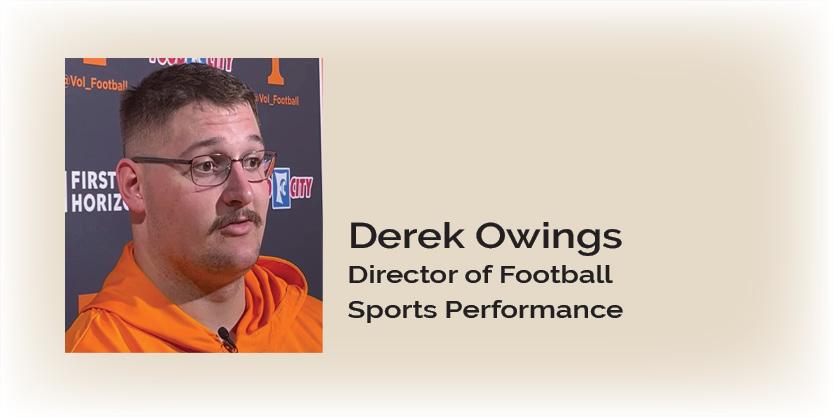
This may surprise you: I’m guessing Derek Owings, if he stays, will prove to be one of Tennessee’s most significant acquisitions.
He is Josh Heupel’s purchased piece of the previous national championship. He was Indiana’s strength and conditioning coach. I think he already is and will be a greater influence on more Volunteers than any other individual on the UT payroll.
We are about to find out how much a strength coach can do to make a team stronger. Matching nutrition and workouts with on-the-field assignments is science over my head. But it supposedly worked at James Madison and Indiana.
Owings, coupled with Curt Cignetti, produced a six-year 65-9 record at those two schools. Of course, the boss gets far more credit. Cignetti was smart enough to hire Owings and get out of his way.
What Indiana did to Alabama in the past Rose Bowl was very convincing. Physicality in the trenches showed on both sides of the ball. Hoosiers tore up the Tide, 38-3. Alabama averaged 1.35 yards per play.
Heupel had insight in offering Owings a Tennessee job that was hard to turn down ($1.2 million in salary, a world record for the position). They had worked together at Central Florida when both were on their way up.
I applaud Owings’ perspective. He does not seek stardom. He says what he is supposed to do is help win football games.
“We don’t get wins based on how many guys can bench press 400 pounds or squat 500.”
He says there are many things under his umbrella but the big one is making sure the Vols are ready to rumble on the 12 most important Saturdays of the year.
Attitude is certainly relevant. Already he has convinced players that they must want to improve, that they see value in all the extra work he demands. Stronger muscles, less fat and improved speed are measurements. Fast, physical and disciplined are key words.
Derek has an interesting goal: “You need to be at your best when your best is needed.”
Throughout Owings’ career he has focused on injury prevention, rapid recovery from mishaps and return-to-play protocols for injured athletes. Coaches love that.
Vols have provided intriguing descriptions of this leader of men – drill sergeant … nice guy … old-school, no-nonsense style blended with modern sports science … tenacious … very high energy … someone who believes, without a shred of doubt, that superior preparation creates an advantage that cannot be overcome.
Sounds as if Vols might have faith in forthcoming results. Look closely. You may see the difference. You might see history happening.
Marvin West welcomes comments or questions from readers, His address is marvinwest75@gmail.com
Cutline: Derek Owings UT sports information




I remember when Coach Majors was asked about the most important part of getting a team ready for battle. PREPARATION! Let’s hope this guy is all he is cracked up to be! Nice column , Mr. West! Old hat, I know.
It was written that Sampson’s strength came from his hair. I think we have plenty of that. Hercules, supposedly from his divine lineage…and we have lost a few “Legacy Vols.” That won’t beat LSU. I tend to think the strongest team up front…on both sides of the ball…usually wins. Owings is a $1.2 roll of the dice that I would not bet against. It would help if our supposedly great edge rusher woud decide to show up and work up a sweat. Good factual review.
Virgil, you and I know it always comes down to blocking and tackling. That’s why a team can have 400 passing yards and still get whipped.