As we continue to move toward our nation’s semiquincentennial, I’m still focusing on elements of the Revolutionary War effort of attaining independence and the related contributions and connections of families of the Fork, the Knox County lands between the French Broad and Holston Rivers.
No, I haven’t resolved my computer issues. I’m just limping along, creating more storage space, one deleted batch of files at a time. Yes, I have external drives that back up my stuff… when I hook them up, which I obviously didn’t do anytime while writing the lost article. No, this isn’t a recreation of the article I lost. Maybe later. Let’s move on.
Joseph Clift was born about 1740 in Talbot County, Maryland. That’s where my Lovedays were from. I wonder whether our families knew each other. From all indications, Joseph died in Guilford, North Carolina, in 1790. His Revolutionary War records are scant, but according to genealogist Terry Clift and what she obtained from the Sons of the American Revolution (SAR) records, Joseph served as a Patriot transporter. Whether he was an enlisted soldier or a civilian isn’t clear, but the role of transporter was integral to the success or failure of Washington’s Continental Line.
Transporters were civilians, militiamen, or enlisted soldiers responsible for moving supplies and equipment, including arms, artillery, munitions, forges, and blacksmithing tools, etc. It was a tough job. Weather and terrain complicated their efforts. Quickly moving heavily laden carts, etc., through muddy, rocky, roadless territory without being detected was the impossible goal. Their success or failure could make or break a battle plan. The transporter chain of command included quartermasters, waggoneers, and packhorsemen, as well as “conductors,” who served as freight agents.
A conductor’s job was to coordinate the transport effort and record each driver’s identification, residence, and cargo, because drivers and their loads tended to disappear at times, whether they abandoned their mission or were ambushed. They got paid only if the conductor signed off on their bill of lading once it arrived in full. You’ll recall that General George Washington’s winter disaster at Valley Forge was because they never received the necessary supplies to keep them warm and fed.
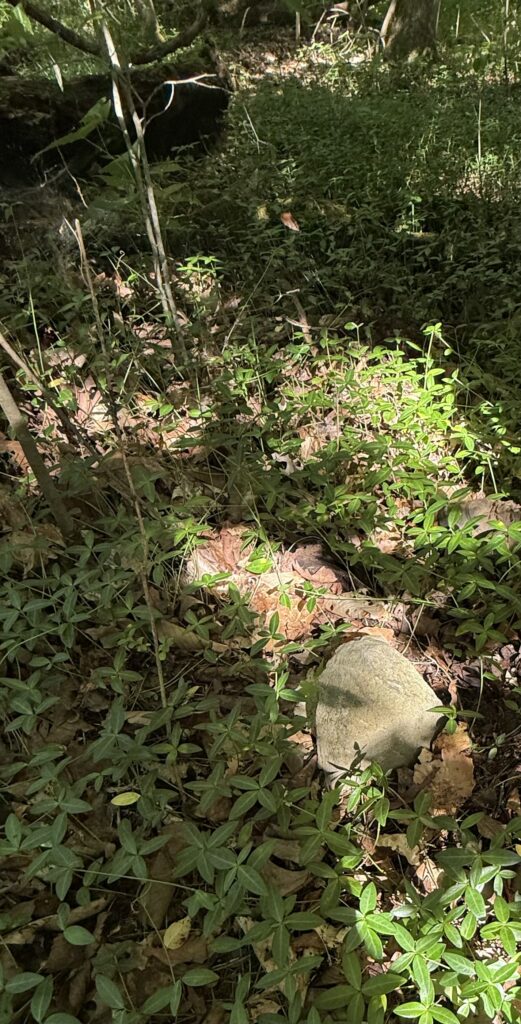
Grave markers of Joseph’s descendants at the Clift Cemetery in the Fork
As the war went on, transporters became harder and harder to find and even less likely to receive pay. The Continental Army had to press into service local men and their horses, oxen, carts, wagons, and watercraft. Although waterways were the ideal mode of transporting goods, the British basically controlled the coast, and interior channels and streams were a challenge. Just crossing a river was a huge task, since bridges were basically nonexistent and ferrymen expected to be paid for their services. The Continental Army had little money. Transporters used pontoons, canoes, and flatboats whenever possible. These, too, were often demanded from the local populace. Forage also was a problem, because the animals and men who moved the loads had to be fed. Sometimes the men themselves had to serve as pack mules, carrying supplies on their backs and even pulling the carts.
Although we don’t know exactly how or where Joseph Clift served as a transporter in the Revolutionary effort, we do know that his son James Clift (1772-1854) settled in the Fork. James owned hundreds of acres that stretched from the Holston River to what became known as the Trentville community at Lyon’s Creek in the northeastern portion of the Fork. James was married twice and had 17 children, among whom his lands were divided. His offspring married into the nearby Johnson, Walker, and Brewer families, as well as others.
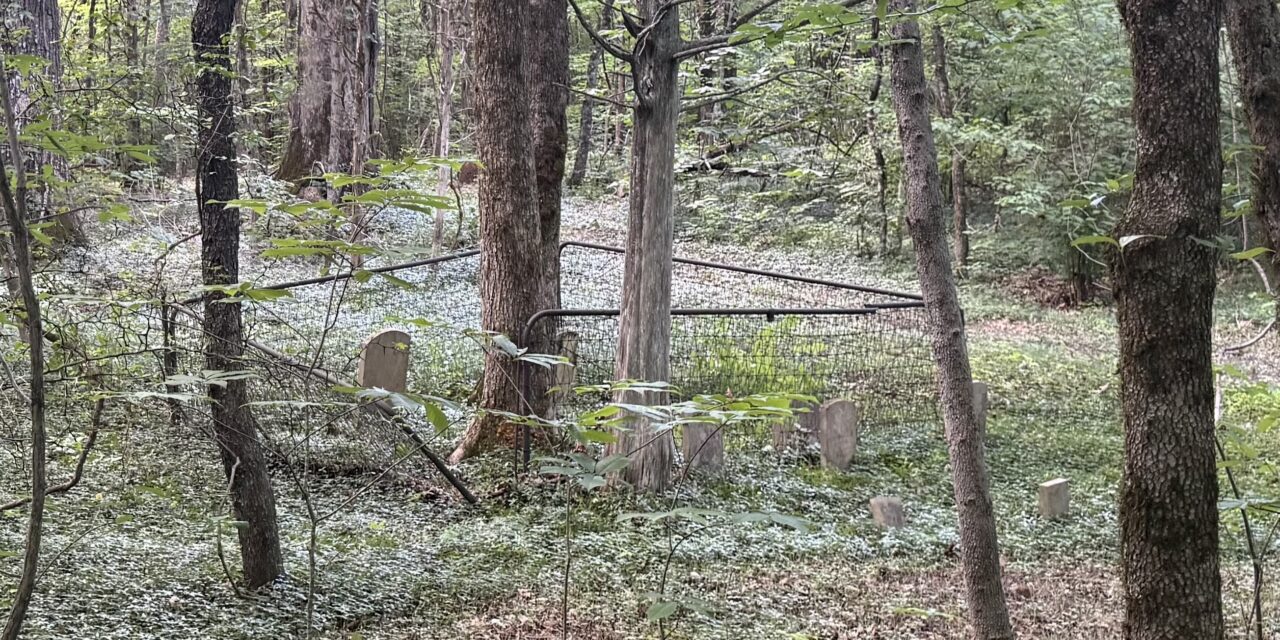
A few of Joseph Clift’s descendants are buried in the Clift Cemetery at Trentville, but his Revolutionary War service has been forgotten in the Fork.
Jan Loveday Dickens is an educator, historian, and author of Forgotten in the Fork, a book about the Knox County lands between the French Broad and Holston Rivers, obtainable by emailing ForgottenInTheFork@gmail.com.
Follow KnoxTNToday on Facebook and Instagram. Get all KnoxTNToday articles in one place with our Free Newsletter.




We just love to read your stories. My David Rogers was from Talbot Co, MD.
I love knowing that, Debra! Thanks for taking time to reach out!
I was an American History major for a brief time in college. I never heard of “Transporters” or that they were responsible for Washington’s winter at Valley Forge.
Neither had I, but I’ve learned so much doing this research. Transporters, of course, were not responsible for the weather, but had supplies reached Washington’s troops, it would have made a difference in their suffering. Rick Atkinson said about the weakened troops in his book, The Fate of the Day, page 252, “Warehouses in Lancaster, York, and Head of Elk contained provisions, but the army lacked enough wagons and pull teams to bring adequate supplies to camp…” Here’s another example of what I found:
https://www.continentalline.org/CL/logistics-and-the-continental-army-part-ii/