
As we continue to move toward our nation’s semiquincentennial, I’m still focusing on elements of the Revolutionary War effort of attaining independence and the related contributions and connections of families of the Fork, the Knox County lands between the French Broad and Holston Rivers.
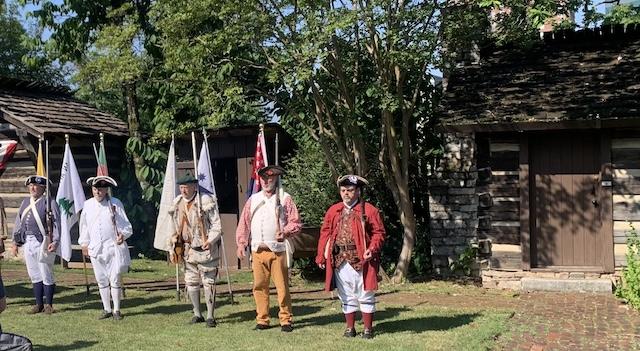
Reenactors at the 2025 4th of July celebration at James White’s Fort
You probably know that James White, founder of Knoxville, built a fort at First Creek where downtown is now located, but have you heard that he first resided in the Fork?
Last week, we speculated on the connections between residents of the Fork and several Thompson militiamen who served under James White. During the early 1790s, White was a member of the “Staff and Officers of the Knox Regiment in the District of Hamilton,” commanding the militia for the protection of the frontiers south of the Ohio; called into service by a special order of His Excellency William Blount.”
James White had served as a captain in the North Carolina militia during the Revolutionary War, earning him the right to a land grant. As has been told so many times before by others, White explored this area as a land speculator. He came with Robert Love, James Conner, Francis Ramsey, and others in 1783 before building his fort in 1786. It was located where the State Street Garage now stands beside where First Presbyterian Church was eventually established. But what is often not mentioned was White’s residency in the Fork.
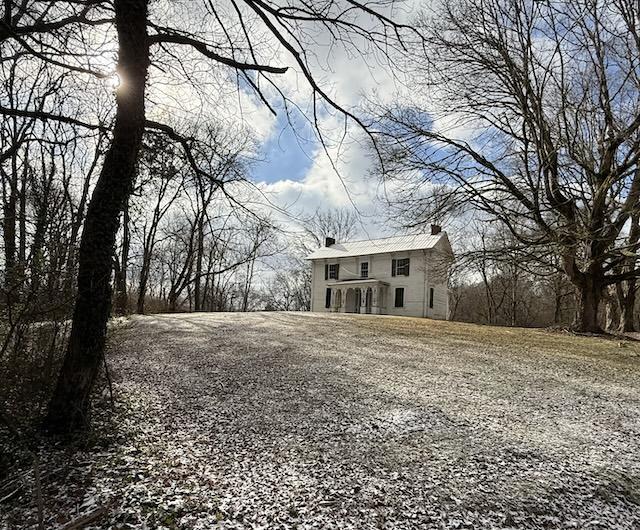
Drawing from the knowledge shared by individuals who had been personally acquainted with White, Dr. Georg F. Mellen wrote a biographical sketch of James in 1915. He told how the exploration party came down from the present-day town of Newport, across the mouth of the Pigeon River, the mouth of Dumplin Creek, and into the Fork, then across the Holston and on to where Lenoir City is now. White was said to be in Riverdale in 1785, in a cabin at the front yard corner of what is called the McNutt-Campbell-Kennedy-Spruiell home, just beyond my house. Early historian Dr. J.G.M. Ramsey states that while living there, White became a member of the third meeting of the legislature for the State of Franklin, which never made it as a state.
In the late 1990s, University of Tennessee anthropology professor Dr. Charles Faulkner conducted an archaeological study of the Riverdale site and found supportive evidence of the cabin’s location. The findings included hammer-dressed foundation stones and European settlement artifacts from the late 18th century, along with prehistoric Native American artifacts. Having a great view of the approach from upriver, that spot apparently had been identified as a prime location long before the settlers arrived. Although the site next door is remembered in Riverdale as a ferry landing where Campbell Branch flows into the French Broad, the old cabin site has been forgotten in the Fork.
Jan Loveday Dickens is an educator, historian, and author of Forgotten in the Fork, a book about the Knox County lands between the French Broad and Holston Rivers, obtainable by emailing ForgottenInTheFork@gmail.com.
Follow KnoxTNToday on Facebook and Instagram. Get all KnoxTNToday articles in one place with our Free Newsletter.