When people picture the wild frontier, they often imagine cowboys, cactus, and dusty box canyons straight out of Gunsmoke. But in America’s earliest days, the frontier lay just west of the Appalachian Mountains—right here in what is now East Tennessee.
Land disputes were constant, and by the late 18th century, both American and Cherokee leaders had spent decades searching for a path to coexist.
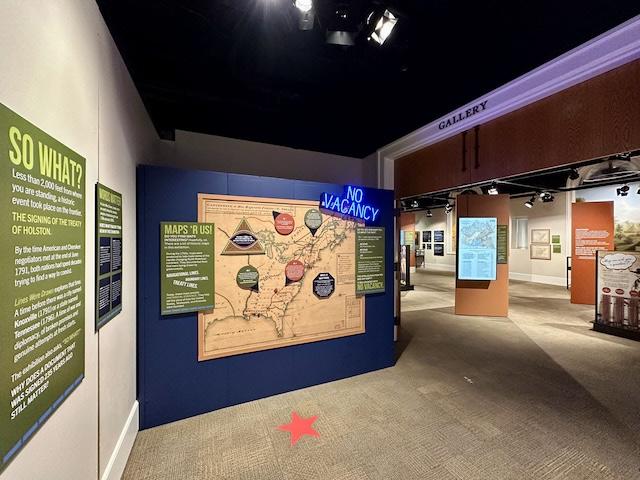
A new exhibition invites visitors to step into that moment in time. It all unfolded less than 2,000 feet from the East Tennessee History Center. On July 2, 1791, Territorial Gov. William Blount and Cherokee leaders met at the mouth of First Creek to sign the Treaty of Holston—the first formal agreement between the newly constitutional United States and the Cherokee Nation.
It drew lines on a map—and lines in law and memory that still resonate today.
Lines Were Drawn | ᏚᏂᏍᏓᏅᏅᏁᎯ (Du Ni Sda Nv Nv Ne Hi): The Treaty of Holston and Its Legacy brings that moment to life as part of America’s 250th anniversary.
The exhibition traces the road to the treaty—from Fort Loudoun and the 1763 Proclamation to the Revolutionary War and the Southwest Territory—and follows its lasting consequences: Cherokee resilience, forced removal, and survival. Visitors will encounter historic maps from the McClung Collection, documents from the National Archives, and artwork from Tennessee museums, as well as animated maps, video, and interactive stations.
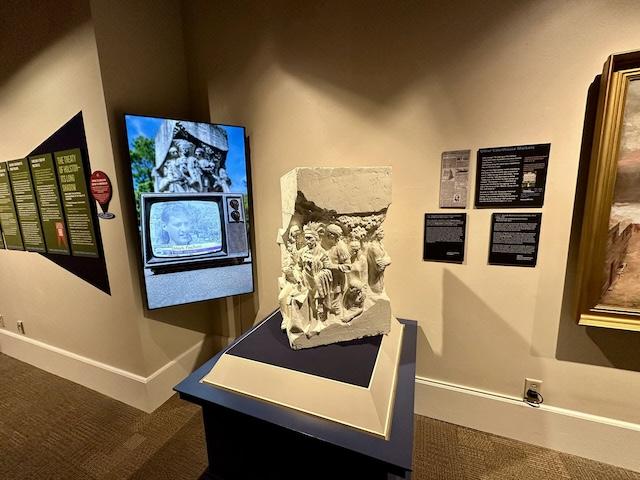
But the story doesn’t end there. A second thread explores how the treaty has been retold—and reshaped—over time, from early historians to public art still standing in Knoxville today. The question lingers: How have these retellings shaped what we believe now?
Admission is free during the exhibition, thanks to the generosity of Marvin House.
Mary Pom Claiborne is assistant director for marketing, communications and development for Knox County Public Library.
Follow KnoxTNToday on Facebook and Instagram. Get all KnoxTNToday articles in one place with our Free Newsletter