
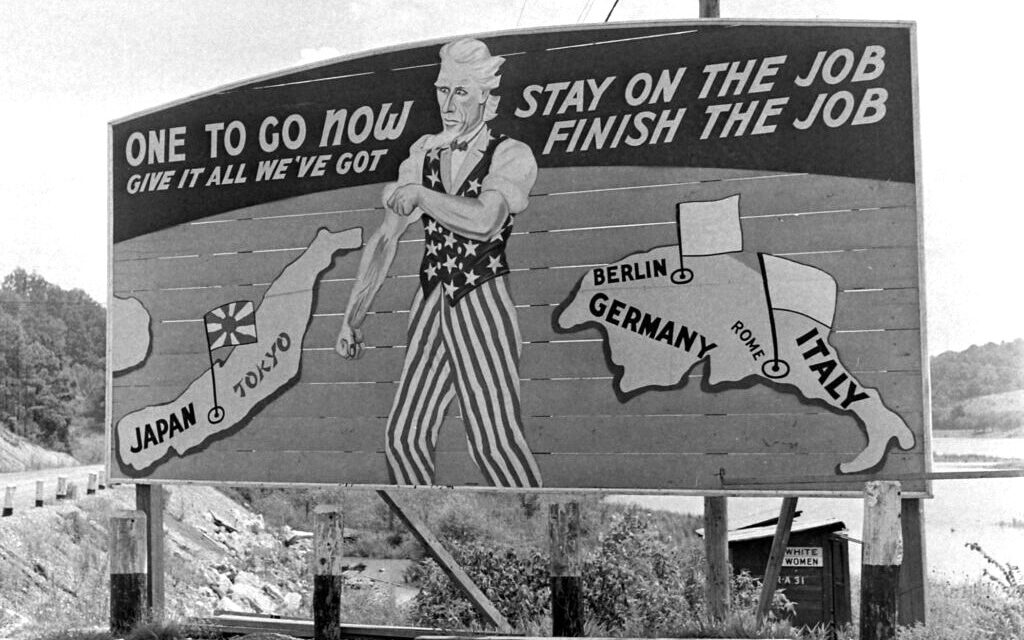
On April 29, 1945, German Chancellor Adolph Hitler and his long-time flame Eva Braun got married. The next day they died by suicide in Hitler’s underground Führerbunker in Berlin. And the sane world rejoiced. One week later, Germany surrendered to the Allies, effective at the stroke of midnight May 8, 80 years ago.
While celebrations were erupting across western Europe, the atmosphere on the home front was more sedate. President Harry Truman specifically avoided using the popular term V-E (victory in Europe) Day and said that no proclamation to recognize it would be made. The United States was still at war in the Pacific Theater, and Truman felt it was not the time for unrestrained celebration. His presidency was a mere three weeks into its tenure. The German surrender fell on his 61st birthday.
Here in Knoxville, the mood reflected Truman’s wishes. Many banks and business downtown opened late or didn’t at all as many employees were glued to their radios early that Tuesday morning awaiting the president’s address. There were some spontaneous but somber remembrances, however. Dr. Frank B. Ward, then head of the Economics Department at the University of Tennessee, read the names of the 219 (at that point) war dead from UT at a V-E Day memorial at Memorial Auditorium. Churches opened their doors and scheduled impromptu thanksgiving services that afternoon, evening and the next day. Extra police were dispatched downtown in anticipation of large crowds, but they never materialized.
Yes, the day was a good day. There was new hope. But World War II was not yet over. In his radio address, Truman called once again for Japan’s unconditional surrender. And to that end, local industries vital to the war effort kept on humming. A.L.C.O.A. was still pumping out aluminum sheets for B-52s, Breezy Wynn’s Southern Athletic Company was sewing up military duffle bags and field jackets, and Oak Ridge was doing, well, whatever the hell Oak Ridge was doing.
Of course, we know now what most didn’t know then, that the government’s pop-up town in rural, Roane and Anderson counties was a vital piece of the Manhattan Project that developed the atomic bomb. It wasn’t even officially named Oak Ridge until 1949. The name was used in reference to the area where some permanent housing was built for the Clinton Engineering Works that broke ground in 1942 after the government forcefully took ownership of 60,000 acres in the Clinch River Valley.

Oak Ridge sign, Manhattan Project (Oak Ridge Public Library)
The vast majority of the thousands upon thousands of workers who flocked to Oak Ridge didn’t know what they were working on. They knew it was part of the war effort. Turn this, twist that, hammer this, hammer that. But by the time V-E Day blessedly rolled around, rumors were afoot. And with Germany defeated, the question of what exactly was going on behind the fence became louder and more frequent. Newspapers were beginning to put the pieces together. Which is when letters from the War Department started arriving on editors’ desks across East Tennessee, but especially in Knox, Roane and Anderson counties. In short, the Office of Censorship asked the editors to keep a lid on it until after the war was over. Loose lips sink ships and all that.
The Tennessee State Library has a copy of a letter sent to Guy Smith, editor of The Knoxville Journal and benefactor to the Knoxville Zoo, dated August 8, 1945, two days after the Enola Gay dropped the atomic bomb Little Bomb on Hiroshima, Japan. By the time the letter reached Knoxville, Fat Man had already been dropped on Nagasaki. It concluded:
The development, made possible by your compliance with secrecy requirements, I am sure, will prove to be a most important factor in the speedy conclusion of the war.
The manner in which you handled general stories about the project was a great source of satisfaction to the many people involved in making the atomic bomb a reality. – Major General Leslie R. Groves, U.S. Army
Smith published the letter on August 12, 1945. The bombs left utter devastation in their wake and changed the course of human history. Japan announced its intent to surrender on August 15.
Beth Kinnane writes a history feature for KnoxTNToday.com. It’s published each Tuesday and is one of our best-read features.
Sources: Tennessee Virtual Achive of the Tennessee State Library; The Knoxville Journal digital archives, Tennessee Encyclopedia, Library of Congress.


The first years of my young life were filled with solemn hours due to so many of the men in our family being off fighting in WWII. Those memories helped me write UNRATIONED HOPE, a volume about the families at home during that time. Since then, I’ve developed a deep empathy for those who serve in the military, especially in times of war, which, it seems is most of the time. Now, we’re enduring a different kind of war – one attacking our freedoms as Americans. I hope, Beth, that your excellent article will remind all who read it that we are citizens of a nation that has NEVER backed down from a threat, and in spite of our mistakes, we’ve done a lot of good in this world. I hope that spirit is still strong. Thank you for sharing history that needs to be remembered.
Thank you for this timely and informative article laced with history.
FWIW; “….A.L.C.O.A. was still pumping out aluminum sheets for B-52s, ” I do believe ALCOA’s aluminum was still going into B-29s.
Keep the history flowing
My sources specifically referenced the B-52 and “other airplanes.”