
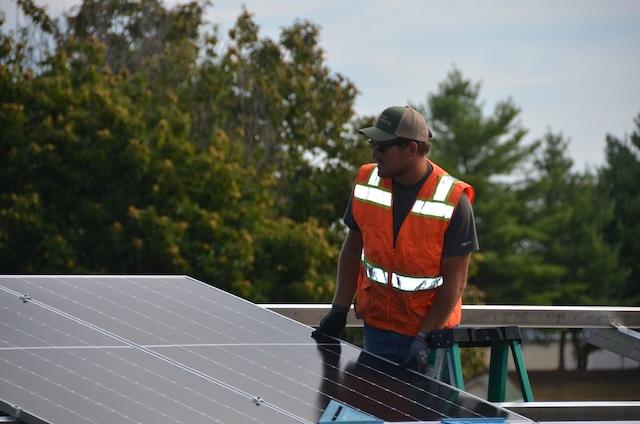
Sunscreen and swimming season is also the time when the power of solar energy seems most evident. Of course, your solar array is likely to produce most abundantly during the long, dog days of mid- to late-summer. It’s also likely to produce very well during clear, cold days in the winter, although those days will be shorter. Solar energy depends on the sun’s light, not on heat.
How do professionals predict how much sunlight will fall onto your solar array in other seasons besides summer? They use Typical Meteorological Year (TMY) data available in the National Solar Radiation Database. TMY represents the median of weather data collected over multiple years, hour by hour. So, an estimate of annual solar production should reflect as accurately as possible the seasonal variations for any location.
When might your solar array rack up the most clean, renewable energy from sunlight? Summer Solstice, the longest day of the year, will be June 20, when the day lasts more than 14 hours and 30 minutes. Yes, solar panels can also work on cloudy days, though not at their peak.
What if your solar array produces more energy than you can use on a sunny, summer day? In Tennessee, that overproduction goes back for free to the local utility company through the power grid. Or, you can use batteries to store extra energy for nights and rainy days.
The Solar Energy Industries Association covers some basic on how solar energy works here on its website.
If you decide to pursue a solar solution to your business needs, keep in mind that it’s not only a resource in summer; it can certainly be an abundant, clean source of energy year-around.
Anne Brock is marketing coordinator for Solar Alliance, which designs solar projects for manufacturers and other businesses. She’s at abrock@solaralliance.com or 865-221-8349.