
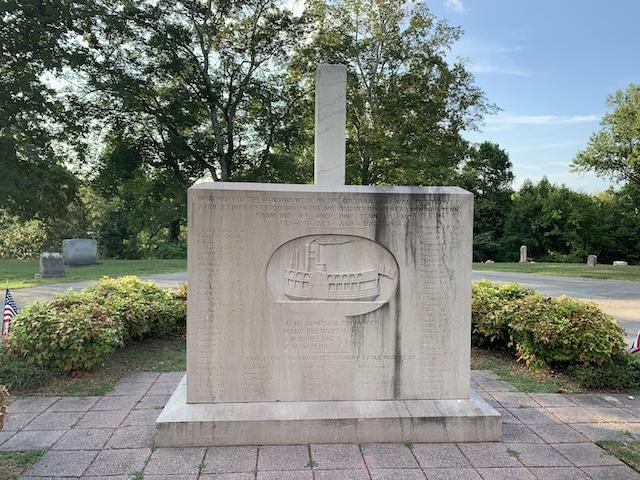
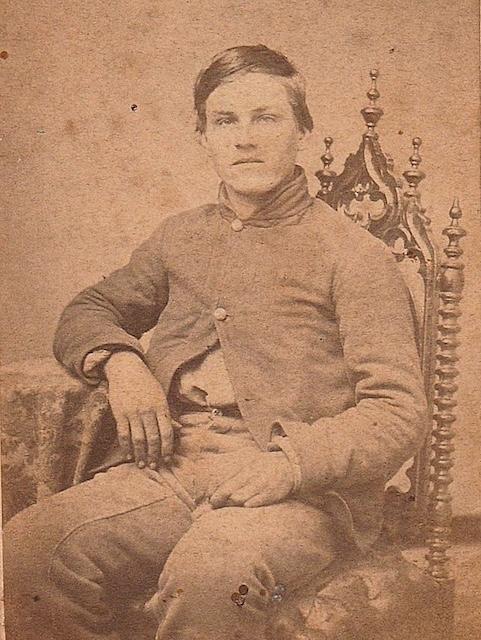
It was April 27, 1865. The waters were icy. The fractured steamboat was a literal inferno. John H. Campbell lost his life in the explosion, but William Swaggerty, Jesse Huffaker and Abner Long managed to survive. All were Union soldiers from the Fork, the Knox County lands between the French Broad and Holston Rivers.
These Union men were among the more than 2,000 lives on the Sultana, a 260-foot-long, side-wheel steamboat designed to carry 376 passengers. Besides the federal soldiers who had survived battle but been taken captive and held as prisoners in confederate prisons in Georgia and Alabama and other prisons in the South, 15 female members of an organization similar to the Red Cross were also on board. So were mules, horses and hogs.
The Sultana was transporting the weak and emaciated soldiers north to be discharged. Men were on the decks, in the hold, and every possible space of the boat. All but part of the crew and a small guard were asleep when the explosion occurred at about 2 a.m., throwing many into the cold and swift Mississippi River, which was about 20 feet out of banks. Only a few hundred victims survived through the night. Most who weren’t killed by the blast or the flames drowned or died later of their injuries. On May 15, the Nashville Weekly Union reported 174 members of the 3rd Tennessee Cavalry had lost their lives in the tragedy.
John H. Campbell had enlisted in the Union army as a blacksmith and was captured in Athens, Alabama. Jesse M. Huffaker was a cobbler who was initially exempted from the Confederate draft because he was needed to provide shoes for soldiers. Unwilling to fight against their country, Jesse and his brother George eventually walked to Kentucky and joined the Union army. They were captured at Sulphur Trestle, Alabama, but because George was wounded, he was sent by a river hospital boat to the north, while Jesse was held in prison.
The night of the disaster, Jesse floated on a piece of timber, then climbed onto a dead tree snagged on the point of an island until he was rescued. After Jesse recovered from the Sultana tragedy, he went on to marry his sweetheart, Belle, and had nine children. He became a blacksmith and ran a shop in the Fork at the corner of Asbury Road and Cinder Lane, where he maintained and repaired quarry equipment pieces and also shoed and toed the mules that pulled the loads of coal powering the quarry machines.
The name of John H. Campbell, grandson of Revolutionary War veteran Alexander Campbell, is among the casualties listed on the Mount Olive Cemetery’s Sultana memorial, which was donated by Fork quarry owner Harmon Kreis. The Association of Sultana Descendants and Friends continue to meet each year, as did the survivors themselves, beginning in 1883. William Swaggerty (1842-1877) is buried at Huckleberry Springs, and Jesse Huffaker (1842-1926) and Abner Long (1844-1924) are buried at Thorn Grove Cemetery, where their stories of survival should never be forgotten in the Fork.
-

- The Sultana
-
- Abner Long
Jan Loveday Dickens is an educator, historian and author of Forgotten in the Fork, a book about the Knox County lands between the French Broad and Holston Rivers, obtainable by emailing ForgottenInTheFork@gmail.com.


Timely and interesting information. The Sultana “Association” held it annual meeting this past weekend at the Mt. Olive Church, where the current organization actually began. Among all the others, my great-grandfather’s name is engraved on that monument. The Association, founded by Knoxville attorney, Norman Shaw, has contributed greatly to promoting and keeping alive the memory of this tragedy. Thanks for your contribution.