
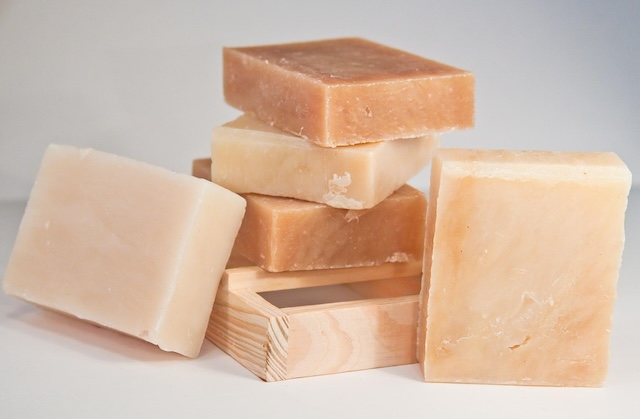
For many families the beginning of August means that it is time to go back to school. As part of my children’s schooling this year, they are learning to carve soap. Soap carving was explained to me as a cheap and easy way to introduce even early elementary age children to carving in a safe way. As I was reading through the introduction of our ‘how to book,’ I was intrigued to learn that this craft first became popular thanks to the father of public relations, Edward Bernays.
When hired by a company, Bernays did not advertise products in the traditional sense. Instead, he sought to change public opinion in a way that would increase demand and consequently increase sales. One of his long-time clients was Procter & Gamble, the makers of Ivory Soap. One day the president of the company called Bernays and said, “We have bad news. Children hate soap because their mothers wash their faces with soap. The soap gets into their eyes, and they detest it, and obviously if they detest it as children, they’ll detest soap when they grow up. What can you do about that?”
Bernays and his team began researching. They learned of a sculptor named Brenda Putnam who was using large blocks of soap for carving instead of wax. The soap was easier to handle and more affordable. It had the added benefit that any bits that were carved off could be reused for cleaning rather than thrown out as waste.
They then consulted with psychologists to learn if children four or five years old and older had the creative instinct that would be necessary for sculpting. Based on his research Bernays recommended that Procter & Gamble hold a soap carving competition with various age categories recommended by the psychologists.
Within one year, they had 23 million children in public schools across the nation carving soap. Soap carving was so popular that the competition expanded to include adults and professional artists. The National Soap Sculpture Competition only lasted for 15 years, but this handicraft with its roots in an industrial marketing campaign is still practiced today both as an entry into wood and stone carving and as a beautiful art form in itself. While it is still very early in the school year, it seems my children agree with the kids of the 1920s; soap carving is good clean fun.
Crystal Kelly is a feature writer for Bizarre Bytes with those unusual facts that you only need to know for Trivial Pursuit or Jeopardy or to stump your in-laws.
Follow KnoxTNToday on Facebook and Instagram. Get all KnoxTNToday articles in one place with our Free Newsletter.

