
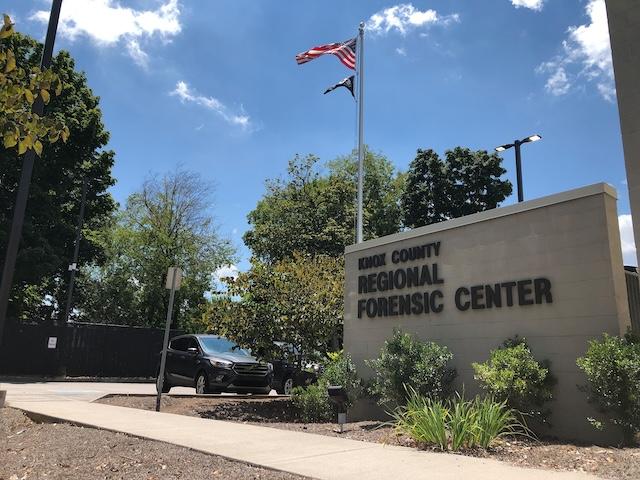
Nineteen overdose deaths in East Tennessee are now under investigation for the presence of the emerging synthetic opioid N-Propionitrile Chlorphine, with 12 confirmed and seven awaiting laboratory confirmation; an increase of three confirmed deaths since last week, according to the Knox County Regional Forensic Center.
Chris Thomas, chief administrative officer and director of the forensic center, confirmed the updated figures on Wednesday following additional toxicology review. The center submits femoral blood samples to NMS Labs for toxicology testing. If the compound is detected, samples are forwarded to a research laboratory for confirmation.
Because the drug does not appear on standard toxicology screens, Thomas urged caution in suspected overdoses. He said naloxone, commonly known as Narcan, may not be effective in reversing overdoses involving cychlorphine but should still be administered.
“Always try,” Thomas said, emphasizing that responders cannot immediately determine which opioid is present. Officials also advised people who use drugs not to use alone, noting that many fatal overdoses occur when no one is present to seek medical assistance.
For law enforcement officers, Thomas said response protocols should mirror those used for fentanyl. There is currently insufficient data to determine whether the drug poses any additional risk through incidental skin exposure, but standard fentanyl safety measures should be followed.
Most of the confirmed and pending deaths occurred in Knox County. Of the 19 cases currently under investigation, 12 are from Knox County, and seven are from surrounding counties, including Roane (2), McMinn (1), Union (1), Claiborne (1), Anderson (1), and Campbell (1) counties.
Thomas also confirmed that a single previously unreported Knox County case on July 31, 2025 involved the drug but was not initially recognized as part of a pattern. At the time, it appeared to be an isolated event. Additional cases emerged in the fall, leading investigators to identify what is now considered a developing cluster.
The drug, also known as cychlorphine, belongs to an emerging subclass of synthetic opioids known as orphine analogues. National forensic researchers first identified the compound in 2024. A January 2026 public alert from the Center for Forensic Science Research and Education reported an increase in fatal overdoses in which the drug was detected across multiple states.
Thomas said laboratory data indicate N-Propionitrile Chlorphine is approximately 10 times more potent than fentanyl.
In most confirmed deaths locally, cychlorphine was detected alongside fentanyl and methamphetamine. In one case, however, it was the only drug identified. That case involved a measured concentration of approximately 0.5 nanograms in femoral blood, which Thomas described as extremely low.
Detection remains a significant challenge. The drug does not appear on routine toxicology panels and requires expanded analysis. Thomas noted that East Tennessee’s advanced testing capacity may make the region appear disproportionately affected compared to jurisdictions that lack similar resources.
“It’s not picked up on normal toxicology screens,” Thomas said previously. “The drug requires additional testing or samples sent to research facilities for detection and quantification.”
Whether the current cases represent a sustained distribution network or a limited supply event remains under investigation. Forensic officials continue to monitor new toxicology submissions as confirmation results return from research laboratories.
I also reached out to All4Knox for comment, but did not receive a response prior to publication.
Det. Brandon Burley (Ret.), M.P.A., is a criminal justice educator whose academic work focuses on reducing recidivism through public policy. He has authored several criminal justice books and has been published in national law enforcement publications.
Follow Detective Burley on Facebook.
Follow KnoxTNToday on Facebook and Instagram. Get all KnoxTNToday articles in one place with our Free Newsletter.


What is the street name of this drug?