
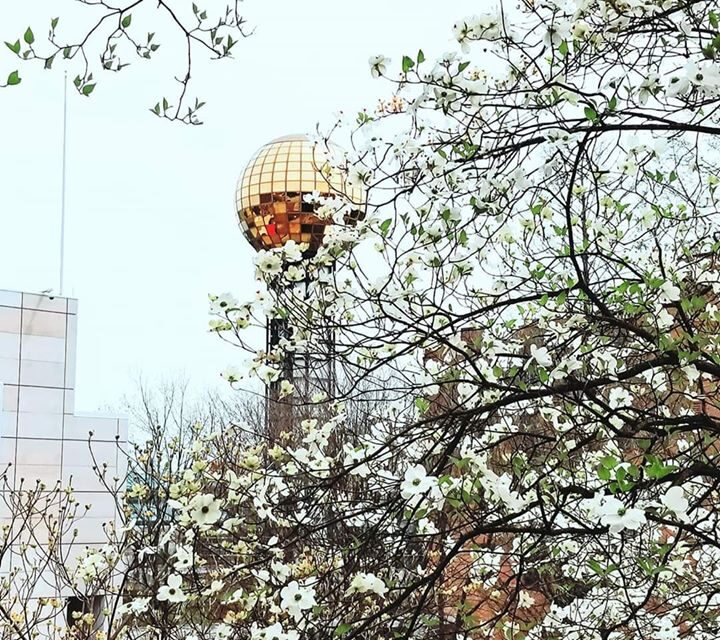
Knoxville has become the kind of place people discover, move to, brag about, and sometimes complain about in the same week.
That is not new.
Knoxville has been changing since the beginning. The city was founded in 1791, after James White, a Revolutionary War veteran from North Carolina, arrived in the area around 1785 and established one of its first permanent structures. William Blount, governor of the Southwest Territory, later chose the area around White’s homestead as the territorial capital. Knoxville became the place where Tennessee’s first state constitution was drafted, and it served as Tennessee’s first capital for more than 20 years.
That is worth remembering, especially for newcomers. Knoxville was not built as a suburb of somewhere else. It was once the political center of a frontier territory, then a state capital, then a railroad city, then an industrial city, then a university city, then an energy city, then a festival city, then whatever we are becoming now.
The city’s history has always been layered.
The arrival of railroads in the 1850s helped Knoxville grow into an industrial center. The Civil War divided the city, and Knoxville later became a place of furnaces, mills, marble, timber, iron, coal, textiles and railroad equipment. Downtown still carries pieces of that story in its older buildings, Market Square, Gay Street and the Old City.
Knoxville also has a deeper cultural story than people sometimes realize. It is home to the University of Tennessee’s flagship campus, the Museum of East Tennessee History, the Bijou and Tennessee theaters, the Beck Cultural Exchange Center and historic homes such as James White’s Fort and Blount Mansion. Knoxville History Project notes the city’s literary and musical connections, including James Agee, Nikki Giovanni, Cormac McCarthy, Frances Hodgson Burnett and early country music figures tied to the city’s cultural life.
And then there is the lore.
In 1982, Knoxville hosted the World’s Fair on what had been a 70-acre abandoned Louisville and Nashville Railroad yard between downtown and UT. The fair’s theme was “Energy Turns the World.” The Sunsphere, built in 1981, still stands 266 feet tall. The fair drew 11 million visitors, and the nickname “Scruffy City” grew out of skepticism about whether Knoxville could pull it off. Knoxville did, and the name stuck.
That history matters now because Knoxville is growing again. The U.S. Census Bureau estimated Knoxville’s city population at 202,021 in 2025, up from 190,740 in the 2020 census. Knox County was estimated at 511,453 people in 2025.
Growth brings energy. It also brings pressure: housing costs, traffic, schools, infrastructure, culture, and the quiet worry that the place people love may become harder to recognize.
That is the tension Knoxville is living in.
New residents should learn the city they have joined. Longtime residents should remember the city has never stood still. Knoxville has always been a place of arrivals, reinvention and argument over what comes next.
The goal should not be to freeze Knoxville in time. That never works.
The better goal is to grow with memory.
A city that forgets its history becomes generic. A city that refuses to change becomes brittle. Knoxville’s challenge is to be neither.
It can welcome new people without losing its old stories. It can build for the future without pretending the past was simple. It can be proud of the Sunsphere and honest about the hard parts. It can be scruffy, growing, and still unmistakably Knoxville.
Det. Brandon Burley (Ret.), M.P.A., is a criminal justice educator whose academic work focuses on reducing recidivism through public policy. He has authored several criminal justice books and has been published in national law enforcement publications.
Follow Detective Burley on Facebook.
Follow KnoxTNToday on Facebook and Instagram. Get all KnoxTNToday articles in one place with our Free Newsletter.




Nicely said, thank you for this perspective on the challenges Knoxville faces as it continues to grow.
I just wish the Metropolitan Planning Commission would do its job and stop being a lackey to developers.