
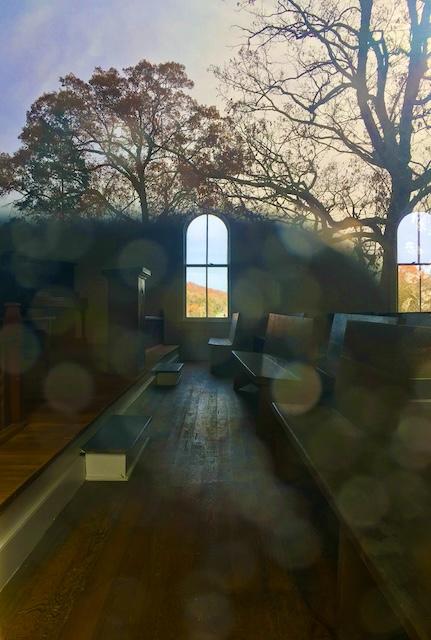
As we continue to move toward our nation’s semiquincentennial, I continue to consider elements of the Revolutionary War effort of attaining independence and the related contributions and connections of families of the Fork, the Knox County lands between the French Broad and Holston Rivers.
Last week, we took a look at Revolutionary War veteran Jesse Green, who also helped rescue John Sevier, and I said we would look more closely at Jesse’s wife, Isabella. Consider what it was like to wait at home while your husband and his buddies are riding like the wind over the mountains on a dangerous mission. What qualities might one develop while living a life in frequent danger and with the expectation of unknown trials?
Isabella was born in the Pennsylvania colony in 1764 to James Gibson and his wife Ann (Houston), who eventually settled their family in the Fork, at what they called Gibson Station, later known as Manifold Station. Isabella was familiar with the dangers of the frontier because their home was often used to shelter community members when attacks were threatened. She married the daring Jesse Green, and they had at least seven children. They were a devoted Methodist family, and three of their sons (Samuel, Jesse Jr., and James H.) became Methodist ministers.
Isabella was a Revolutionary War wife known for her hospitality to the adventurous newcomers on the frontier along the French Broad, especially those who needed the attention of a compassionate caregiver. Historian Dr. J.G.M. Ramsey wrote as part of her obituary:
“… nowhere has the sick couch had around it more maternal sympathy–more of woman’s assiduous care and tenderness and skillful nursing, than through a long life, it was the duty and pleasure of Mrs. Greene to bestow upon the sick and dying. Nor had age or infirmity chilled the warmth of her sympathetic heart, or diminished her affectionate kindness to suffering humanity…. Indeed, she seemed to delight in doing good and adding to the comfort of others. Emphatically, a sister of charity, wherever disease prevailed, or suffering existed, or epidemic committed its havoc, there was Mrs. Greene, always present to soothe–to nurse–to encourage–to sympathize. Essentially a Christian, she loved all and helped all; was social, obliging, kind, forgiving, hospitable, amiable, gentle, humble, unpretending, sincere, pious.”
Since Jesse’s death on August 6, 1831, Isabella had lived with their daughter Elizabeth, who had married Samuel Bowman Jr., whose homeplace I can see across the river from my back deck. However, at the time of Isabella’s death, she was staying with their son James H. Green, who preached at Seven Islands Methodist Church. Ramsey told that just a week before her death at age 86 on November 20, 1849, she had traveled several miles to visit with a sick friend.
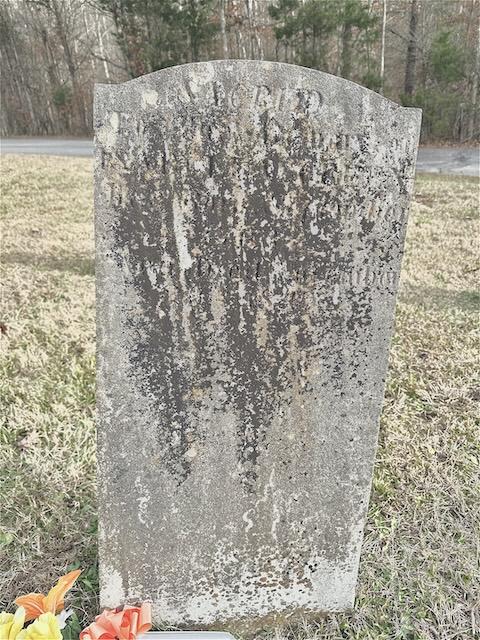
Isabella Green’s marker at Forest Grove Church graveyard
On the day Isabella died, she had gone to her special place of prayer after breakfast, as was her custom. She had been gone so long that a granddaughter went to check on her, only to return to the house and report that Isabella was still on her knees, her hands folded in prayer and her face upturned toward Heaven. However, when the family checked again soon after, she had passed on to her reward. Ramsey stated that she had died as she probably would have preferred, “supplicating, praising, adoring in secret.” After a visiting “concourse of mourning friends and acquaintances” whose tears and regrets attested to how much she was valued, she was buried the next day “near the old family mansion at Greene’s old Chapel,” now forgotten in the Fork but assumed to be the forerunner of today’s Forest Grove Church.
Jan Loveday Dickens is an educator, historian, and author of Forgotten in the Fork, a book about the Knox County lands between the French Broad and Holston Rivers, obtainable by emailing ForgottenInTheFork@gmail.com.
Follow KnoxTNToday on Facebook and Instagram. Get all KnoxTNToday articles in one place with our Free Newsletter.