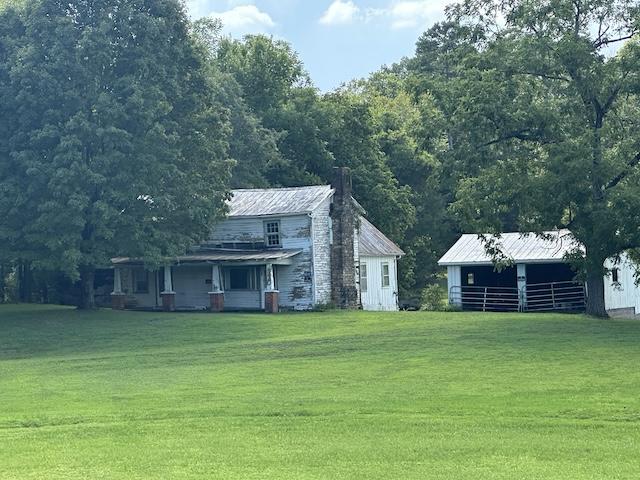
Again this week, we are moving toward our nation’s semiquincentennial by focusing on the Revolutionary War effort of attaining independence and the related contributions and connections of folks of the Fork, the Knox County lands between the French Broad and Holston rivers.
Service and sacrifice. We often use those words in relation to what our military persons provide to our country, but what did that mean in 1779? How did individuals feel when faced with the choice of entering the fray that was already on their doorstep? Neighbors who remained loyal to the king eyed neighbors who were considered rebels for rising up against the king’s reign over the British colonies, and those two opposing allegiances resulted in conflict and violence that threatened daily peace in rural communities.
John McLemore of Granville County, North Carolina, was familiar with the angst, anger, and anguish in making a decision about which side to support and to what extent he would be involved. However, in late summer of 1779, he joined the American army under the command of Captain Micajah Bullock and Lieutenant Ralph Williams. John was 17. To “keep the Tories in awe,” Major Richard Cook led them to the mouth of Cross Creek on the Cape Fear River, then to Hillsborough and on to Back Creek, covering hundreds of miles within John’s three-month service.
Nine months later after being honorably discharged, he was engaged to be married, and because of “her strong and earnest remonstrances and his great reluctance at leaving her, he was induced to hire a substitute and remain at home.” The fears were real, and the young couple’s concerns were understandable. So, John hired a man by the name of William Westbrook to serve in his place in performing another tour of three months with the American army. As payment for taking his place, McLemore gave Westbrook a horse, saddle, bridle, one hundred acres of land, and two cows and calves. It was not an unusual arrangement. Sacrifices came in all forms.
However, in 1781, McLemore entered the Continental Army at Granville as an orderly sergeant in a company of volunteer horsemen under Captain Nathaniel Waller and Col. John Key. From Granville, the army marched to the mouth of Cross Creek on the Cape Fear River, where Major Richard Cook and General Bratton took command. There, McLemore’s company was put with infantry.
From the mouth of Cross Creek, General Butler led them to Rockfish River, where they met General Rutherford and his large force. They crossed the Rockfish and marched on to the northeast, where a large force of British and Tories was on the opposite bank. There McLemore’s company remained within two miles of Wilmington until the British left their position and headed toward what would be known as the Battle of Guilford Courthouse. When John’s three months of service expired, he was honorably discharged and returned home.
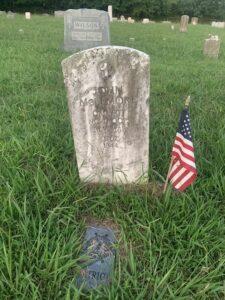
John McLemore’s marker at Union Cemetery
McLemore stated in his pension application that he knew he was born in Brunswick County, Virginia, in 1762, because he had seen the dates of birth for himself and his siblings that his father had recorded in the family Bible. After enlistment in the war, he continued to live in Granville County until 1796, when he then lived in Montgomery County and Burke County for about eight years each. (These details are shown online in the Patriot Paths site.) After his beloved Sarah died in 1811, he moved to the Fork, where he was surrounded by family and lived out his life. He was awarded an annual pension of $37.50 in 1840, but he died in 1844 and is buried in Union Cemetery, where his service to our country has been all but forgotten in the Fork.
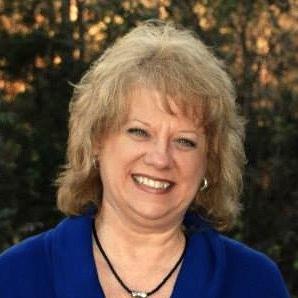
Jan Loveday Dickens is an educator, historian, and author of Forgotten in the Fork, a book about the Knox County lands between the French Broad and Holston Rivers, obtainable by emailing ForgottenInTheFork@gmail.com.
Follow KnoxTNToday on Facebook and Instagram. Get all KnoxTNToday articles in one place with our Free Newsletter.