
Several months ago, we were in Southern California for my father’s 98th birthday and our anniversary. We often go to my dad’s, brother’s, and nephew’s favorite restaurant in Malibu, Paradise Cove Café. After lunch, we drove south, a drive we’ve made many times over the years, on Pacific Coast Highway toward the southern part of Malibu. We weren’t prepared for what we saw – the fire damage ten months later. Words can’t begin to describe the devastation for over five miles along the beach and throughout the canyons. The luxury homes, as well as the more modest ones, were turned into rubble. I have seen devastation from tornadoes, but this was different. There was nothing left. Nothing.
From January 7 to the end of January 2025, California’s notorious Santa Ana winds devastated Malibu, the Pacific Palisades, and later in the Eaton fire, 40 miles east in Altadena. The flames were driven out of canyons through Pacific Palisades and toward Malibu. The Palisades fire became the Malibu fire – same name, different place.
-
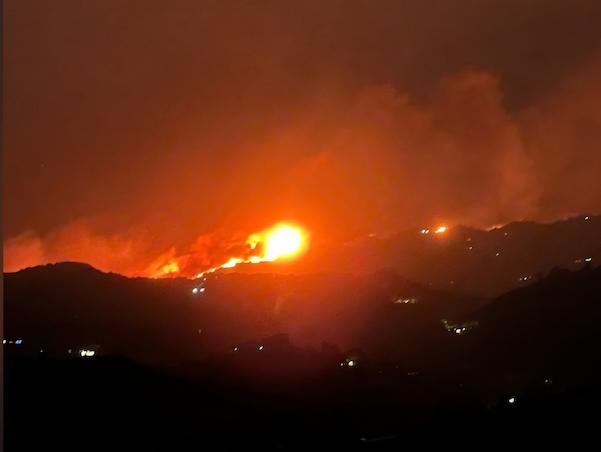
- Looking west toward the Pacific Ocean – Malibu beach and canyon homes and structures burn. Photo credit – Will Maloney
-

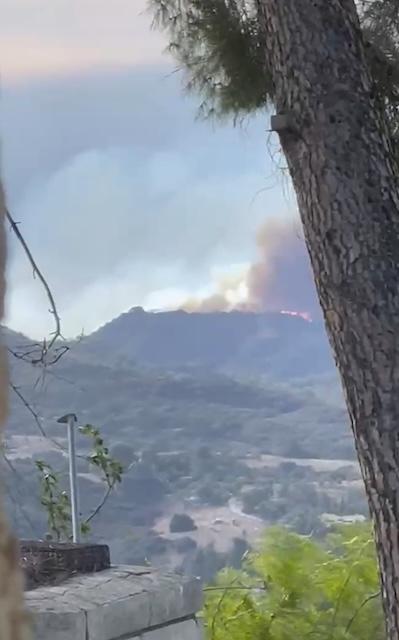
- 80 mph gusts wreak havoc with trees and brush in Topanga Canyon State Park, sending embers west toward Malibu. Photo credit – Will Maloney
Rebuilding and insurance are a nightmare
How many homes and structures were destroyed? Inside Malibu’s city limits (counts vary by source), but the range is stark: almost 600 homes per one insurance trade report; about 720 total structures (including 322 coastal homes) in local reporting.
Rebuilding is where the statistics become even more confusing. As of January 2026, a year after the fires, Malibu had issued 486 building permits, but not all of those were for total rebuilding. This includes repairs. It appears that only 16 permits for single homes have been issued. Much of this depends on the area – the City of Malibu or the surrounding canyons in LA County. For fire survivors, that reads like a second disaster: this time in slow motion.
The accelerant the three California fires shared was the wind. Southern California forecasts called for 60–80 mph Santa Ana gusts with isolated peaks near triple digits in the high country; that’s hurricane-force air aimed down canyons toward neighborhoods. No wonder the nights turned into ember blizzards.
There are no numbers currently available as to how many people are displaced in Malibu, but CBS Sunday Morning this week, January 4, reported that 80 percent of the fire victims from all three fires are still displaced.

Only twisted metal and ash remain from Topanga Beach to Canyon Beach in Malibu. Photo credit – M. Staten
As for insurance – good luck. CBS also reported that 70 percent of all cases have not been paid or have been denied for all three fires.
Professionals and volunteers came to help
Mutual aid came from across California and out of state (Nevada, Oregon, Washington, Arizona), and others. Volunteers from throughout the country arrived in Southern California to lend a hand with clean-up, food, shelter, mobile shower units, and displaced animals.
One of those was my nephew, Will Maloney, who lives 18 miles east, through the canyons in the Calabasas area. He and his friends were determined to help the firefighters, so they carefully traveled on motorcycles through Topanga Canyon State Park, overlooking Malibu, and avoiding closed roads. Positioning themselves in a safe area, they established a supply line to provide food and water to the firefighters for several days.
“Everyone wanted to help in some way,” Will explained.
Warning systems fail
Warning systems are supposed to buy time. Whether they were sirens or cell phone alerts, most warning systems failed. L.A. County blasted faulty, confusing mass alerts on January 9—two days after firestorms erupted—sparking “warning fatigue.”
Was it arson?
Federal prosecutors say the Palisades disaster began as a deliberately set New Year’s Day fire that reignited under Santa Ana winds. That fire spread to Malibu. A suspect was arrested/charged federally, but it’s an allegation unless/until proven in court. The U.S. Department of Justice announced the arrest of a man accused of maliciously starting what became the Palisades Fire.
The three fires sit squarely in the wildland-urban interface—where postcard landscapes meet combustible reality. All three fires endured wind events strong enough to outrun fire engines. All three discovered that warning systems only work if they work on time.
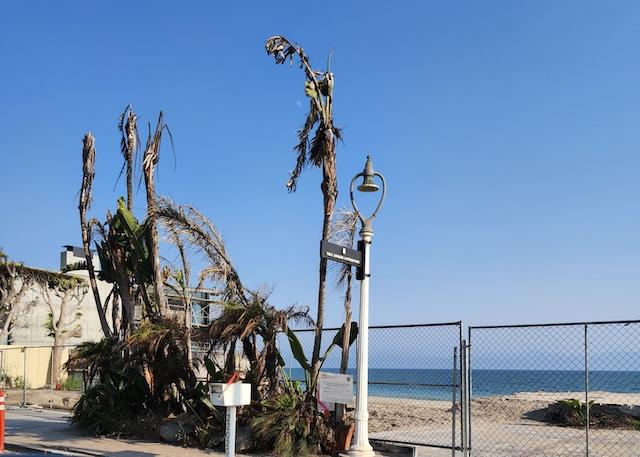
The aftermath of the Malibu fires shows total destruction for over five miles along Pacific Coast Highway. Photo credit – M. Staten
The aftermath
The fire is just chapter one. The sequel is long and bureaucratic—permits, geotech reports, insurance math—and it tests a community’s stamina.
Our 2016 fires in Gatlinburg and Sevierville had similarities to the California fires: wind and faulty alarm systems. On a ridge in the Smokies or a canyon above the Pacific, the lesson is the same: live in fire country, plan for the wind. Because when it blows, the embers don’t care about zip codes.
Melanie Staten is a public relations consultant with her husband, Vince.
Follow KnoxTNToday on Facebook and Instagram. Get all KnoxTNToday articles in one place with our Free Newsletter.
Send your news and notes of community interest to send news@knoxtntoday.com.

