
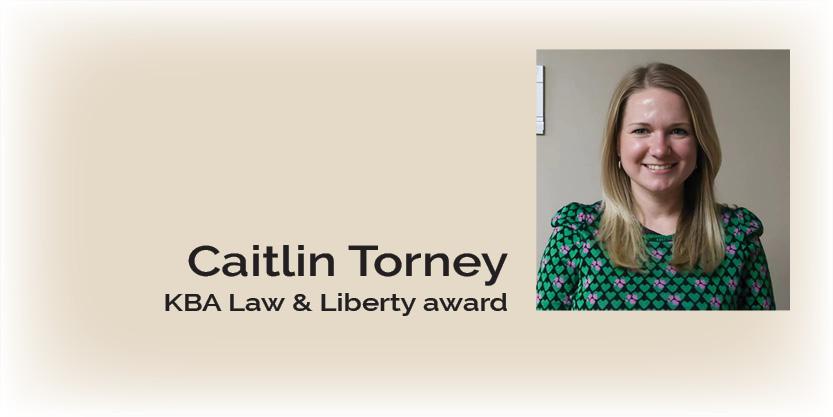
The Knoxville Bar Association presented the 2026 Law & Liberty Award to Caitlin A. Torney in conjunction with the Association’s Law Day festivities on Wednesday, April 29, 2026. Torney is the director of career services and alumni relations at Lincoln Memorial University Duncan School of Law.
Prior to her employment at LMU, she served as the pro bono coordinator for Legal Aid of East Tennessee. During her five‐year tenure in that position, Torney helped expand pro bono services offered to the community and supported significant and ongoing partnerships within the local legal community. In addition to many other accomplishments, she was celebrated for her efforts to increase access to justice initiatives to serve veterans, small business owners and victims of natural disasters in the region.
An active member of the KBA Access to Justice Committee, Torney is a graduate of Wake Forest University School of Law and has practiced law in both North Carolina and Tennessee.
The Knoxville Bar Association Law & Liberty Award seeks to recognize a person who has provided extraordinary service to the community, particularly in demonstrating and encouraging an abiding respect for the rule of law and in the improvement of the legal system for all members of the community.
Knoxville Bar President Rachel Hurt said, “Caitlin Torney is a prime example of the attributes we seek to celebrate in this award. Her contributions to our community and our profession make her an extraordinary recipient of this prestigious award.”
Supreme Court dismantles Voting Rights Act of 1965
The U.S. Supreme Court has been accused of “gutting” the Voting Rights Act of 1965. The vote was 6-3 along party lines, on an appeal styled Louisiana v Callais, which was issued April 29, 2026.
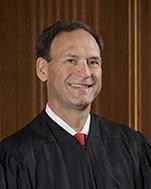
Samuel Alito
Justice Samuel Alito wrote the opinion, joined by five Republican colleagues. Justice Clarence Thomas wrote a concurring opinion, signed by Gorsuch, in which he quoted himself from a dissent he wrote 30 years ago. Then the only justice of color, he wrote that the Voting Rights Act encouraged creation of “Black districts” with Black representation; “Hispanic districts” with Hispanic representation.
That interpretation was “repugnant to any nation that strives for the ideal of a color-blind Constitution,” he wrote. Today’s decision should largely put an end to this “disastrous misadventure in voting-rights jurisprudence.” Thomas had argued that the Voting Rights Act did not include districting at all.
You can read the opinion and dissent here.
Justice Elena Kagan penned a powerful dissent, joined by Justices Sotomayor and Jackson. Notable lines from Kagan’s dissent:
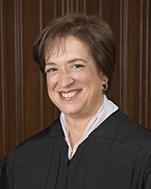
Elena Kagan
“I dissent. The Voting Rights Act is – or, now more accurately, was – ‘one of the most consequential, efficacious and amply justified exercises of federal legislative power in our Nation’s history.’ It was born of the literal blood of Union soldiers and civil rights marchers. It ushered in awe-inspiring change, bringing this Nation closer to fulfilling the ideals of democracy and racial equality. And it has been repeatedly, and overwhelmingly, reauthorized by the people’s representatives in Congress. Only they have the right to say it is no longer needed – not the Members of this Court. I dissent, then, from this latest chapter in the majority’s now-completed demolition of the Voting Rights Act. …”
Kagan recited a lengthy description of how minority votes were suppressed, primarily in the South, and said, “The Voting Rights Act of 1965 represented Congress’s most determined effort to stop the cycle. Selma’s Bloody Sunday had galvanized the Nation to finally confront racial disfranchisement. …”
Then she sounded like the most conservative justice reacting to the court-driven social changes of the 1950s and ‘60s: “The American people pay no Member of this Court to make those predictive policy judgments – and more importantly, the Constitution does not allow us to base our decisions on them.
“It is for the people’s representatives in Congress to decide when the Nation need no longer worry about the dilution of minority voting strength. So long as Congress has not done so – and it has not – this Court has no right to cancel (sorry, ‘update’) a duly enacted statute on the theory that it knows better. …”
Kagan then accused the country’s “two major parties” of competing “in a race to the bottom.”
She said the Court’s ruling puts achievements of minority representation in government in peril.
And she ended with this rousing statement: “I dissent because Congress elected otherwise. I dissent because the Court betrays its duty to faithfully implement the great statute Congress wrote. I dissent because the Court’s decision will set back the foundational right Congress granted of racial equality in electoral opportunity. I dissent.”
Notes & Quotes
Election Day in Knox County is tomorrow – Tuesday, May 5. Polls are open from 8 to 8.
Quote: “A prince never lacks legitimate reasons to break his promise.” – Niccolò Machiavelli, author of The Prince (1513).