As we continue to move toward our nation’s semiquincentennial, I’m still focusing on elements of the Revolutionary War effort of attaining independence and the related contributions and connections of families of the Fork, the Knox County lands between the French Broad and Holston Rivers.
Absalom Rutherford had gray eyes. That little fact might not seem significant, but I don’t remember seeing details like that for any other Revolutionary War soldier that I’ve researched. He was 5’ 10” with light hair and a fair complexion. And he was only 17 when he enlisted.
Absalom was born in 1763 in Albemarle County, Virginia, but his family moved to what is now Wythe County, where he joined the 2nd Virginia Regiment under Captain William Bentley in September 1780. Young Absalom saw action with some key names and was in some of the major southern battles. His troop marched down the James River to drive out General Benedict Arnold, then marched under the command of General Nathaniel Greene, eventually to fight in January 1781 at Cowpens, where Continental Army leader Daniel Morgan faced off with British commander Tarleton Banastre.
In March, he fought at the Battle of Guilford Courthouse against British Lieutenant General Charles Cornwallis. They followed Cornwallis over the Deep River to Camden and besieged it until the British left, then they went to Ninety-Six and besieged it until their captain was taken prisoner. They ended up taking a fort on the Savannah River outside of Charleston just before his term expired. He was sent to Salisbury, North Carolina, where he was honorably discharged in December 1781.
Absalom Rutherford married in 1790 and a few years later moved from Virginia to Tennessee, where he lived on 600 acres in Corryton for 33 years before applying for a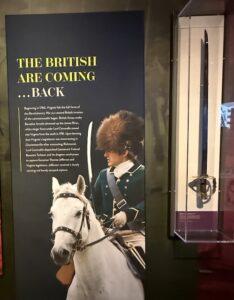 pension in 1832. He died on April 28, 1841, and his wife Mary applied for a widow’s pension in 1843, then applied for bounty land in 1855, when she was 82.
A partially legible Bible record stated the names of daughters Deliah, Ann, and Polly, but a news article revealed that Absalom and Mary also had two sons, Absalom and James. James had 10 sons, who divided his half of their father’s lands equally among them. Portions were sold one-by-one outside the family. By 1910, the remaining acreage from the original 600 had been passed down to Russell Rutherford and R.P. and M.H. and A.M. Rutherford, the latter of whom was the last to live on what was left of the farm. Household goods and farm implements were then sold from the land that had been in the family for over 100 years.
Although several generations of Absalom’s descendants continued to live in Corryton, various lines migrated elsewhere, including the lands between the French Broad and Holston rivers, where his noteworthy service has been forgotten in the Fork.
Jan Loveday Dickens is an educator, historian, and author of Forgotten in the Fork, a book about the Knox County lands between the French Broad and Holston Rivers, obtainable by emailing ForgottenInTheFork@gmail.com.
Follow KnoxTNToday on Facebook and Instagram. Get all KnoxTNToday articles in one place with our Free Newsletter.