
For many Christians, the Holy Bible is considered the infallible, inerrant word of God, and to question any of its content is to border on the blasphemous.
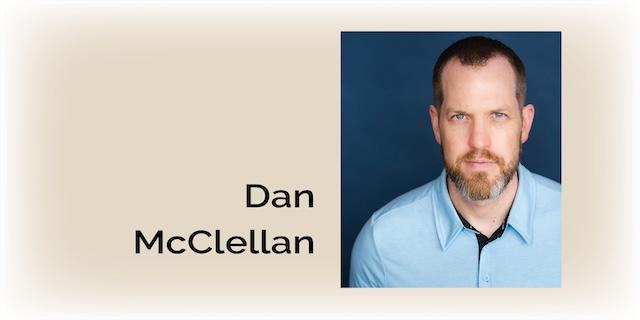
Dan McClellan, however, thinks otherwise. A biblical scholar whose work is centered around the academic study of Christianity’s holiest book, as well as pushing back against misinformation and misinterpretation of the texts contained therein. The title of his 2025 book, The Bible Says So: What We Get Right (and Wrong) About Scripture’s Most Controversial Issues, will serve as the theme of this year’s Cummings Conversations. During a visit that will include three public lectures on February 1-3, McClellan will lead an undoubtedly spirited and spiritual discussion of the ways that the Bible both informs faith and is shaped by history, culture and human interpretation — challenging audiences to consider not just what the Bible says, but how and why it has been used to justify belief, authority and action.
“One of the central points of my book is that the Bible is a text that cannot speak for itself, and only has meaning to the degree a reader, listener or viewer generates meaning in the process of interpretation, which I describe as a negotiation between a variety of different factors, including our social, historical, and rhetorical circumstances, any received tradition, and our rhetorical goals,” McClellan said. “As a result, what the Bible seems to ‘say,’ particularly on more important social and moral issues, is more accurately what we are saying with the Bible as our authorization.”
Known as the Margaret M. Cummings Conversations on Faith, Learning and Service, the annual event is an opportunity for the College community to explore the intersections of faith and service, stemming from the institution’s founder, the Rev. Isaac Anderson’s, charge to “do good on the largest possible scale.” Formerly known as the February Meetings, the series was renamed in 2019 and offers an opportunity for guest lecturers from all corners of theology and academia to share their perspectives through free public lectures open to the MC community.
“We are excited to welcome Dan McClellan to campus to engage with our students, staff, faculty and the greater community,” said the Rev. Jessica Kitchens Lewis ’07, Maryville College chaplain and director of campus ministry. “He has an amazing way of making theology and religion accessible through a variety of media forms, and his approach to honest and civil discourse is refreshing. We hope his visit and speaking engagements will inspire others to dive deeper into scripture, but in a larger way, I hope his authentic and civil way of discussing hot topics will encourage all of us to speak with others across lines of division, no matter what they may be; to seek to understand one another; to share our perspectives; and to learn to listen curiously.”
“The Bible has long been understood as an inspired and inerrant document that rests at the foundation of billions of Christians’ understanding of humanity’s origins, purposes, and responsibilities,” McClellan said. “It is so deeply embedded in the worldviews and self-understandings of so many people around the world that thinking critically about challenges to that nature, origin, and function is just going to be a subconscious bridge too far for many people.”
A great many Biblical intellectuals and scholars find such discussions to be invigorating, but there are a number of other Christians, McClellan points out, who feel as if his work is somehow an “attack” on the holy book of one of the world’s great religions. Nothing, he emphasized, could be further from the truth — and those who interpret it as such, he added, often conflate scholarly discourse with an agenda that’s actually a reflection of their own ideology.
“I certainly don’t intend to destabilize faith, and am a person of faith myself, but that does seem to be how a lot of people understand the impact of my work,” he said. “I would be lying if I said my work is entirely consonant with everyone’s faith, but I also hear from multiple people every day that my work has helped them to restore or renew their faith. I’m trying my best to accurately represent the data and the current state of the scholarship, which needs to have a seat at the table of public discourse.”
As a primer for this year’s Cummings Conversations, McClellan invites those on the fence about attending to engage with his content on social media and seek out portions of his book online.
Cummings Conversations events open to the public include “A Conversation with Dan McClellan and Dr. Phillip Sherman” at 7 p.m. Monday, Feb. 2, in the Harold and Jean Lambert Recital Hall of the Clayton Center for the Arts (Sherman is a professor of religion and chair of the Division of Humanities at Maryville College); a chapel service at 1 p.m. Tuesday, Feb. 3, in the Center for Campus Ministry; and a lecture at 7 p.m. Tuesday, Feb. 3, in the Lambert Recital Hall.
For more information, email Jessica Lewis at jessica.lewis@maryvillecollege.edu.
Maryville College is a nationally ranked institution of higher learning and one of America’s oldest colleges, located in Maryville, Tennessee, between the Great Smoky Mountains National Park and the city of Knoxville. Maryville College offers more than 60 majors, seven pre-professional programs and career preparation from their first day on campus to their last, in the words of our Presbyterian founder, to “do good on the largest possible scale.”
Karen Eldridge, Executive Director of Communications: karen.eldridge@maryvillecollege.edu.
Follow KnoxTNToday on Facebook and Instagram. Get all KnoxTNToday articles in one place with our Free Newsletter.


Human interpretation of the Bible is dangerous because it involves a mind and a heart which are of a fallen nature. When I read a text I ask God to help me understand what I read and help me to apply it to my everyday living. Ultimately, I believe the practice of reading is important in not breaking the chain and not as much as interpretation. The unbroken chain is saying to God, I’m faithful to You. Therefore, my end result or position is saying to God, Your will be done Father. No more, no less and absolutely nothing else and I am good with that. I do not need to have a complete interpretation of every word.