
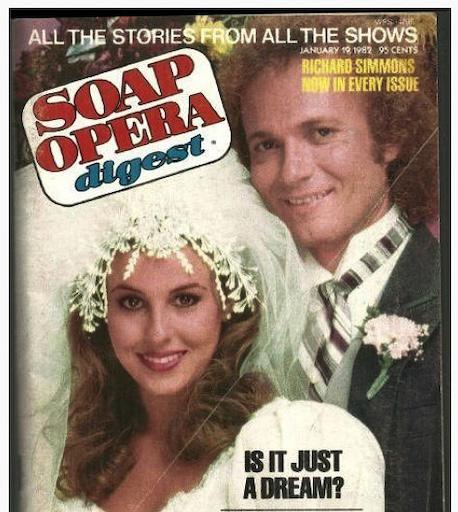
Actor Anthony Geary died recently, closing the book on one of daytime television’s most iconic careers. Over the years, Geary’s portrayal of Luke Spencer on General Hospital helped redefine what a soap character could be. Luke was charming, reckless, funny, and morally complicated — a far cry from the radio and television heroes and villains of earlier eras. Geary won a record eight Daytime Emmy Awards, often leaving the show and returning, his character’s reappearances treated like major events. He was a major player in the direction soap operas developed.
My great aunt was hooked on the soaps. I used to laugh at her when I was a teenager, as she talked in depth about “her stories” from that day. Little did I know that I, too, would get hooked on a soap opera – General Hospital.
In 1980, it aired at 3:00 p.m. in the Washington, D.C. market, a time when I was attempting to get my infant daughter to take an afternoon nap. One day, I turned the channel (yes, I actually switched the channel manually) to General Hospital. I was desperate for something to watch. There was no 24-hour news cycle or cable then. I started watching General Hospital. By 1981, at the time of Luke (Anthony Geary) and Laura’s (Genie Francis) infamous wedding, I was hooked
How did they start?
The American soap opera began not on television but on radio, wafting through living rooms in the 1930s. The name came from the sponsors — Procter & Gamble, Colgate-Palmolive, and Lever Brothers — who underwrote serialized daytime dramas aimed at homemakers. Shows like Ma Perkins, The Guiding Light, and Young Doctor Malone perfected the format: intimate stories, cliffhangers, and characters who aged slowly, if at all.
When television arrived, soap operas made the transition. By the early 1950s, daytime TV had become their natural habitat. The camera added close-ups, tears became more visible, and betrayals felt more personal.
Television soap operas expanded far beyond their radio roots. They tackled controversial subjects — divorce, abortion, addiction, AIDS — long before prime-time dramas dared to do the same. They also embraced spectacle. Secret twins appeared. Long-lost children returned as adults. I remember many story lines where amnesia was prevalent. Villains fell down elevator shafts and came back years later with new faces and often unfinished business.
General Hospital created careers
Among the longest-running and most influential of all soaps is General Hospital, which debuted on ABC in 1963. It is the longest running soap opera, and the show is still on the air. Initially focused on the professional and personal lives of hospital staff in the fictional city of Port Charles, the show gradually broadened into a sprawling saga involving mobsters, spies, romances, and supervillains. In the early 1980s, General Hospital became a genuine pop-culture phenomenon, fueled by the wildly popular Luke and Laura storyline that drew an estimated 30 million viewers to their 1981 wedding episode.
Which actors got their start on General Hospital?
The answer may surprise you: Demi Moore, Richard Dean Anderson (MacGyver), Meghan Markle, John Stamos, James Franco, Ricky Martin, and the list goes on.
I met two soap opera stars
I didn’t know how addicted I was until I met an actual soap opera star – George E. Carey, an occasional guest star on General Hospital. Little did I know, as my dad and I approached the actor’s toney Hollywood Hills mansion one Sunday while I was visiting, who our host was. My dad didn’t mention his name. He simply said, “We are going to George and Agnes’ for brunch.” George opened the door, introduced himself, and I almost fainted! It was “Lamont Corbin” from General Hospital. As it turned out, he had been one of my dad’s closest friends in the LA advertising business for many years.

Melanie and General Hospital star George E. Carey circa 1982
George had wonderful things to say about the show, and we talked endlessly about it. He said it was a lot of work, long hours, and a lot of line memorization. He told me lots of “secrets” about fellow actors on the show.
A few years earlier, while working in the White House Press Office, the mother of one of my colleagues, Mary Stuart, came to visit from New York. She had been on a CBS’ Search for Tomorrow soap since 1951 as Joanne. She was glamorous, vivacious, and took the press office by storm! Somehow, someone on the staff managed to get her into the Oval Office to meet President Ford! Though this was many years before Miley Cyrus’ hit “Wrecking Ball,” Mary was truly a wrecking ball …and a charming one at that. When the show ended in 1986, she earned the title of longest running actor on a soap opera.
The times change for soaps
Soap operas began to fade in the 1990s as viewing habits changed. Cable television, talk shows, reality TV, and eventually streaming chipped away at daytime audiences. Production costs rose, ad revenues fell, and once-dominant soaps were canceled one by one. Today, only a handful remain, with General Hospital standing as the last survivor of ABC’s once-formidable daytime lineup of All My Children, One Life to Live and General Hospital. Three soap operas remain on the air.
Soap operas may no longer dominate the cultural conversation, but for generations of viewers — and for performers like Anthony Geary — they created a shared daily ritual, a fictional world that unfolded one weekday at a time.
Melanie Staten is a public relations consultant with her husband, Vince.
Follow KnoxTNToday on Facebook and Instagram. Get all KnoxTNToday articles in one place with our Free Newsletter.

