
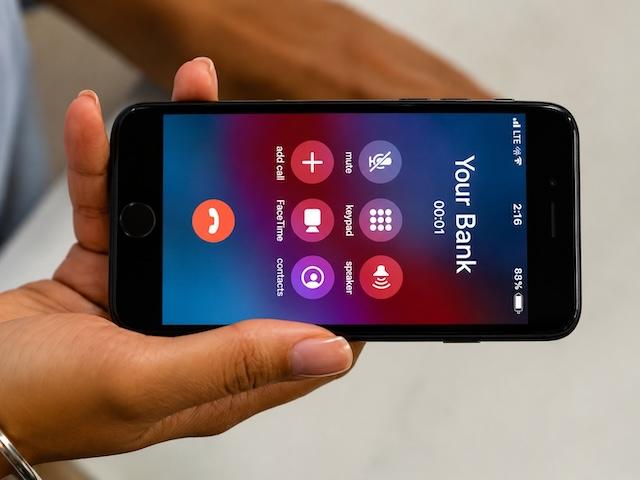
Your phone rings and the caller says there is suspicious activity on your bank account. The number on the screen may even look like your bank’s real phone number.
The caller knows your name. Maybe the person mentions a recent transaction or asks whether you authorized a purchase. Then comes the urgency: Your money is at risk, and you need to act immediately.
That sense of panic is exactly what an imposter scammer wants.
Caller ID is not proof
Technology allows scammers to make a call appear to come from a familiar company, government agency or financial institution. This practice, often called spoofing, means the name or number displayed on your phone should not be treated as proof that the caller is legitimate.
A convincing caller also may have pieces of personal information gathered from data breaches, social media or other sources. Knowing your name, address or bank does not prove the person is really calling from that institution.
Watch for pressure to act now
A major warning sign is urgency. A scammer may claim your account will be frozen, money will disappear or a fraudulent transaction will go through unless you act immediately.
Be especially suspicious if someone asks you to move money to a different account, send a wire transfer, purchase gift cards, use cryptocurrency or provide a verification code sent to your phone.
A legitimate fraud investigation should give you an opportunity to independently verify who is contacting you.
Never give away a security code
One-time passcodes and verification codes are designed to protect your accounts. A scammer who already has some of your information may need only that final code to gain access.
If you receive a code you did not request, do not read it to a caller, text it to anyone or enter it into a link someone sends you.
Hang up and make the call yourself
If a caller claims to represent your bank or credit card company, the safest response is simple: End the call.
Then contact the institution yourself using the number printed on the back of your debit or credit card, shown on a bank statement or available through the institution’s official website or mobile app. Do not call a number supplied by the person who contacted you.
If the original call was legitimate, your bank can confirm the issue.
Talk before you transfer
Scammers often discourage victims from speaking with family members, bank employees or anyone else who might question the transaction. That is another warning sign.
Before sending a large or unusual payment because of an unexpected call, text or email, talk with someone you trust. A few minutes of conversation can interrupt the pressure that makes these scams effective.
This can be especially helpful for families with older relatives. Agree in advance that an unexpected financial emergency is something family members can discuss without embarrassment or judgment.
If you think you responded to a scam
Contact your financial institution immediately. Ask whether transactions can be stopped, accounts secured or cards replaced. Change compromised passwords and continue watching your accounts for unfamiliar activity.
Imposter scams succeed because they can sound believable and create fear. Falling for a convincing approach is not a measure of intelligence. The best defense is a simple habit: When someone unexpectedly contacts you about your money, stop the conversation and verify the situation independently.
Your bank may really need to reach you someday. Just make sure it is actually your bank before you act.
First Horizon Bank is a leading regional financial services company, dedicated to helping our clients, communities and associates unlock their full potential with capital and counsel. It’s the powerful tools you need with the personal service you deserve. Contact First Horizon for all your banking needs.
Follow KnoxTNToday on Facebook, Instagram, X, LinkedIn and TikTok.
Get all KnoxTNToday articles in one place with our free newsletter. Comments may be sent to news@knoxtntoday.com.