You might be reading this in September, but I’m writing it right now in August. August 25th, to be exact, the day the world lost its dearest songbird, Dolly Parton. How does that relate to my focus on stories from the Fork, the Knox County lands between the French Broad and Holston rivers? Stay with me.
The whole world knows that Dolly Parton was born in the Smoky Mountains to a large family with little income. I won’t say that they were impoverished, as many of the reporters in the media are saying, because I know how rich one can be without a lot of financial income. That’s how I feel about my own roots. I’ve often quipped that I “grew up with nothing, and I still have most of it.” We had a little land, but we weren’t wealthy. However, like Dolly, I feel blessed to have grown up with other, intangible riches.
Before moving to the Fork, my dad and his family had lived in Sevier County, just a couple of ridges over from where Dolly grew up and just a couple of hollers from where Cas Walker’s family lived. Even today, my sister and I own a few acres near Dolly’s private mountain compound. Along with our brother and all our numerous cousins (both of our parents were each among nine siblings who survived into adulthood and had kids), we grew up on stories.
Our paternal grandmother’s brother was Wiley Oakley, the Smoky Mountain trail guide and storyteller known as “the Roamin’ Man of the Mountains,” who entertained the likes of Franklin D. Roosevelt, Harvey Firestone, Henry Ford, and other well-known and well-heeled people of his time. The British Broadcasting Company even aired his stories “across the pond.” Bill Landry shared a lot of Wiley’s and my other Smoky kin’s stories on WBIR’s Heartland Series. Many more are preserved in audio recordings at various archives.

The author’s grandfather (top left) with his mother, and a few siblings and cousins in Sevier County
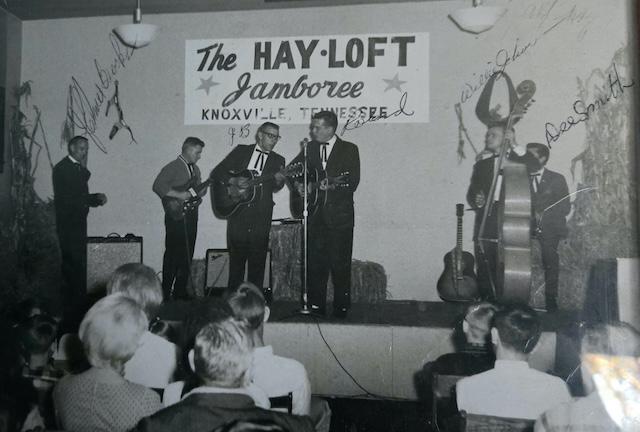
Most of the foundational families of the Appalachian Mountains passed on their histories through storytelling and ballads, which are stories put to music. As Dolly would tell, it’s just what is done. To this day, my family members, no matter the generation, can’t gather without recalling and retelling stories, often at our own expense. Like Dolly, we’re not afraid to laugh at ourselves. And at reunions, music. Our dad, aunts, uncles, and cousins played and sang, and some still clog and flatfoot.
-
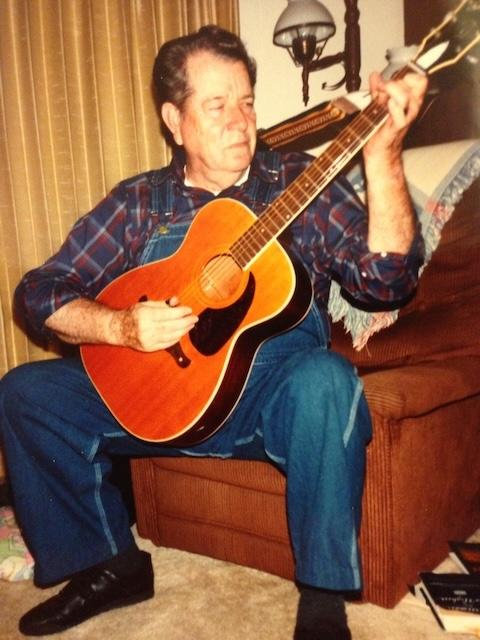
- The author’s father who “played by ear”
-
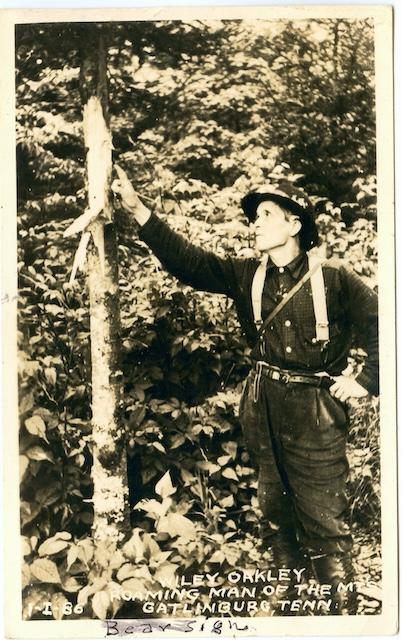
- Wiley Oakley points to a bear’s work.
Same as Dolly’s dad, my dad didn’t get much education in Sevier County back in those days, but my mother was a stickler for proper language. While he said words such as “ort” instead of “ought” and “heared” instead of “heard,” Mother tried her best to instill in us some decent grammar. And a clean vocabulary. She wouldn’t allow me to say “heck” or “dang” or other unladylike words. Well, at least she tried.
What my mother couldn’t do was erase my East Tennessee accent or cadence of speech. I often tell that I’m called “Jan,” but, while it’s only three letters with just one vowel, I evidently can’t say it in just one syllable. An automated phone system once spelled my spoken name back to me as J-A-H-A-N. After repeated attempts to say it correctly, I gave up. The reality of my pronunciation and enunciation, or lack thereof, has hurt me professionally, I’m sure. One student once told me, “You sound country.” Well, that’s because I am.
I can’t fix it. At some point in my adult life, I decided and literally began to declare to others, “I’m just going to be like Dolly Parton and embrace it.” Dolly empowered me.
Dolly showcased her roots (except maybe the ones that weren’t blonde), and she used her mountain storytelling as a part of her writing. I guess that’s what I do here in some small way. Even though I know proper English and all those rules and have more than enough education to write an actual academically acceptable paper, it’s liberating to just be me. Thanks, Dolly. Thank you for your example, your testimony, your joy, your generosity.
Sharing stories is my joy; it’s a part of my fiber. Daddy and my other relatives had no idea that their legacy of storytelling would mean that someday it would help keep people, places, and events from being forgotten in the Fork.
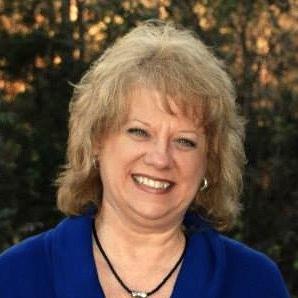
Jan Loveday Dickens is an educator, historian, and author of Forgotten in the Fork, a book about the Knox County lands between the French Broad and Holston Rivers, obtainable by emailing ForgottenInTheFork@gmail.com.
Enjoyed this article? Read more of Jan Loveday Dickens’s stories about the people, places, and history that make the Fork community unique.
Follow KnoxTNToday on Facebook, Instagram, X, and LinkedIn. Get all KnoxTNToday articles in one place with our Free Newsletter. Comments may be sent to news@knoxtntoday.com.

Thank you, Jan.
You brought tears to my eyes remembering “Loveday lore”. And, yes, we spell it correctly, but we say it “Lovedee”
The older I get the more I make sure my speech does not change.
Love you, Guy’s wife
We have much to cherish, Jane! Thanks for chiming in! 🥰