Sometimes I come away with more questions than answers as I read through the 40+ diaries of Dr. Swancey Kennedy (1844-1923), a Knox County physician who served folks between the French Broad and Holston rivers.
As I’ve said before, I believe history wants to be known. No, I’m not even sure myself what I mean by that, but the strangest things happen that some would call “mere coincidence.” Feels more like “providence.” I’ve called it “serendipity,” but it seems deeper and more significant than that. I really don’t know what it is, but it happens to me a lot.
For instance, within a couple of days of a Smith descendant contacting me and asking about his specific ancestors, I came across those exact names in Dr. Kennedy’s 1886 diary. I had never seen the names mentioned before, but there they were; they were just a couple of pages over in the diary from where I had been reading when the Smith gentleman contacted me. Those folks didn’t even live in the area of Dr. Kennedy’s usual rounds, but he had visited them and wrote about it. Explain to me the timing of that phone call. Needless to say, the Smith descendant was as thrilled as I was shocked.

Smiths in the Kennedy diary, 1886
As shown in the entry about the Smiths, as well as several others, Dr. Kennedy was helping area veterans with their pension applications. The Civil War had ended in 1865, but veterans of the Union army were not allowed a pension unless they could prove that a resulting disability kept them from being able to earn a living. However, In the 1880s, the Grand Army of the Republic launched a lobbying campaign to expand pension benefits for Union Civil War Veterans. Eligibility wasn’t expanded until 1890, so the men that Dr. Kennedy was helping with answers to the application questions were evidently wounded during the war. Pleasant T. Smith had served in Companies K and L of the 1st Regiment of Tennessee Cavalry and had applied for a disability pension in 1882.

Partial 1890 Journal and Tribune article
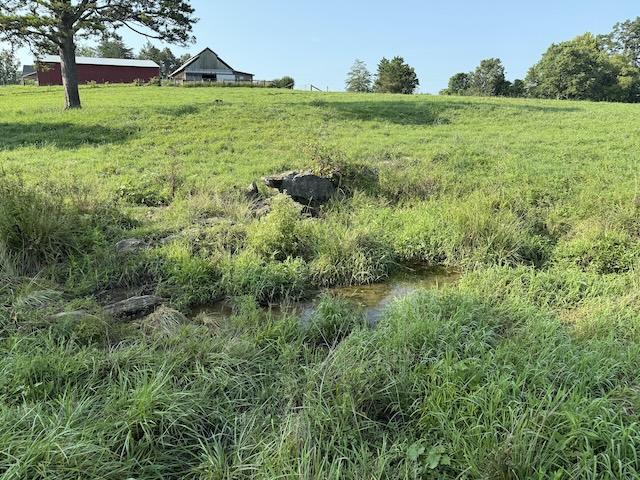
On the other hand, sometimes I can’t find answers. At another time, on his way home from Marion Oglesby’s, Dr. Kennedy “analyzed the water and found plenty of iron in it” at Mrs. Oglesby’s spring. In conversations with Gordon Oglesby, I learned that his mother told him they used to have parties down at his sulfur spring off Piney Grove Road in the Fork, but I still don’t know whether it’s the same one Dr. Kennedy visited. Gordon’s mother had told him they used to have parties at that spring, and remnants of a spring house or some other structure were still there when he first bought the place.
The Knox County map included with this article shows that Oglesby families lived there in 1895, even though Gordon didn’t know when he bought the farm that other Oglesby families had owned it long ago.

Map 1895
Was Dr. Kennedy looking for iron in the spring for medicinal purposes? How did he test it? At the time, some folks might check to see whether a silver coin changed colors when immersed in the waters. Such springs often developed into resorts that were very popular in the 1800s. Sulfur springs were believed to help cure rheumatism, indigestion, and kidney and liver diseases. And iron, of course, found in the waters of popular resorts such as Tate Springs in Grainger County, was bottled and sold as a cure for various ailments. But which Mrs. Oglesby was Dr. Kennedy talking about, and where did she live? Francis Mean (“Marion”) Oglesby (1848-1917) is buried at Union Cemetery, so was Marion living near the spring Gordon Oglesby owns today when Dr. Kennedy visited him?

An Oglesby farm today in the Fork, with the sulphur spring beside the tree on the right
In another entry, Dr. Kennedy took his daughter and another girl “to Mrs.Oglesby’s spring to stay a month.” It was obviously more than just water coming from under a rock. I pray the answer to the spring’s location hasn’t been totally forgotten in the Fork.
Jan Loveday Dickens is an educator, historian, and author of Forgotten in the Fork, a book about the Knox County lands between the French Broad and Holston Rivers, obtainable by emailing ForgottenInTheFork@gmail.com.
Enjoyed this article? Read more of Jan Loveday Dickens’s stories about the people, places, and history that make the Fork community unique.
Follow KnoxTNToday on Facebook, Instagram, X, and LinkedIn. Get all KnoxTNToday articles in one place with our Free Newsletter. Comments may be sent to news@knoxtntoday.com.