If you haven’t been, you should be watching The American Revolution, Ken Burns’ latest magnum opus on PBS. If you need to catch up, all episodes are available online here or on the PBS app on your smart TV. If you are looking for Disney-fied history, you will not get it from Burns. The Revolution and subsequent birth of our nation cannot be distilled into a simpleton binary: our history is complicated and contradictory, it contains multitudes.
There are estimated to be around 4,500 known Revolutionary soldiers buried in Tennessee, the vast majority of whom moved here to secure the land grants they received as payment for their service in the war. My friend and colleague, Jan Loveday Dickens, is currently chronicling those families that made their way into East Knox County.
At the time of the Revolution, East Tennessee was part of North Carolina. There is little history of the war itself (in terms of battles) on this side of the Smoky Mountains, and that was skirmishes with the Cherokee. Allied with Great Britain, they preferred that colonials remained east of the Appalachians as promised by King George III. The primary battle that proto-Tennesseans fought in was King’s Mountain in South Carolina. No one was fighting redcoats at Sycamore Shoals.
I have 10 ancestors that I know of who served during the war. Whether they actually fought in any battles is another story. Several I know were at King’s Mountain. Several were at the Battle of Guilford Courthouse, North Carolina, in March of 1781. While technically a win for Cornwallis (the Patriots retreated), the British Army was so decimated it proved the setup for his surrender at Yorktown seven months later.
One of my 5th great-grandfathers, Matthew Cary Whitaker, was wounded at Guildford. Born in Halifax, N.C., (not far from Roanoke Rapids) in February 1762. At 16, he ran off to join the militia in 1778. I do not know what other battles he may have been in, but do know that it took him so long to recover from his wounds and eventually return to Halifax that his family presumed him dead. At the end of the war, he was still shy of 20 years old.
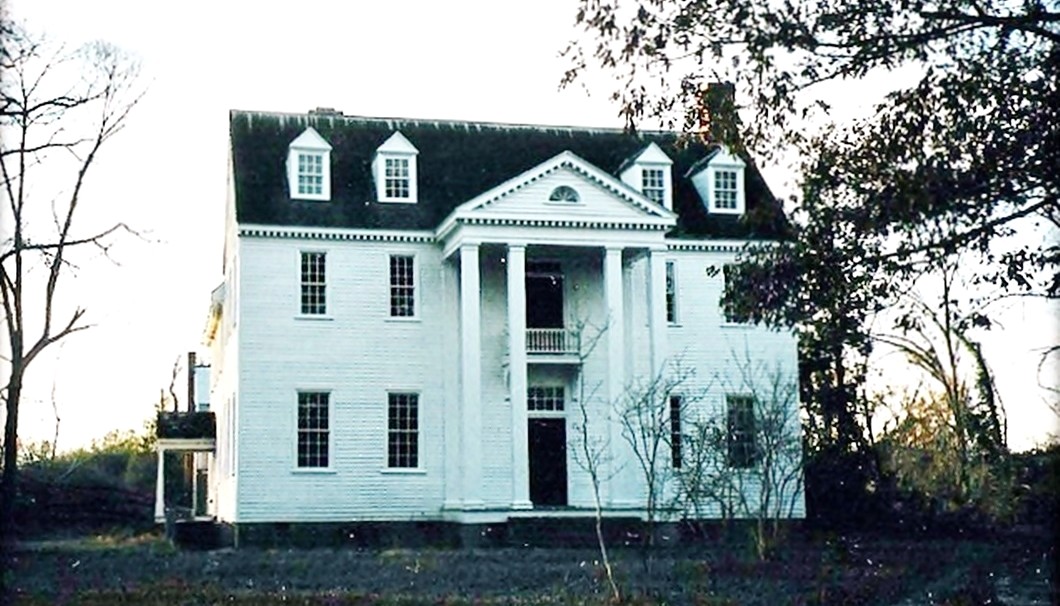
In 1787 he married Elizabeth Ann Coffield, and by 1790 had staked his claim in the wilderness just south of Halifax in Enfield and began construction on his plantation home, known for over 200 years now as the Shell Castle. Matthew was yet another in the long line of men who fought for “freedom” in the Revolution but forged their own on the backs of humans they held in bondage. Because he didn’t build his house. It was the slaves who cut and sawed the trees from his land, burnt the bricks cut from the clay soil, made the lime mortar from oyster shells brought in from Norfolk, Virginia, (hence, Shell Castle), hammered the nails forged in the blacksmith shop that they built, tended the fields of tobacco and gardens of produce and the livestock.

There’s even a coffee table book about the Shell Castle.
Matthew primarily sold his goods in Norfolk. He represented Halifax in the North Carolina House of Commons from 1800 to 1806 and in the Senate from 1807 to 1810, plus one more term in 1812. He lost his eyesight in his later years and died in 1814 at the age of 52. Elizabeth joined him a year later. The location of their graves is unknown, but presumably somewhere on the plantation, that remained in the possession of their descendants until 2008.
Beth Kinnane writes a history feature for KnoxTNToday.com. It’s published each Tuesday and is one of our best-read features.
Sources: Wheeler’s History of North Carolina by John H. Wheeler, Roster of Soldiers and Patriots of the American Revolution Buried in Tennessee by Lucy Womack Bates, The History of Tennessee: From Its Earliest Settlement to the Present Time by William Henry Carpenter
Follow KnoxTNToday on Facebook and Instagram. Get all KnoxTNToday articles in one place with our Free Newsletter

