The 40+ diaries of Dr. Swancey Kennedy (1844-1923), a physician who served folks between the French Broad and Holston rivers in Knox County, are a treasure trove of history. And a springboard for reflection. In previous articles, I told how Dr. Kennedy helped veterans with their pension applications, and I recently realized that it wasn’t just for the Civil War. Evidently, some were for the Mexican-American War (1846-1848).
On January 19, 1887, Dr. Kennedy went to Knoxville “to take Richard Luttrell, Hence Underwood, and Perry Mulvaney’s affidavits in some pension cases of Frank McLemore and Isham Hickman.” Of course, I had to look them up.
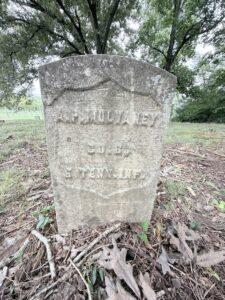
Allen Perry Mulvaney’s Civil War marker
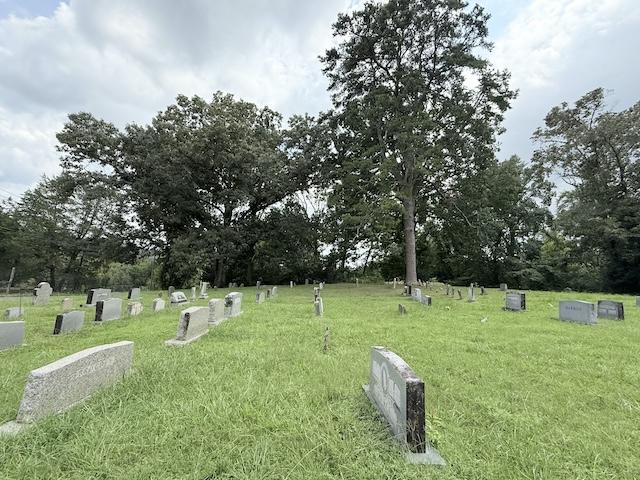
Allen Perry Mulvaney served the Union as a private in Company B of the 6th Tennessee Infantry. His pension was approved in 1896. He lived in the Fork at Riverdale and is buried at the Daily Cemetery off Stoney Point Road. Isham Hickman enlisted in 1861 at Knoxville as a private in the Confederacy. He served under Capt. E.E. Hankins in Company G of the 37th Tennessee Infantry, which had been consolidated in April 1865 from Tennessee’s 7th Regiment of the Provincial Army and its 1st Rifle Regiment. Frank McLemore enlisted as a private at Harrisburg in Company K of the 23rd Regiment of the Arkansas cavalry. He was paroled at Wittsburg, Arkansas, May 25, 1865.
A couple of weeks later, on February 2, Dick Luttrell and Esquire Witt came for dinner, and Dr. Kennedy helped Luttrell apply for an increase in his pension. Richard Luttrell had enlisted at Strawberry Plains as a captain in Company D of the Union’s 13 Regiment of cavalry. Just a few days after that, Dr. Kennedy wrote to Washington about Mrs. M.S. Plumlee’s pension case.
Margaret S. (Alexander) Plumlee (1823-1897) was the widow of John M. Plumlee (1822-1871), who had enlisted in Knoxville in 1846, during the Mexican-American War, and served in the 1st Regiment of the Tennessee Mounted Infantry. His obituary stated that, “Having been sorely afflicted for many years, and thus disabled from hard labor, much of his time was spent in careful study of God’s Word…” His pension file tells that he had received a surgeon’s honorable discharge in 1847 at Tampico because of a disability resulting from war injuries. He died in 1871 at age 49; he and Margaret are buried in the Plumlee Cemetery in the Fork.
In a note at the end of 1886, Dr. Kennedy had written about W.M. Baker, a Civil War veteran who had been in Co. H of the 8th Regiment (organized in Kentucky between late 1862 and mid-1863) and had served under Captain Alex Goddard. His regiment had participated in Burnside’s East Tennessee Campaign and the operations around Knoxville. Baker had enlisted on October 8, 1863, and was discharged August 3, 1865, at Cahaba prison in Alabama. He had been captured September 5, 1865, then paroled. Baker had stated, “Whilst the guards of the prison were counting us, one of the guards stabbed me in the left side and the arm and struck me with the barrel of his gun on the left breast. I was treated by the physician of the prison.” Baker lived in Riverdale and was appointed as a road commissioner in 1888.
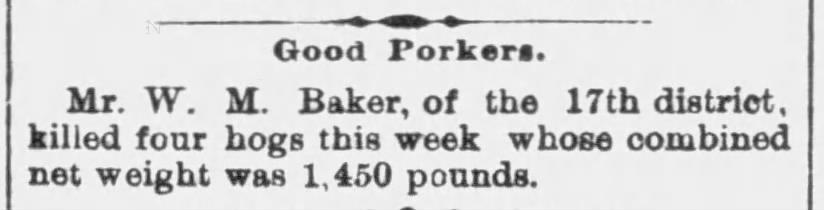
Civil War veteran W.M. Baker’s prize hogs
Perhaps the only readers who care about such details shared here are the descendants of the individuals mentioned. However, as our nation continues to look back at its 250 years, I feel that such vignettes provide insights to the prices paid for our freedoms and, specifically, the sacrifices made by those who have been forgotten in the Fork.
Jan Loveday Dickens is an educator, historian, and author of Forgotten in the Fork, a book about the Knox County lands between the French Broad and Holston Rivers, obtainable by emailing ForgottenInTheFork@gmail.com.
Enjoyed this article? Read more of Jan Loveday Dickens’s stories about the people, places, and history that make the Fork community unique.
Follow KnoxTNToday on Facebook, Instagram, X, and LinkedIn. Get all KnoxTNToday articles in one place with our Free Newsletter. Comments may be sent to news@knoxtntoday.com.