
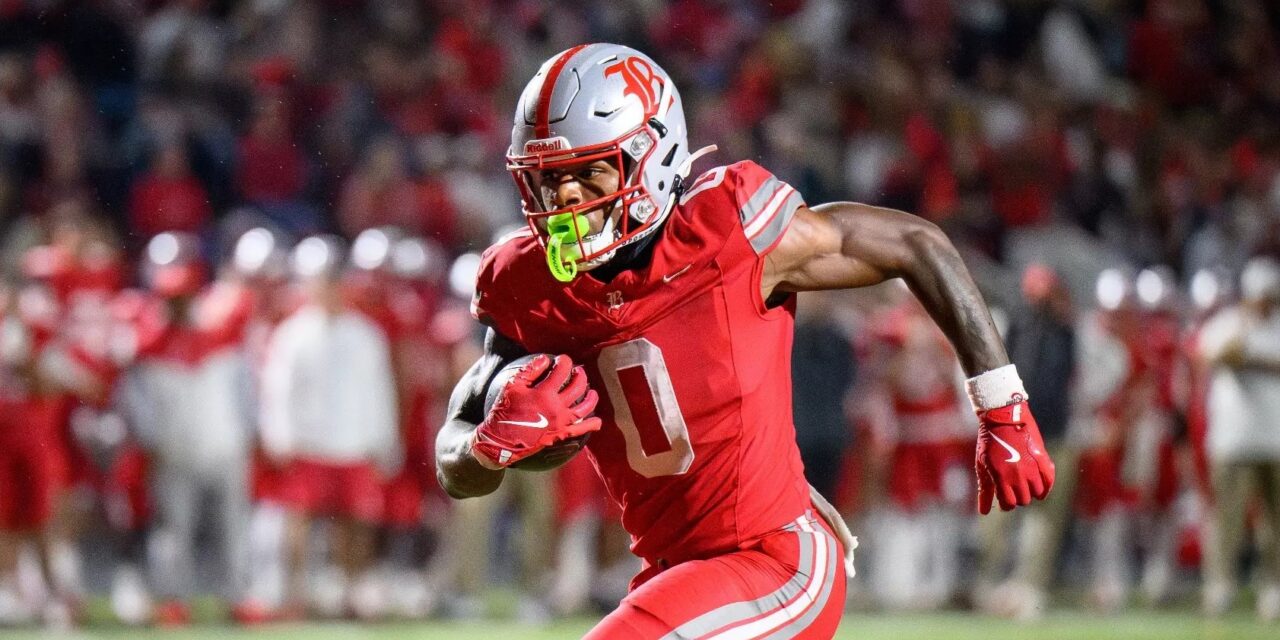
Decision Day is Wednesday. Earth will no doubt stand still as everybody holds their breath while awaiting word on where DGG will play college football (Tennessee or Ohio State, unless he changes his mind before next year).
This recruitment is a really big deal. David Gabriel-Georges is the best running back among the boarding students at Baylor School in Chattanooga. I’ve been told he is the best high school football player in the state of Tennessee. At 5-11 and 210, he is first or second among great young runners in the United States of America.
DGG is actually on loan from Canada. He mostly grew up in Terrebonne, an off-island suburb of Montreal. His parents, from Haiti, and some other relatives live in Quebec. Their languages of choice are Creole and French. They are not dumb-dumbs. They understand football money is printed south of their border.
David is already one of my four favorite Tennessee recruiting stories since the pursuit and roundup of players became a sport of its own. UT rolled out the big show when he officially visited.
NFL star Alvin Kamara just happened to be in town and available for consultation. DGG really likes the former Vol and admires his style as a running back.
One of the visit highlights was paint on the famous campus rock, “We need you” or something like that in French. David’s parents were properly impressed.
DGG complimented Tennessee fans.
“It’s really great to see what they do to make me want to come here. It was nice to see the Rock and they put my name on it and spelled it in French. The people here are really nice.”
Tennessee has experience in recruiting stars. Other top names on my list are Peyton Manning, Richmond Flowers and Condredge Holloway. Heath Shuler is an almost. Nico? Nah. He was just a purchase, a bad buy the hot dog chef was pushing at the deli.
***
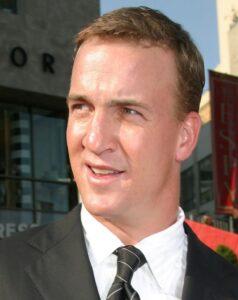
Peyton Manning
Peyton Manning was an Ole Miss legacy. He was an automatic. His father, Archie, was the school’s most famous athlete. Of course, the son would follow dad’s footsteps. How could he do better?
That sensational father and homecoming-queen mother, Olivia, Rebel royalty, made a bewildering decision. They told Peyton his life was his, to choose for himself where he wanted to go and what he wanted to do with his future.
Peyton was courteous to Mississippi coaches. He talked more seriously with Michigan and Florida people. He was intrigued by what Phillip Fulmer and David Cutcliffe were accomplishing at Tennessee.
A Fulmer-Cutcliffe visit at the Manning home in New Orleans became significant. The offensive coordinator and the quarterback were deep into football details. Archie was taking a nap in his favorite chair. Olivia and Fulmer were just chatting.
Keep in mind, I wasn’t there but I have been told that in that lovely living room setting, Olivia suddenly asked if “that Steve Kiner” was still connected to Tennessee?
The great linebacker had been the focal point in a press conference discussion of whether Ole Miss had the horses to win the 1969 SEC championship. Kiner allegedly said some people didn’t know the difference between horses and mules.
Kiner had absolutely nothing to do with the “Archie who?” insults but he was blamed for that, too.
Olivia’s question must have surprised Fulmer but he maintained his poise and softly said “No, he’s been gone for years.”
It was logical if Fulmer thought, in that instant, Tennessee had lost Peyton Manning because of Kiner’s quip about mules.
You must know what happened – 11,201 passing yards, 89 touchdowns and just about every passing record in Volunteer history. Peyton delivered and still does.
***
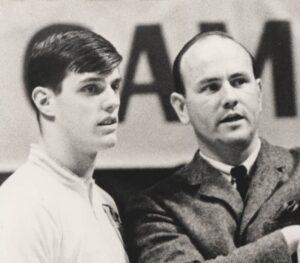
Richmond Flowers and UT track coach Chuck Rohe
Richmond Flowers was legendary before he arrived at Tennessee. As a multi-talented high school senior in Montgomery, Ala., he had the courage to reject Paul (Bear) Bryant, thousands of Alabama disciples and George Wallace, pugnacious governor of the state.
Richmond said no thank you to all that was sacred with the mighty Crimson Tide. He added insult to injured pride by choosing the Volunteers. Doug Dickey’s chief football recruiter, track coach Chuck Rohe, was the winning edge.
Richmond’s father, Flowers Sr., was Alabama’s attorney general. He was sworn to uphold the law, to condemn the Ku Klux Klan and to prosecute violations of civil rights. That was in direct conflict with Gov. Wallace’s declaration, “Segregation now, segregation forever.”
The attorney general lost – for a while. Alabama lost his son.
Young Richmond was a very fast football player. Better still, he had America’s fastest high school high hurdles time. He said, with a devilish, little smile, “I guess I am the fastest white boy in the country.”
He could have gone to any college that had football and track teams. For sure, he was going out of state. He had experienced too much hostility. It has been said that he could beat everybody in athletics but he couldn’t outrun hatred.
Rohe said getting Flowers for Tennessee was his greatest recruiting achievement. What Richmond and the UT track program could do for each other was decisive.
There are dozens of Richmond Flowers stories as a Volunteer. He scored the touchdown in the 10-9 triumph over the Tide in 1968.
The Flowers tale I like best is about two wins in three races against a quarter horse in a three-day summer rodeo at Tellico Plains.
Vol quarterback Dewey Warren was the promoter and banker. He covered all bets. Richmond was paid $50 per race. The Swamp Rat got away with a big bag full. He might not have gotten away if Richmond had lost that third race.
***
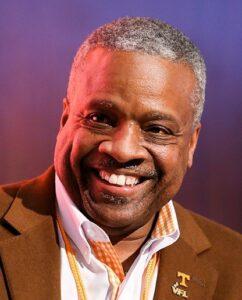
Condredge Holloway
If Condredge Holloway had been six inches taller and had a cape, his nickname could have been Superman. As he was, 5-10 and 175, he was Peanut and the Artful Dodger.
John Wooden thought basketball was Condredge’s best game. The old coach wanted him as a UCLA point guard.
The Montreal Expos thought Holloway was, for sure, a major league shortstop. A team representative spread out the bonus money for his mother and him to see.
Condredge specialized as a football quarterback because Dorothy wanted her son to go to college. Of course, Alabama and Auburn wanted him. He was from Huntsville, Alabama.
Both lost out because of racial issues. Coaches admitted, alas, that the state and their teams were not ready for a black quarterback. He’d have to be a wide receiver or defensive back.
Tennessee won because Coach Bill Battle said Condredge could be what he was, the best young quarterback available to the Volunteers.
Line coach Ray Trail was the day-by-day recruiter. Trail was a cowboy at heart, what you saw was what you got, no make-believe, no smoke and mirrors.
Condredge had complete faith that Trail would tell him the truth.
“Will Coach Battle keep his word?”
Ray Trail said: “Bill Battle’s word is good as gold.”
Condredge became the most exciting quarterback I’ve seen at Tennessee. I’ve seen more than a few.
Marvin West welcomes comments or questions from readers. His address is marvinwest75@gmail.com
Photos of Manning, Flowers and Holloway courtesy of UT sports information.



“You must know what happened…” (after the Kiner alleged remark, originally reported in the SEC Skywriters Tour that summer).
Yessir, we do. Tennessee fans wore their “Archie Who?” buttons down to Jackson, Miss. And the headline in the next morning’s Tennessean: “OLE MISS ‘MULES’ KICK VOLS” 38-0.
(7 points more than the the Vols had kicked Ole Miss the previous year) I could post a screenshot of the page but I don’t think this platform enables that.
Richmond Flowers was a childhood hero of mine.
And I was fortunate to attend Condredge Holloway Day at his high school alma mater in Huntsville after his final season as a player at UT.
Thanks for the memories, Sir.
Gawd I loved reading this, one of my favorite in a long line of great articles. Thank you again Marv! https://www.icollector.com/Sports-Illustrated-Magazine-1966-Richmond-Flowers-Issue_i55054521. We got 2 out of your top 3 because of bigotry! The other was most likely because of a gentleman detailing to Olivia how his big ole linemen would protect her son. I’d like to hear more about the defense stars from those ferocious Vols in the Wantland, Walker, Kiner, etc. years when you’ve got the time. I think we’re going to be in for quite a treat on both sides of the ball that will take most by surprise. I’m even more optimistic than usual. By a lot! Can’t wait.