
As NASA prepares for Artemis II, retired Navy Capt. and former astronaut Barry Wilmore says the mission matters because the region between Earth and the moon is becoming strategically important.
“History has shown the necessity and vital importance to national security of dominating all airspace up to and including low-Earth orbit,” Wilmore said in response to questions this week. “As we continue to reach further, that dominance must extend cislunar all the way to the lunar surface.”
For East Tennessee, where federal science and national security research already shape much of the region’s identity through institutions such as Oak Ridge National Laboratory, that argument places Artemis in a context beyond exploration.
Cislunar space refers to the region between Earth and the moon, an area increasingly discussed by both NASA planners and defense analysts as nations prepare for longer operations beyond Earth orbit.
Wilmore’s comments reflect how lunar missions have evolved since the Apollo program era, when moon travel was largely framed through scientific achievement and national prestige.
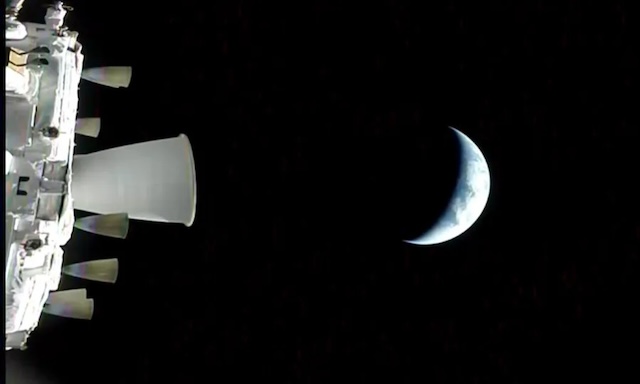
Artemis II is designed as a crewed lunar-orbit mission, sending astronauts around the moon and back while NASA tests systems needed for later surface missions.
“History will show in the future the importance of leading the way in this vital region in our Earth-moon system,” Wilmore said.
Wilmore, a former Navy test pilot, framed Artemis less as spectacle than as deliberate national positioning.
If Artemis succeeds, the mission may eventually be remembered not only as a return to lunar orbit, but as an early decision about whether the United States intended to lead there.
Det. Brandon Burley (Ret.), M.P.A., is a freelance writer for KnoxTNToday.
Follow Detective Burley on Facebook.
Follow KnoxTNToday on Facebook and Instagram. Get all KnoxTNToday articles in one place with our Free Newsletter.