
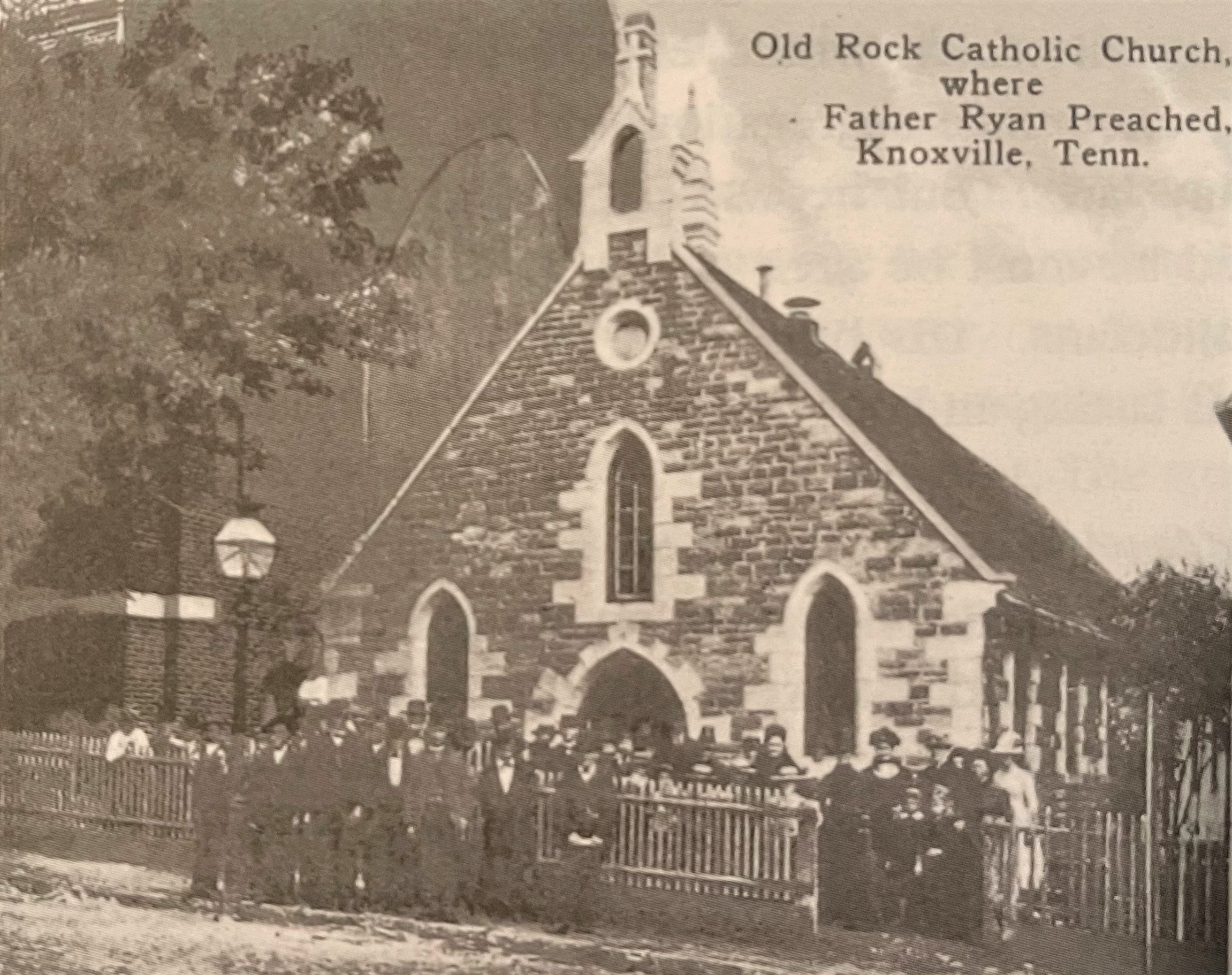
William Gannaway Brownlow was an equal opportunity hater. He was the founder of The Knoxville Whig (which evolved into The Knoxville Journal), the first Republican governor of Tennessee in the Reconstruction era, and a former circuit riding preacher and breather of hellfire at anyone who wasn’t a Methodist. While his beliefs on various issues evolved over time, there are two areas where “The Fighting Parson” remained consistent: he was never a secessionist, and he despised immigrants of every stripe.
In the decade prior to the Civil War, Brownlow advocated for the “Know-Nothing” American Party, a movement that didn’t outline much that it was for, but had a clear-eyed vision over what it was against: immigrants and Catholics. So, frequently drawn into his crosshairs was Knoxville’s growing population of newly arrived Irish post 1850. And most of those Irish were Catholic. Double whammy. And while Brownlow detested every denomination other than his own, there was none that ranked higher than his hatred of Catholicism. He referred to the practice of the faith as “Romanism,” a common 19th century slur against Catholics that ranks right alongside “papist.”
All of which is ridiculous when you consider his wife, Eliza Ann, was an O’Brien. While he excoriated his Irish neighbors in his newspaper, he pulled up just short of calling for them to be run out of town on a rail. Probably because the grunt work construction of the East Tennessee & Georgia and East Tennessee & Virginia railroads (which later consolidated and eventually became Southern) through Knoxville was largely in the hands of those Irish immigrants.
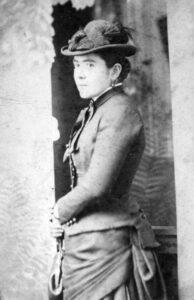
Kate Sullivan Brennan, a seamstress and Beth Kinnane’s great great grandmother, circa 1870s (Photo: Knox County Two Centuries Project- C.M. McClung Collection)
Though my roots in East Tennessee go back to when we were still North Carolina, my first ancestors in Knoxville were among those Irish immigrants on the wrong end of Brownlow’s editorials (see story here). The city’s first St. Patrick’s Day parade was held in 1869, and remained in practice for many years before falling off the calendar in the early 20th century.
A century ago, there was no parade, and not much mention of it in the newspapers. The calendar in 1925 matches this year: St. Patrick’s Day was on Tuesday. While there wasn’t a parade, there was a Knights of Columbus St. Patrick’s Day dinner, held in the auditorium of City Hall, which by that time was in the former home of the Tennessee School for the Deaf and the current home of the Lincoln Memorial’s Duncan School of Law. The theme for that dinner was social and religious tolerance. The speakers were city manager Louis Brownlow (no known relation to the parson), Rev. Louis Kemphues of Holy Ghost, Rev. Ritchie Ware of Fifth Avenue Christian Church, and Rev. Francis Grady of the Church of the Immaculate Conception.
Grady said that he had no doubt that St. Patrick envisioned a world where Catholics and Protestants would engage in “joint celebrations of the love and loyalty which he had engendered into the hearts of the Irish.” Brownlow made a plea for prejudice to be superseded by facts. Indeed.
Sláinte. Erin go bragh. Happy St. Patrick’s Day.
Beth Kinnane writes a history feature for KnoxTNToday.com. It’s published each Tuesday and is one of our best-read features.
Sources: The Knoxville Journal digital archives, The Tennessee Encyclopedia, The New York Times
Follow KnoxTNToday on Facebook and Instagram. Get all KnoxTNToday articles in one place with our Free Newsletter




Dear Beth,
As as child in Morristown we were members of Panther Springs United Methodist Church on Panther Springs Road. That church burned but the congregation had already moved to another location. When entering the front doors of the church there was a large window with Brownlou’s full name, stating he was a governor and more which I do not remember. There were two doors into the church so one on either side of the large stained glass window which covered the entire area. Very little was ever said except I did know that he had ideas that were not good.
Sincerely,
Janice Spoone