
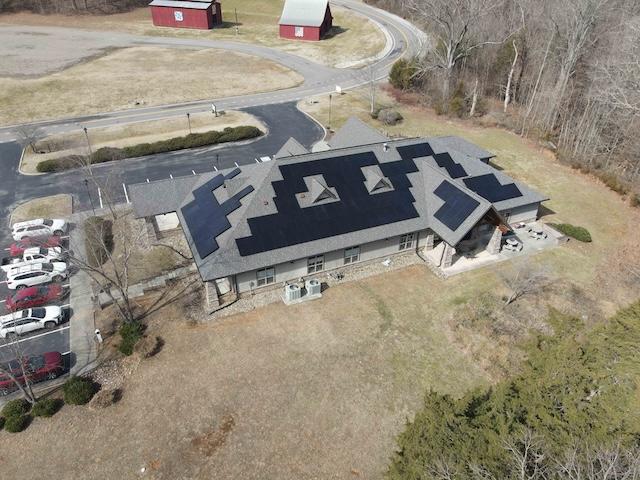
Episcopal church leaders are closer than ever to their goal of carbon neutrality by 2030 because of new technology installed at headquarters in Knoxville and the resulting program to help smaller churches save energy.
“It is a joy to learn that the solar panel system will both reduce our energy use at Diocesan House and allow us to pass our savings on to small churches in East Tennessee,” said Bishop Brian Cole. “Every dollar saved through energy efficiency can then be redirected to direct ministry and mission in our communities.”
Renewable energy is now running most day-to-day operations at the Episcopal Diocesan House in Knoxville, with a state-of-the-art battery energy storage system providing backup for critical loads during a grid power outage. This solar photovoltaic system, as well as other energy efficiency efforts, creates significant new monthly savings on electric bills. The organization intends to use these savings to help small Episcopal churches in the area with energy efficiency projects of their own.
On Friday, February 20, at 1 p.m., the Carbon Neutral Task Force, led by church volunteer Courtney Shea, plans to hold an energy-efficiency demonstration at the headquarters. Energy Home Basics will conduct a blower door test to show how the building envelope can be improved to achieve energy savings. Solar Alliance Southeast will also show how the new solar PV and BESS system works to offset grid electricity use and add resilience.
“This is a great example of how energy storage pairs well with solar production for an office, church, or other mid-sized commercial setting,” said General Manager Jon Hamilton of Solar Alliance Southeast. “The benefits go beyond lowering electric bills, to the resilience of being able to store clean power on site for use in a backup power situation.”
Here is a look at the new energy system by the numbers:
- 46.76 kilowatts (KW) solar PV rooftop system
- 60 kilowatt-hour (kWh) battery energy storage system (BESS)
- Produce approximately 58,400 kilowatt-hour (kWh) of clean electricity each year
- Offset an estimated 46.7 metric tons of carbon dioxide equivalent annually
This is equivalent to preventing annual emissions from:
- 118,808 miles driven by gas vehicle
- 5,250 gallons of gasoline consumed
- 51,825 pounds of coal burned
- 3,172,110 smartphones charged
The Diocesan House is located at 814 Episcopal School Way in Knoxville. To RSVP for the February 20 event or for more information, contact Brother Andrew Aelred Morehead, OC at amorehead@dioet.org or 865-966-2110.
Anne Brock is Marketing Coordinator for Solar Alliance, which designs commercial solar installation projects. She can be reached at abrock@solaralliance.com or 865-221-8349.