Children are growing up in a world filled with different cultures, languages, traditions, beliefs and family experiences. Their classmates may celebrate different holidays, eat different foods, speak different languages at home or have abilities and challenges unlike their own.
These differences offer an important opportunity: teaching children that understanding someone does not require being exactly like them.
Acceptance begins with curiosity, grows through kindness and becomes meaningful when children learn to see beyond differences to recognize what they share.
Books can help make that lesson come alive.
Books that open doors to understanding
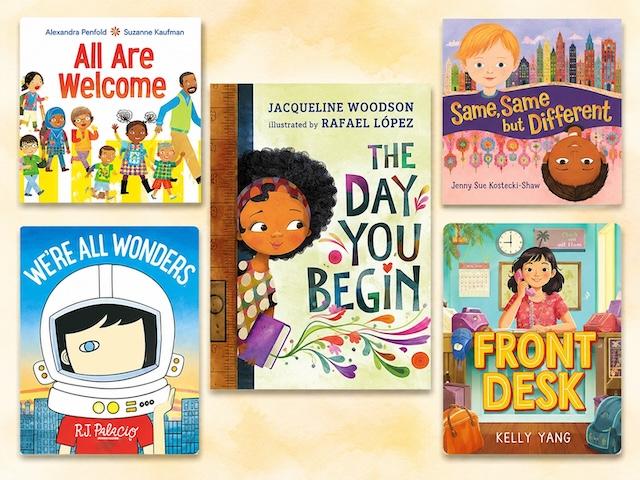
The Day You Begin by Jacqueline Woodson (Ages 5–8)
Every child has experienced a moment of feeling different or left out. Woodson’s beautifully written story reminds young readers that sharing their own experiences, even when those experiences are unlike anyone else’s, can create unexpected friendships.
Conversation starter: Have you ever felt like you didn’t belong? What helped you feel included?
All Are Welcome by Alexandra Penfold (Ages 4–8)
A school becomes a welcoming community where children from many backgrounds learn, play and grow together. The colorful illustrations celebrate differences in culture, clothing, traditions and family life while emphasizing that everyone deserves a place to belong.
Conversation starter: What could you do if a new student joined your class and didn’t know anyone?
We’re All Wonders by R.J. Palacio (Ages 4–8)
Inspired by the bestselling novel Wonder, this picture book introduces younger children to Auggie, a boy whose face looks different from those around him. His story encourages readers to consider how their words, actions and attitudes affect others.
Conversation starter: Why is it important to get to know someone before making judgments about them?
Same, Same but Different by Jenny Sue Kostecki-Shaw (Ages 4–8)
Two boys, one in America and one in India, become pen pals and discover that their homes, schools and daily routines may look different, but their interests and feelings have much in common. Their friendship demonstrates how curiosity can build bridges across cultures.
Conversation starter: What might you learn from a friend who lives in another country?
Front Desk by Kelly Yang (Ages 8–12)
Mia Tang helps her immigrant parents manage a motel while navigating school, friendships, prejudice and financial struggles. This engaging novel introduces older readers to the challenges some families face and the courage required to stand up for others.
Conversation starter: How can we help someone who is being treated unfairly?
Beyond the bookshelf: Turning understanding into action
Reading about differences is a beginning, but children also need opportunities to practice acceptance in everyday life.
Parents, grandparents and teachers can encourage that growth by helping children:
- Ask respectful questions. Curiosity is natural. Teach children to ask thoughtfully rather than make assumptions.
- Look for common ground. Two children may have different traditions or backgrounds but share a love of sports, animals, art or music.
- Include others. Invite the child sitting alone to join a game or conversation.
- Recognize unfairness. Help children understand why teasing, exclusion and stereotypes can hurt.
- Listen before judging. Everyone has a story, and we rarely know the whole story from appearances.
Perhaps the most important lesson is that acceptance does not mean everyone must think alike, believe alike or abandon personal traditions. It means recognizing the dignity of others and treating them with kindness and respect, even when differences remain.
A lesson for our own community
East Tennessee has its own rich traditions, but our communities also include families whose stories began in different states, countries and cultures. Children encounter that diversity in classrooms, neighborhoods, churches, libraries and on athletic fields.
Those everyday encounters can become opportunities for friendship rather than division.
Imagine the child who invites a classmate with limited English into a playground game. Or the student who sits beside someone who looks different, learns differently or simply hasn’t found a friend.
Small gestures can make an enormous difference.
When children learn to appreciate what makes each person unique while recognizing the humanity they share, they develop skills that will serve them throughout life.
And sometimes, that understanding begins with something as simple as opening a book together.
Young Readers’ Shelf takeaway: We don’t have to be the same to be friends. We just have to be willing to understand, respect and care about one another.
Follow KnoxTNToday on Facebook, Instagram, X, LinkedIn and TikTok.
Get all KnoxTNToday articles in one place with our free newsletter. Comments may be sent to news@knoxtntoday.com.