
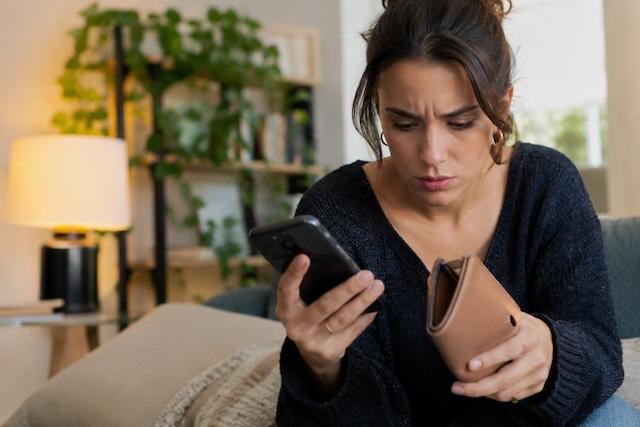
Whether your debit card is lost, stolen or simply misplaced, the first few minutes matter. Knowing what to do can help protect your money and prevent a stressful situation from becoming a financial emergency.
You reach for your debit card at the grocery store, gas station or restaurant, and it isn’t there.
You check your wallet again. Then your purse, pockets and car. Still nothing.
Was it left at the last store? Did it fall out somewhere? Or has someone stolen it?
Before panic takes over, remember that the most important thing is to act quickly, even if you aren’t sure the card has been stolen.
A missing debit card is different from a missing credit card because debit card transactions can directly affect money in your checking account. Fortunately, a few immediate steps can help protect your finances.
- Lock your card immediately
Many banks offer the ability to temporarily lock or freeze a debit card through their mobile banking app.
If your bank provides this feature, use it as soon as you notice the card is missing.
A temporary lock can help prevent new transactions while you search for the card. However, some previously authorized or recurring transactions may still process.
If you find the card in your coat pocket or between the seats of your car, you may be able to unlock it through the app.
If you believe the card was stolen or its information has been compromised, report it to your bank rather than relying on a temporary lock.
- Check your recent transactions
Open your banking app or online account and review recent activity.
Look for purchases you don’t recognize, including small charges. Fraudsters sometimes test stolen card information with inexpensive transactions before attempting larger purchases.
If you notice suspicious activity, contact your bank immediately.
Do not assume a small, unauthorized transaction is harmless.
- Report the missing card to your bank
Even if you don’t see unauthorized charges, notify your bank promptly if the card cannot be located.
Use the official banking app, website or telephone number provided by your financial institution. Avoid clicking unfamiliar links in text messages claiming to be from your bank.
Your bank can explain whether the card should be canceled, whether a replacement is needed and what steps should be taken to protect your account.
Do not wait several days hoping the card will turn up. Prompt reporting can make a significant difference in limiting potential financial losses.
- Know your protection under federal law
Federal consumer protections generally limit liability for unauthorized debit card transactions, but how quickly you report the problem matters.
For a lost or stolen debit card, the general rules are:
- Within two business days: Your liability is generally limited to $50 if you notify your bank within two business days after learning of the loss or theft
- After two business days: Your potential liability can increase to $500 if you delay reporting.
- After 60 days: If unauthorized transactions appear on a statement and you fail to report them within 60 days after the statement is sent, you could face additional losses for transactions occurring after that period.
These limits are subject to the circumstances and applicable exceptions. If your card number was stolen but the physical card was not lost, different protections may apply.
Some financial institutions provide additional protections beyond federal requirements.
The safest approach is simple: report suspicious activity immediately.
- Request a replacement card
If the card is permanently lost, stolen or compromised, your bank can generally cancel it and issue a replacement.
Ask whether a digital replacement can be added to your mobile wallet while you wait for the physical card.
Remember that a replacement card may have a different number, expiration date or security code. You may need to update payment information for subscriptions, utility bills and other recurring charges.
- Continue watching your account
Finding no suspicious transactions today does not necessarily mean your account is safe.
Monitor your checking account over the next several days and weeks. Consider activating transaction alerts that notify you when purchases or withdrawals occur.
If unauthorized activity appears, report it promptly and follow your bank’s instructions for disputing the transactions.
Keep a record of when you reported the missing card, whom you spoke with, and any confirmation or case numbers provided.
What if you find the card later?
If you temporarily locked your card and have not reported it stolen or compromised, your bank may allow you to unlock it.
However, if the card has already been canceled, do not attempt to use it again. Destroy it securely and begin using the replacement.
If you find the card in a public place after it has been out of your possession, ask your bank whether replacement is the safer option.
One precaution that can save time
You don’t have to wait until a card goes missing to prepare.
Take a few minutes today to locate your bank’s official lost-or-stolen-card reporting instructions. Make sure you know how to access your mobile banking app and whether it offers card-locking and transaction-alert features.
Never keep your debit card’s PIN written on the card or stored with it.
And remember that legitimate financial institutions will not ask you to disclose your PIN or one-time security code to someone who unexpectedly contacts you.
A missing card doesn’t have to become a financial disaster
Losing a debit card is inconvenient, but knowing what to do can make the experience far less stressful.
Lock the card. Check your account. Contact your bank. Monitor for suspicious activity.
Those four actions are worth remembering and sharing with family members, particularly young adults managing their first checking accounts and older relatives who may be less familiar with mobile banking tools.
First Horizon encourages customers to remain alert to financial fraud and take advantage of available account security resources.
For information about banking services and security resources, visit https://www.firsthorizon.com/.
This article provides general consumer education. Contact your financial institution for instructions specific to your account.
Take a puzzle break! Play WordRow, Sudoku or Crosswords today! Choose your favorite puzzle in the site navigation.
Follow KnoxTNToday on Facebook, Instagram, X, LinkedIn, and TikTok. Get all KnoxTNToday articles in one place with our free newsletter. Comments may be sent to news@knoxtntoday.com.