
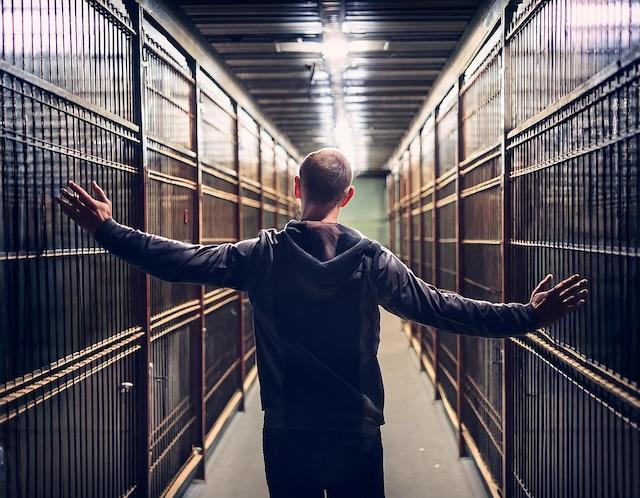
Most people in Knoxville never see the moment someone steps out of jail with a plastic bag of belongings, a court date, and a vague plan to somehow “start over.” They don’t see what happens the day after the headlines fade, the morning after a release, or the long stretch of weeks when someone is trying to rebuild a life with almost nothing in place.
And that is a problem — because the gap between what the public imagines and what actually happens after incarceration is enormous. It’s also where Knoxville has more power than we realize.
When I wrote last week about the programs quietly rebuilding lives in our city, I heard from people across Knoxville: church volunteers, nonprofit directors, social workers, family members of people in recovery, and even men who had been incarcerated themselves. Most of them said some version of the same thing: “People really don’t understand what reentry looks like.”
They’re right — and understanding that reality is the first step toward improving it.
The first 48 hours matter more than people know.
During my years as a detective, I watched countless men and women walk out of custody with almost no structure. Many returned home to unstable environments, strained relationships, untreated addiction, or no real plan at all. It was not unusual to see the same faces again within days or weeks.
The public often assumes reentry is a single moment — you leave jail, and your life picks up where it left off. But reentry is actually a series of high-pressure decisions stacked one after another:
- Where do I sleep tonight?
- How do I get a job without reliable transportation?
- Who will hire me with this charge?
- How do I get my medication?
- Do I have a safe place to stay sober?
- How do I rebuild trust with my family?
If there’s no support system, no structure, and no mentors, the weight of those questions can crush progress before it begins.
Knoxville’s ministries and nonprofits step into those questions every day, filling the void with something the justice system rarely has the capacity to provide: long-term, relationship-centered support.
The public does not see the work behind the scenes.
What the public doesn’t see is the daily mentorship, accountability, counseling, Bible studies, recovery meetings, job searches, transportation help, medical support, and constant encouragement it takes to turn a life around.
- They don’t see the volunteers who spend their evenings teaching classes.
- They don’t see the churches providing meals or clothing.
- They don’t see the mentors answering phone calls at midnight.
- They don’t see the men in recovery checking in on each other every single morning.
This work rarely makes the news, but it’s the difference between someone simply getting out and someone actually moving forward.
Knoxville’s strength is its collaboration.
One thing I have learned while meeting with local ministries and speaking with men in recovery is that Knoxville is at its best when it works as a network, not as isolated groups. You have programs addressing addiction, organizations focused on housing, ministries helping with employment, and churches offering discipleship and community.
Individually, these groups make progress.
Together, they change trajectories.
The public rarely sees how coordinated this ecosystem actually is — or how much time leaders spend working behind the scenes to keep men and women anchored when the pressures of life start pulling them back toward old patterns.
We are not powerless.
People sometimes talk about recidivism as if it’s inevitable — a cycle that can’t be broken. But the men I have met in recent weeks tell a very different story.
They talk about mentors who refused to give up on them.
They talk about programs that believed in their potential before they did.
They talk about structure, accountability, and faith becoming life rafts when everything else felt unstable.
And they talk about Knoxville — this city — as a place where they finally had room to breathe and grow.
Redemption does not start in a courtroom. It starts with people who are willing to stand in the gap.
The part we do not see — But need to.
Every success story in Knoxville represents dozens of unseen moments of struggle, discipline, prayer, patience, frustration, recommitment, and grace.
Life after jail is not easy. But Knoxville has built something that many cities haven’t: a community that believes people can change, and is willing to do the work alongside them.
If we want safer neighborhoods, stronger families, and a healthier city, we do it by supporting the places where hope is being lived out — often quietly, but with enormous impact.
There is more good happening here than people realize.
And it’s time we paid attention to that too.
Det. Brandon Burley (Ret.), M.P.A., is a criminal justice educator whose academic work focuses on reducing recidivism through public policy. He has authored several criminal justice books and has been published in national law enforcement publications.
Follow Detective Burley on Facebook.
Follow KnoxTNToday on Facebook and Instagram. Get all KnoxTNToday articles in one place with our Free Newsletter.


Very educational. Directions needed regarding recruiting volunteers.
Hey Joyce! Depending on where you interests are for volunteering, there is a lot of options. There is a womens only ministry that is in both downtown and near Emory Road. They are called FOCUS ministries and they help both in the jails by ministering to women as well as they have a halfway house where they help the women after incarceration. If you are interested here is a link to their volunteering site: https://www.focustn.org/volunteer
If you have additional questions, or you want some other options for volunteering, use the link in the article and you can send me a message. Thank you for your interest.
What an informative article. Thank you.