
The human body has amazed me with how all its systems are interconnected. This was pointed out very well in a recent study from Germany, which looked at MRI images of the heart in patients with visceral obesity (beer belly) versus patients with generalized obesity.
But first, a little lesson in cardiology. MRI of the heart shows how thick the heart muscle is and the size of the heart chambers (the top chambers, called atria, and the bottom chambers, called ventricles). The primary purpose of the ventricles is to pump blood out of the heart. The ventricle size is measured both while blood is flowing in and after the blood has been pumped out. In what is known as “concentric hypertrophy,” the ventricular muscle thickens, resulting in less blood entering and therefore less blood leaving. In other words, the heart doesn’t supply the body very well. The result of this is heart failure and narrowing of the arteries supplying the heart, scarring of the heart muscle, and increased risk of heart rhythm irregularities, which can result in sudden cardiac death.
Back to the story. The measurement tool to define “beer belly” is the waist-to-hip ratio, i.e., the ratio of the measurement of the waist to the measurement of the butt. Beer belly obesity is defined in women as a ratio greater than 0.85 and in men as greater than 0.9. The study mentioned above found that simply measuring this ratio showed visceral obesity predicted an abnormal heart in 80% of the patients.
In other words, just having a beer belly predicts heart disease 80% of the time. Strangely enough, having generalized obesity with a “normal” waist-to-hip ratio predicted heart disease only 20% of the time. It is unknown if this is an association of facts or a true cause-and-effect.
To put it all together, obesity is not healthy. However, “beer belly” obesity is even worse. The moral of the story, get your weight down or get familiar with your doctors. Pleural used here as you will be seeing more than one!
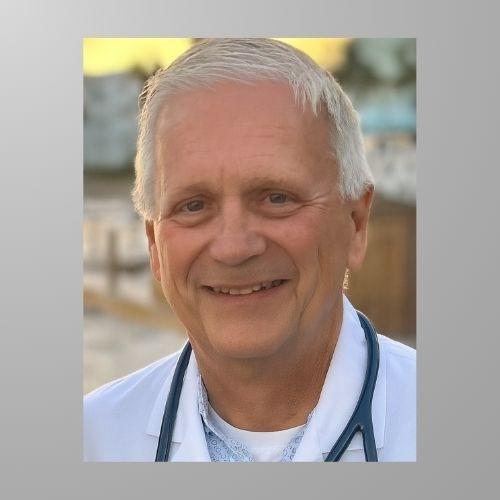
Dr. Charlie Barnett is a contributor to KnoxTNToday, where he writes a weekly column, DocTalk, sharing his expertise on health and wellness management.
Follow KnoxTNToday on Facebook and Instagram. Get all KnoxTNToday articles in one place with our Free Newsletter.

