
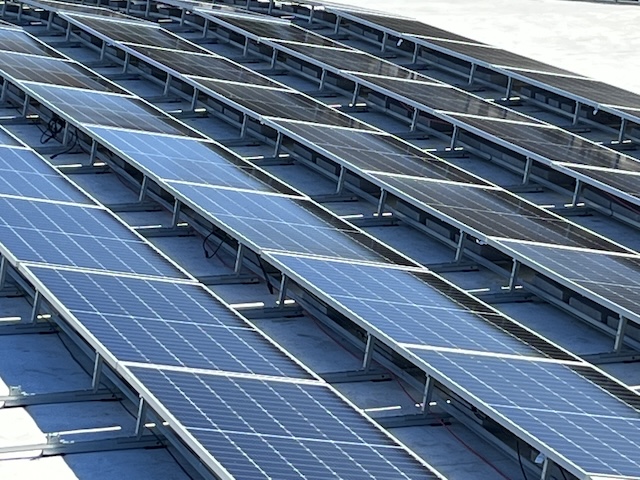
Business owners still have time to take advantage of clean energy tax incentives, even with the shifting sands of last year’s public policies. While residential tax incentives for the lowest-cost solar energy expired at the end of 2025, businesses still have this opportunity. They simply have more details to sort through with their accountants.
Eyeing July 4th: Why are so many businesses eyeing July 4th this year? That’s because independence from rising utility bill costs could hinge on starting construction of solar or solar+storage projects by this date. If so, the project has four years to complete and still qualify for at least a 30% tax credit under the Inflation Reduction Act. Alternatively, if the renewable energy project does not begin by July 4, 2026, it must “enter service,” being completed and commissioned, by the end of 2027 to still qualify for the tax credits. Safe harbor rules are more stringent for larger projects. There have always been potential bonus credits for projects in economically challenged areas.
Why Made in America weighs more heavily: Starting in 2026, the requirements are more stringent for using components that are made domestically. The reality is that not all commercial-grade components have been manufactured and competitively priced from factories on US soil, though there has been an industry effort to improve that. Even now, around half of the components for a solar project can still be made overseas (now labeled from a Foreign Entity of Concern such as China), because even the federal government realizes this is still the most accessible way to get a project completed and add some energy independence with solar.
Resources:
- Solar Energy Industries Association on Safe Harbor
- Solar Power World on Physical Work Test
- Internal Revenue Service Guidance
Anne Brock-Rankin is Marketing Coordinator for Solar Alliance, a renewable energy company based in Knoxville. She can be reached at abrock@solaralliance.com.
Follow KnoxTNToday on Facebook and Instagram. Get all KnoxTNToday articles in one place with our Free Newsletter.

