Back to Dr. Swancey Kennedy (1844-1923) and his diary of 1888, when, even then, politicians were the focus in the Fork, the lands between the French Broad and Holston rivers in Knox County.
I’m waiting for the yard signs to disappear. It’s not that I don’t care about who cares about our government. I’d just rather enjoy the beauty of our autumn trees without the campaign signs that also color the ground. Election day has come and gone, and now those should, too.
In Dr. Kennedy’s day, if you wanted to know anything about the candidates, you had to pick up a newspaper and read about them or go to a church or school or store to hear them speak. Or maybe your neighbor would attend one and then meet you at the fence row and tell you about it. You didn’t have to see and listen to them every other minute during a favorite tv show.
When I read Dr. Kennedy’s entry about going to hear “the silver-tongued orator,” I had to know more. Evidently, a good moniker or slogan is effective even more than 100 years later.
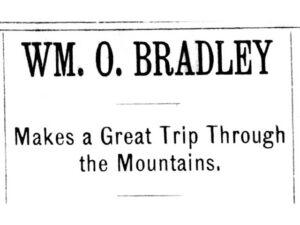
Lexington Herald-Leader news header, 1889
William O’Connor Bradley (1847-1914), one of many politicians called by that same nickname over the decades, was an attorney-turned-politician who would eventually serve as governor (1895-99), and later as senator (1909-14), in the state of Kentucky. At the age of 14, he had run away twice to join the Union Army during the Civil War, but because of his young age, he was returned home by his father, who was a prominent criminal defense attorney.
Bradley had been privately educated and tutored while studying under his father, so he was able to pass the bar exam at the age of 18, with special permission from the Kentucky legislature, without ever attending college. He joined his father’s firm but soon climbed the rungs of the political ladder and used his fighting spirit to address corruption and the concerns of the populace.
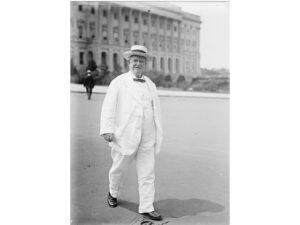
William O. Bradley, 1913
At the age of 40, he ran for governor against a former Confederate general, and though Bradley lost, he made a lasting impression. In 1888 when Dr. Kennedy heard him speak, Bradley was running for a Senate seat and evidently also supported candidates of his party in Tennessee. Even though he lost that race, too, his opponent recommended him to be an ambassador to Korea, but he turned it down. Bradley upset the status quo by complaining about excessive spending and questioning the books of the Kentucky state treasury, which led to a revealing audit that spurred the treasurer, “Honest Dick Tate,” to abscond with $250,000 of state funds and disappear forever. Obviously, sometimes a moniker is misleading.
During his political career, Bradley was known as a civil rights advocate who demanded that officials prosecute perpetrators of racial violence. As governor, he also ordered an end to the tollgate violence. Though his political terms of service were rife with conflict over his controversial stance against the current norms, he initiated a lot of progress and reform. He used his “matchless voice” to articulate his position on lots of important issues and was considered “one of the finest stump speakers.”
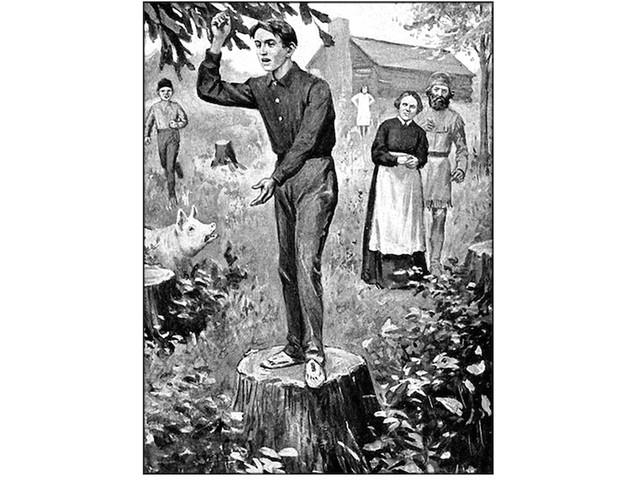
I wonder whether William O. Bradley was on a stump when Dr. Kennedy heard him. The term “stumping” originated from the days when speakers would stand on a tree stump to be seen and heard by crowds in rural areas, but those days have been forgotten in the Fork.
Jan Loveday Dickens is an educator, historian and author of Forgotten in the Fork, a book exploring the Knox County lands between the French Broad and Holston rivers. To obtain a copy, email ForgottenInTheFork@gmail.com.
Read more stories by Jan Loveday Dickens about the people, places and history of the Fork community, and learn more about her in her author bio on the same page.
Take a puzzle break! Play WordRow, Sudoku or crosswords today! Choose your favorite puzzle.
Follow KnoxTNToday on Facebook, Instagram, X, LinkedIn and TikTok.
Get all KnoxTNToday articles in one place with our free newsletter. Comments may be sent to news@knoxtntoday.com.