
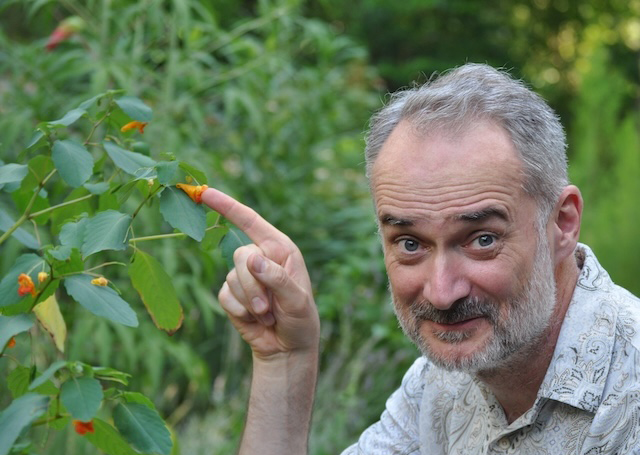
When flowers evolved, they revolutionized the Earth. Gorgeous petals and alluring aromas transformed former enemies into cooperative partners. Join Pulitzer Prize finalist, David George Haskell, in a Zoom presentation on Monday, March 30, 7 p.m., as he explains the many ways that flowers build, sustain, and animate the living world, including human life.
Sponsored by the University of Tennessee Arboretum Society, Tennessee Citizens for Wilderness Planning (TCWP), and the Oak Ridge Public Library, the class is free, but you must register to receive the Zoom link and a copy of the recording to watch at your own convenience. Register at utarboretumsociety.org under Programs. For questions or registration issues, contact Michelle at mcampani@utk.edu.
Using stories from his latest book, “How Flowers Made Our World,” Haskell will illuminate the many ways that we live on a floral planet. Through radical genetic
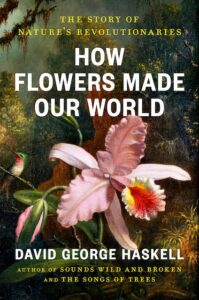
“How Flowers Made Our World,” a new book by David George Haskell.
flexibility, flowers turned past environmental upheavals into opportunities for renewal. This inventiveness allowed them to build and sustain temperate forests, rainforests, savannas, prairies, and even ocean shores.
“Flowers also catalyzed our evolution, and we now depend on them for food and a healthy planet,” explains Haskell. “When we perfume ourselves, give a loved one a bouquet, or use blooms in gardens and religious ceremonies, we honor the special bond between people and flowers.“
David George Haskell is a writer and biologist, acclaimed for his lyrical explorations of the living world. He is a two-time finalist for the Pulitzer Prize in General Nonfiction, for “The Forest Unseen” and “Sounds Wild and Broken.” His book, “The Songs of Trees” won the John Burroughs Medal. He is a recipient of an Award in Literature from the American Academy of Arts and Letters.
An author of essays and multimedia experiences for The New York Times, Emergence Magazine, and other venues, Haskell is a Linnean Society of London Fellow and a Guggenheim Fellow. An Adjunct Professor of Environmental Sciences at Emory University, Haskell is Professor Emeritus at The University of the South in Sewanee, Tennessee. He lives in Atlanta, Georgia.
The University of Tennessee Arboretum Society (UTAS) is the arboretum’s volunteer organization and is celebrating its 61st year in 2026. UTAS was formed in 1965 to support and enhance the University of Tennessee Arboretum. UTAS is the longest standing volunteer organization in the University of Tennessee system statewide.
The Forest Resources AgResearch and Education Center celebrates its 62nd anniversary in 2026. It is one of the ten University of Tennessee Institute of Agriculture AgResearch and Education Centers located throughout Tennessee. The Institute of Agriculture also provides instruction, research and public service through the UT Herbert College of Agriculture, the UT College of Veterinary Medicine, UT AgResearch and UT Extension offices, with locations in every county in the state
Melanie Staten is a public relations consultant.
To learn more about the Arboretum Society, go to website here.
Follow KnoxTNToday on Facebook and Instagram. Get all KnoxTNToday articles in one place with our Free Newsletter.

