Porter Creek Trail in the Greenbrier area of Great Smoky Mountains National Park offers hikers a mix of late-summer wildflowers, mountain scenery and a little Smokies history.
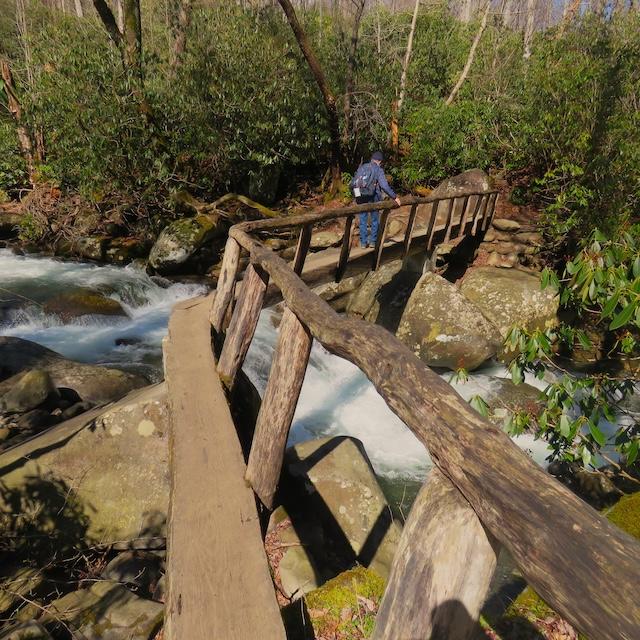
Porter Creek crossing
The trail begins at the end of Greenbrier Road, reached by turning off U.S. 321 just east of the Gatlinburg city limits. Porter Creek Trail is 3.7 miles long and ends at backcountry campsite No. 31. I consider it a moderately difficult hike, with sections where hikers will encounter plenty of roots and rocks. Fern Falls is about 2.5 miles up the trail.
-
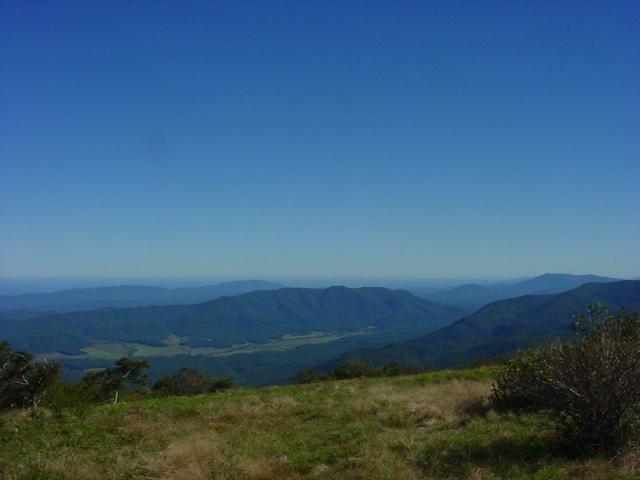
- Cades Cove from Gregory Bald
-
- Gregory Bald
On this hike, I found several wildflowers still putting on a show while others had moved beyond their peak:
- Asiatic dayflower — One; at peak bloom
- Flowering spurge — Few
- Goldenrod — Several varieties; past peak bloom
- Great lobelia — Some; slightly past peak bloom
- Heal-all — Few; at peak bloom
- Hearts-a-bustin’ — Many seed pods; past peak display
- Pale jewelweed — Many++; some at peak bloom
- Partridge pea — One clump of blooms
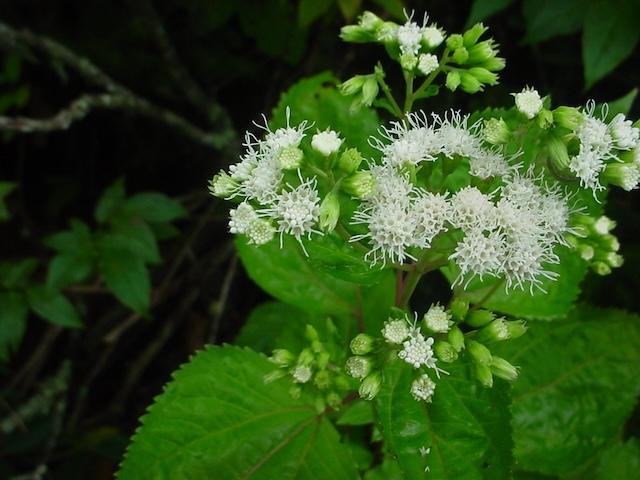
- White snakeroot — Some; just starting to bloom
- White-top aster — Some; at or near peak bloom
Because most of these wildflowers have been featured in recent hiking reports, the only wildflower photo I’m including this time is white snakeroot.
Another photograph shows the long footlog bridge along Porter Creek Trail. It is a good example of the skill and hard work of the park’s trail crews, whose work makes experiences like this possible for thousands of hikers.
White snakeroot and a Cades Cove story
White snakeroot also provides a connection to the history of Gregory Bald and the people who once lived in Cades Cove.
Many Cades Cove residents drove their cattle to Gregory Bald in early spring and left them there until fall. A herdsman looked after the cattle for 50 cents a head. For families in the cove, using the valley land to grow crops was considered more productive than using it to graze cattle.
When the cattle were driven back from Gregory Bald in the fall, however, care had to be taken to keep them from eating white snakeroot. The plant contains toxins that can pass through a cow’s milk to humans. The resulting illness became known as “milk sickness.”
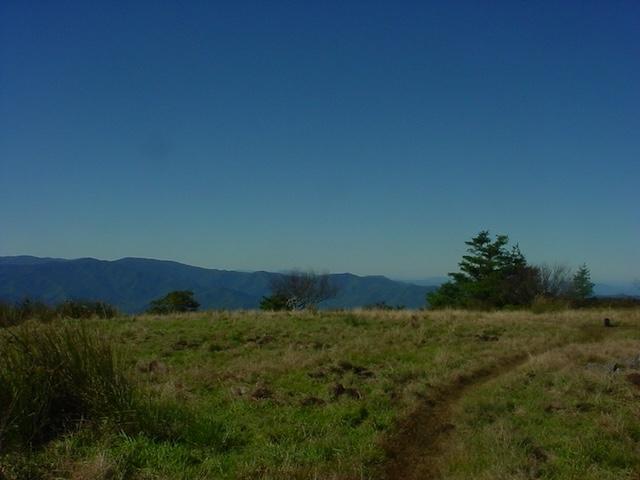
That history is why I’m also including photographs of Gregory Bald and the view from there. A wildflower seen along a Smokies trail can sometimes tell a much larger story — one connecting the plants, mountains and people who came before us.
Tom Harrington is a regular hiker who reports on his hikes and mountain stories from the Smokies.
Enjoyed this article? Explore more Hiking with Harrington by Tom Harrington.
Follow KnoxTNToday on Facebook and Instagram and subscribe to our free newsletter to receive every new article in one convenient email.