
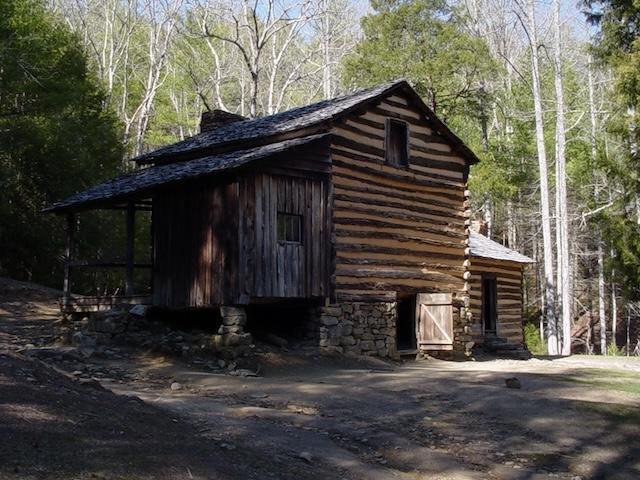
Elijah Oliver was one of the seven children of John and Lucretia Oliver (the first Anglo-Saxon settlers in Cades Cove) who reached adulthood.
The Elijah Oliver home is located about a half mile off of the Cades Cove loop road, 4.5 miles from the entrance. The home was built in 1866. The home consists of two rooms that are connected by a roof. The second room was used as a kitchen. The second room was lower than the first room, and the space between the two rooms was called a “dog trot”. Those of us who were around in the 1950s and 1960s would have likely called this space a “breezeway”. During the summer months, much of the time, there was a comfortable breeze blowing through this space, and the residents would often sit there shelling beans or taking the husks off of corn.
Other structures at the homesite were a barn, corncrib, smokehouse, and springhouse. Milk, butter, cheese, and cream would be kept in the springhouse, which had a stream running through it. My dad grew up drinking milk that was kept in a springhouse behind the homeplace on Garden Drive in Fountain City, and he always said the milk that was kept in a springhouse tasted better than the milk kept in a refrigerator.
Residents of Cades Cove could accurately be described as problem solvers and achievers. For example Elijay Oliver built a series of troughs carrying the water through the spring house. Water would drop from the upper trough into the lower trough. It was said the bone chilling water dropping from the upper trough to the lower through provided a higher rate of evaporation which enhanced the cooling effects inside the spring house.
In the earlier days there were no motels, hotels or tourist homes in Cades Cove. If a person traveled to the cove because of the distance and the primitive roads it would take a large portion of a day to get there. If a visitor had no relatives or friends to stay with overnight they would need to find a place to stay. Most Cades Cove homes were small, and families were large. Taking strangers into one’s home would be inconvenient and awkward to say the least, and the residents would be sacrificing their privacy and security. Elijah Oliver saw a need and met it. He enclosed a part of the porch. There was no direct entrance from the enclosure to the main part of the house. Thus, he could meet the visitor’s need for housing and at the same time protect his family’s privacy and security. This enclosure was called “the stranger room”. A second use of the stranger room might happen when a son got married. He and his wife might occupy the stranger room until they could build a home of their own.
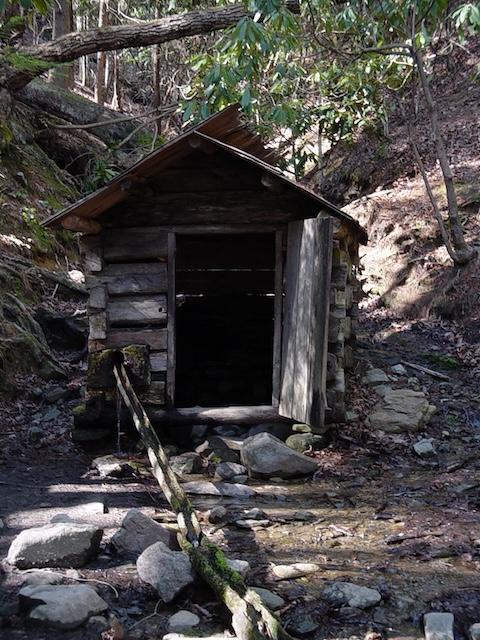
Spring House at Oliver Cabin
-
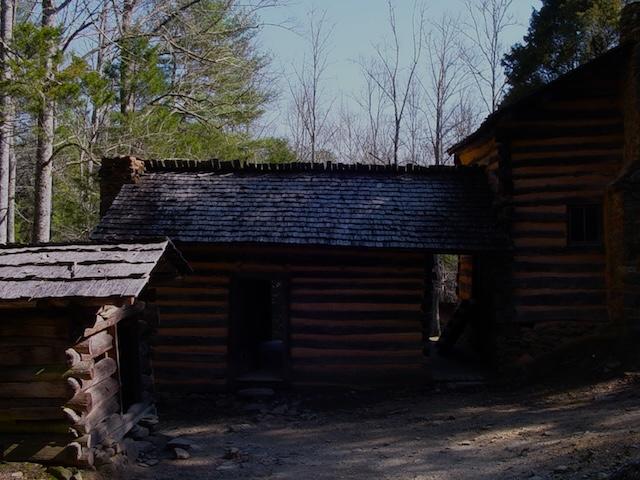
- John Oliver Cabin
-
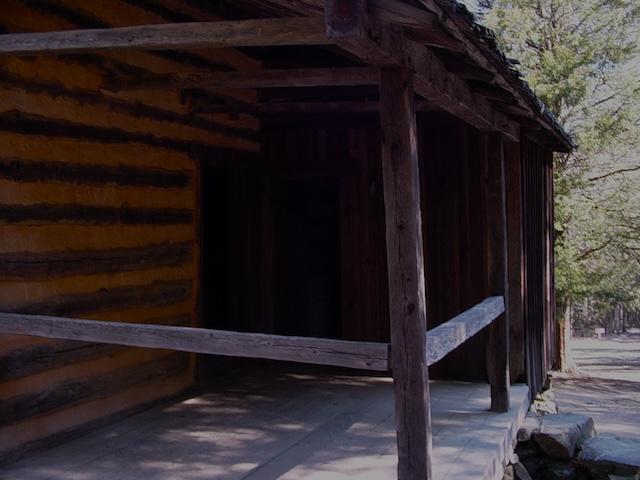
- Stranger Room at Oliver Home
Elijah Oliver was a Union sympathizer during the Civil War. He was captured by some rebels and held for two weeks. His horse was stolen by some rebels, and he started to chase them. His wife Mary Jane stopped him and said she could do without the horse better than she could do without him. Because of the danger during the war Elijah moved his family up onto the side of Rich Mountain and kept them there until the end of the war.
Probably most of our society lives comfortably compared to the life of the residents of Cades Cove. As we consider the lives of the folks that preceded us perhaps we can remember them with respect and admiration and be even more thankful for our blessings.
Tom Harrington is a regular hiker who reports on his hikes and mountain stories from the Smokies.
Follow KnoxTNToday on Facebook and Instagram. Get all KnoxTNToday articles in one place with our Free Newsletter.

