
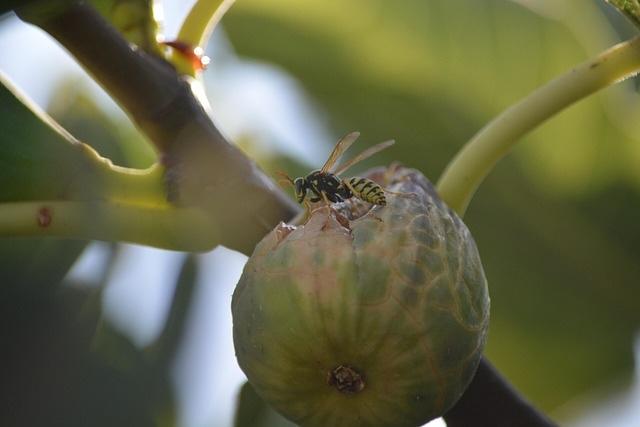
While in school, every child learns the basic parts of a flower and how insects, such as bees, buzz from flower to flower, pollinating them as they go. However, most people never have the opportunity to learn how specialized and unique the pollination process can be for each individual plant. The relationship between plants and their pollinators can be fascinating and downright weird. One example among many is the fig and the fig wasp.
Figs are actually an inverted flower. What we typically think of as the fruit is really a package of flowers around a hollow space. The flowers are pollinated by female fig wasps who enter through a tiny opening at the bottom of this structure. The opening is so small that the wasps may lose their antennae and wings as they crawl inside.
Once inside, the wasps lay their eggs in some of the female flowers and pollinate the others. After laying their eggs, the wasps often die before finding their way back out of the fig. The males hatch first and fertilize the females before they hatch. After mating, they bore tiny holes in the fig so the females could escape. Then they die. The females hatch just as the fig starts producing male flowers. They pick up pollen from these flowers before escaping through the holes to visit another fig and start the cycle over again.
So, should you be worried about getting a mouthful of wasps the next time you bite into a fig? No. The most common figs for fresh eating in the United States, such as Mission figs or Brown Turkey figs, do not require pollination to ripen. Other common fig cultivars actually have separate male and female plants. In these species, the wasps lay their eggs in the male caprifigs, which are not typically eaten by humans.
Even when wasps die inside the fig, there is little risk of eating them. After the female fig flowers have been fertilized, they begin to ripen into fruit. As the fruit ripens, enzymes break down the bodies of any dead wasps and absorb them into the fruit. So, whether fresh or dried, cultivated or wild, the next time you bite into a fig, you can rest assured that the crunch in these odd fruits is coming from the seeds and not the wasps that pollinated them.
Crystal Kelly is a feature writer for Bizarre Bytes with those unusual facts that you only need to know for Trivial Pursuit, Jeopardy, or to stump your in-laws.
Follow KnoxTNToday on Facebook and Instagram. Get all KnoxTNToday articles in one place with our Free Newsletter.

