
We’re testing a new audio feature on KnoxTNToday! We’d love your feedback.
Listen to this article.
It’s funny what you might learn while taking a long walk through Seven Islands State Birding Park in the Fork, the lands between the French Broad and Holston rivers in Knox County.
Today when you hear the word “consumption,” it’s usually in a news report about how when people spend more, business demands and profits increase, resulting in economic growth. But that’s not what I’m referring to.
I’m talking about the health malady now known as tuberculosis.
Sadly, Dr. Swancey Kennedy (1844-1923) frequently mentions consumption in his late 1880s diaries. All too many residents of the Fork were diagnosed with it.
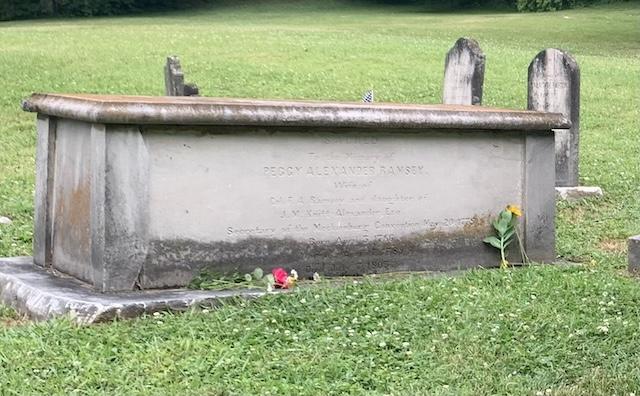
The first time I gave consideration to the illness and its prevalence was when I learned that Francis Ramsey’s first wife Margaret (“Peggy”), the first mistress of the historic 1797 Stone House in the Fork, had died of it in 1805. So, what was that like during the 1800s? Persistent coughing, night sweats, fever, and the “consumption of the body” as it physically wasted away.
That brings me to my walk with my friend Connie Whitehead at Seven Islands, where she told me about the book, Everything is Tuberculosis: The History and Persistence of Our Deadliest Infection, by John Green. No, we don’t talk about only birds and rivers and flowers and deer on our walks. I immediately ordered the book.
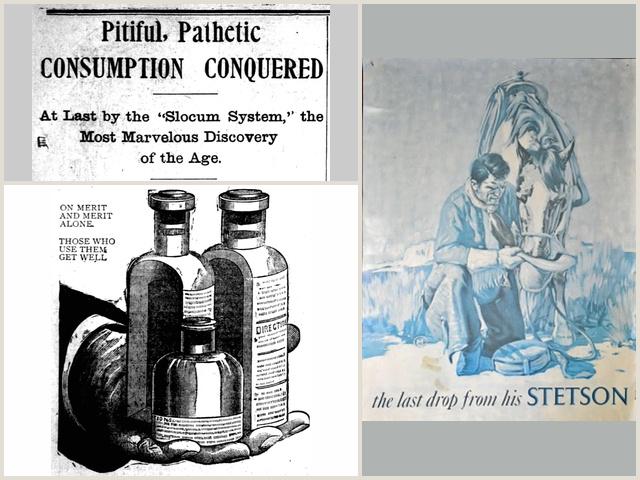
1898 Knoxville Journal ad, 1898 Knoxville Journal and Tribune Slocum System ad illustration plus 1940s ad for Stetson cowboy hats
The author begins by telling how James Watt, the Scottish inventor, engineer, and chemist who improved the steam engine, spent a lot of time trying to invent a device that would deliver nitrous oxide to the lungs. He thought it might aid in treating consumption. His daughter Jessy had died of it at age 15 in 1794, and his son Gregory was then sick with the dreaded disease. Watt was unsuccessful in saving his son. Gregory died in 1804 at age 27.
Peggy (Alexander) Ramsey suffered for 18 months before dying at age 39, the mother of three surviving children. Another Fork resident, Eliza J. (McMillan) Wayland, died of the disease in 1890, and her death is described in her obituary, which I recounted in an earlier article.
Hippocrates had named the disease “phthisis,” which is a Greek derivative that means “wasting away.” Many people of the 1800s often attributed illnesses to incidents and circumstances totally unrelated to infectious diseases, but today we know that tuberculosis is caused by airborne bacteria that is spread when an infected person coughs, sneezes, or just exhales.
Green states in his book that “anyone can get tuberculosis – in fact, between one quarter and one third of all living humans have been infected with it.” Even though it can remain dormant for a lifetime, “up to 10 percent of the infected will eventually become sick.” Most people who are treated early with a full course of antibiotics recover from it.
But antibiotics didn’t exist in Dr. Swancey Kennedy’s day. Fresh air and sunshine were often believed to strengthen the lungs and body. Rest and high-calorie diets were regularly recommended to combat the weight loss. Pain medications and cough suppressants were prescribed.
Through the book that Connie told me about, I learned that John B. Stetson, the New Jersey hatmaker who first designed the cowboy hat, had gone west in the 1850s because he had “consumption” and believed the clean, dry air would help cure him. While there, he saw the need for a durable, wide-brimmed hat. He survived and returned east to launch his company. Who knew?
Robert Koch, a German physician and microbiologist, is credited for discovering the cause of tuberculosis in 1882, but years passed before successful treatment with antibiotics was widely used. In the meantime, Dr. T.A. Slocum falsely advertised his concoction of “Pshychine” and strychnine as a remedy, a fraudulent claim whose exposure helped lead to the Pure Food and Drug Act of 1906.
In 1905, Robert Koch was awarded the Nobel Prize in Physiology of Medicine for his work related to tuberculosis. Like other physicians of his time, Dr. Kennedy saw some of his patients die of “consumption,” but thankfully, most deadly instances of tuberculosis have been forgotten in the Fork.
Jan Loveday Dickens is an educator, historian and author of Forgotten in the Fork, a book exploring the Knox County lands between the French Broad and Holston rivers. To obtain a copy, email ForgottenInTheFork@gmail.com.
Read more stories by Jan Loveday Dickens about the people, places and history of the Fork community, and learn more about her in her author bio on the same page.
Take a puzzle break! Play WordRow, Sudoku or Crosswords today! Choose your favorite puzzle in the site navigation.
Follow KnoxTNToday on Facebook, Instagram, X, LinkedIn, and TikTok. Get all KnoxTNToday articles in one place with our free newsletter. Comments may be sent to news@knoxtntoday.com.