
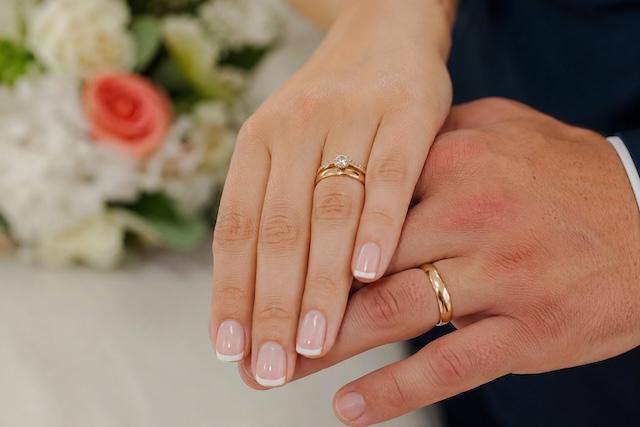
I attended a wedding last weekend and another one this coming weekend, at which I have spent a fair amount of time lately watching rings slide onto fingers. Somewhere between the vows, flowers and wedding cake, a question popped into my head: Why do we wear wedding rings on the fourth finger?
Like many traditions, the answer is part history, part symbolism and part romantic legend.
The fourth finger of the left hand has long been associated with marriage in many Western cultures. One popular explanation traces the custom to ancient Rome and the belief in the “vena amoris,” or “vein of love.” According to the story, a vein ran directly from that finger to the heart, making it the perfect place for a symbol of love and commitment.
It is a lovely idea. Anatomically, however, it is not true. The veins in that finger are not equipped with a special express lane to the heart. Still, romance has never depended much on anatomy.
Wedding rings themselves go back thousands of years. Ancient Egyptians used rings as symbols of eternity, with the circle representing something without beginning or end. Over time, different cultures adopted rings and various customs surrounding which hand and finger should wear them.
Even today, the left-hand tradition is far from universal. In several countries, wedding rings are commonly worn on the right hand. Religious customs, family traditions and regional practices all play a role.
So, why the fourth finger? There is no single, tidy answer. History, symbolism and tradition simply joined hands somewhere along the way.
After two weddings in two weekends, I think I prefer the romantic version. A direct line from the ring finger to the heart may not pass the science test, but it certainly fits the occasion — and makes a much better wedding story.
Bizarre Bytes gives us those unusual facts that you only need to know for Trivial Pursuit, Jeopardy, or to stump your in-laws.
Enjoyed this article? Read more Bizarre Bytes.
Follow KnoxTNToday on Facebook, Instagram, X, and LinkedIn. Get all KnoxTNToday articles in one place with our free newsletter. Comments