
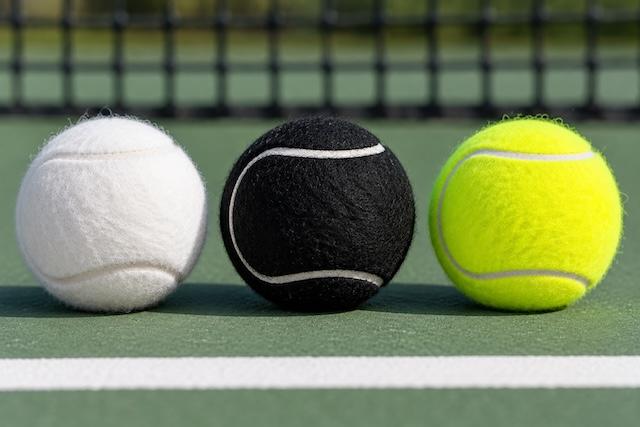
Watch a tennis match on television, and that little yellow ball seems like an obvious part of the game. But tennis balls weren’t always yellow—and television is largely why they changed.
For decades, tennis balls were traditionally white or black, with the color chosen partly to make the ball easier to see against the court. Then color television changed the game.
As color broadcasts became more common, the International Tennis Federation studied which ball color television viewers could see most easily. The answer was a bright fluorescent shade known as “optic yellow.” Yellow balls were introduced into the rules in 1972 because they were easier for viewers at home to follow across the television screen.
Not everyone rushed to make the change. Wimbledon, famous for holding tightly to tradition, continued using white tennis balls for years before finally switching to yellow balls in 1986.
Yellow or green?
Here’s where you can start an argument at your next family gathering.
Are tennis balls yellow or green?
The official description is optic yellow, but plenty of people look at a tennis ball and insist it is green. Lighting, the background and even the way our brains perceive color can influence what we see.
Put it to the test
You don’t have to wait for next year’s Wimbledon or U.S. Open to test the reason behind the color change. Professional tennis is being televised this week, including the Billie Jean King Cup Finals and WTA tournaments in Seoul and Singapore, followed by the Laver Cup Sept. 25-27.
Turn on a match and deliberately watch the ball. Notice how that bright yellow-green dot stands out as it travels across the court at high speed.
It turns out one of the most recognizable objects in sports got its familiar color partly because somebody wanted to make your television viewing better.
Now the real question: Do you see yellow — or green?
Bizarre Bytes gives us those unusual facts that you only need to know for Trivial Pursuit, Jeopardy, or to stump your in-laws.
Enjoyed this article? Read more Bizarre Bytes.
Follow KnoxTNToday on Facebook, Instagram, X, and LinkedIn. Get all KnoxTNToday articles in one place with our free newsletter. Comments may be sent to news@knoxtntoday.com.