
As we continue to move toward our nation’s semiquincentennial, I’m still focusing on elements of the Revolutionary War effort of attaining independence and the related contributions and connections of families of the Fork, the Knox County lands between the French Broad and Holston Rivers.
Most people drive along Strawberry Plains Pike in the heart of the Fork and never know it’s there. It’s the home of Alexander McMillan, which is more than 230 years old.
Alexander McMillan came to America from Ireland in 1775 to join family members in Virginia, but soon joined the Continental troops that moved up into Quebec, fighting the British along the way. He reportedly lost a finger to frostbite there while on picket duty. By 1778, he had made it to Virginia and married his first cousin, Margaret Martha McMillan. In 1780, he joined other Overmountain Men who fought at the Battle of King’s Mountain. (He also fought at the Battle of New Orleans during the War of 1812, even though he was 66 years old.)
McMillan was among the surveyors and land speculators, who included James White, Francis Ramsey, and others, who explored the Fork after the North Carolina “Land Grab Act” opened up the area in 1783. McMillan first settled just over the line that became the Fork’s Knox County border at Jefferson County, barely into the little hamlet of Strawberry Plains on land later owned by Rev. Thomas Stringfield. Soon, McMillan moved to his new home in the heart of the Fork and lived there until he died in 1837.
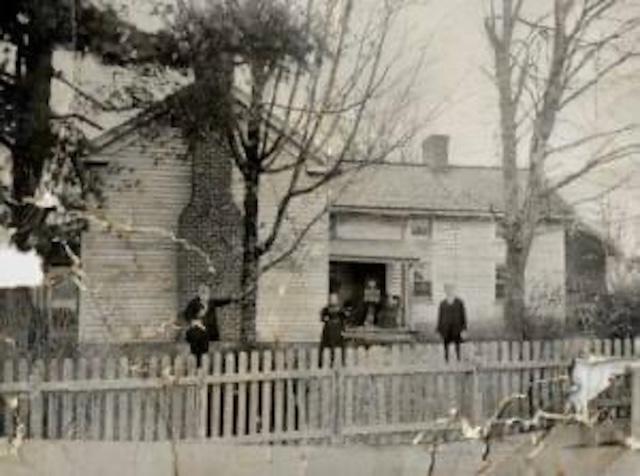
Alexander McMillan’s home after many additions and renovations
When his son William’s wife died, William and his children moved into Alexander’s home, which had been expanded to accommodate the seven grandchildren. Even more rooms were added as the family grew and the house changed hands. His unassuming “post and beam” frame house off Strawberry Plains Pike continued to be enlarged and upgraded with more modern amenities and passed down through generations of descendants until it was sold out of the family in the 1970s.
At one point, McMillan owned a large swath of land of 900 acres that stretched from the Holston River across the middle of the Fork toward the French Broad. His selection for a home site was unique because it was at the center of the Fork, as opposed to being built closer to one of the two rivers that were used for transportation. However, the large landholdings were worked by several enslaved persons, and the farm generated secure income.
As the ladies of the McMillan family married men with surnames such as Cobb and Blake, deeds reflected the division of land and new ownership, but Alexander McMillan’s descendants continued to be successful farmers and community leaders. They were the founders of Caledonia Presbyterian Church, as well as Wooddale Academy.

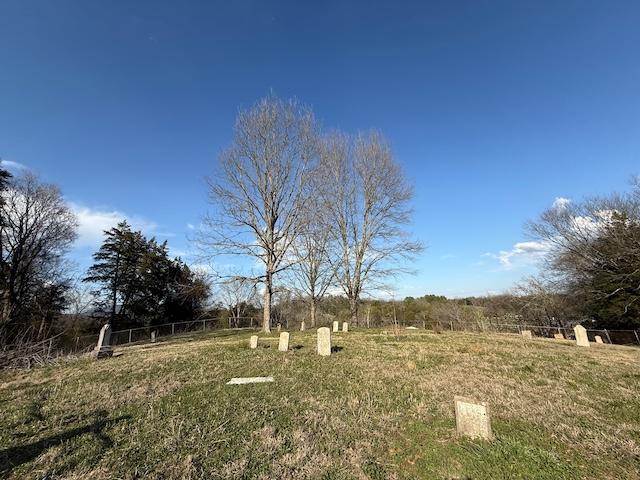
Alexander McMillan grave marker
Alexander and Margaret McMillan died within a year of one another and were buried on the Sherrod farm in the Old Caledonia Presbyterian Church graveyard off Ruggles
Ferry Pike. Though a marker acknowledges Alexander’s military service, the exact location of his grave has been forgotten in the Fork.
Jan Loveday Dickens is an educator, historian, and author of Forgotten in the Fork, a book about the Knox County lands between the French Broad and Holston Rivers, obtainable by emailing ForgottenInTheFork@gmail.com.
Follow KnoxTNToday on Facebook and Instagram. Get all KnoxTNToday articles in one place with our Free Newsletter.

