
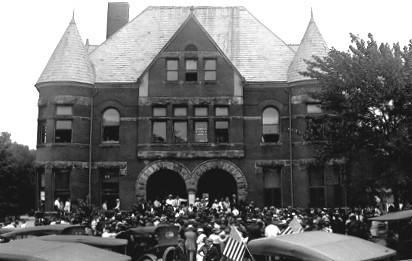
At dawn on November 2, 1926, Ben Morton was the mayor of Knoxville, Austin Peay was the governor of Tennessee and Calvin Collige was president. Tennessee was represented by Lawrence D. Tyson and Kenneth D. McKeller in the United States Senate. Knox County, as part of Tennessee’s 2nd congressional district, was represented by James Willis “J. Will” Taylor in the house of representatives.
Taylor served in the house from March 1919 until his death in November 1939. Born in Union County in the Lead Mine Bend area, he eventually made his way to Fountain City where attended Holbrook Normal College before it became Central High School, as well as attending the American Temperance University in Harriman (sidebar: his education Harriman was a planned town, developed intentionally alcohol free. The university only made it 15 years, but it’s primary building, Temperance Hall, now serves as office space for the city government).
After teaching for several years, Taylor completed his law degree at Cumberland School of Law in Lebanon in 1902. He was admitted to the bar that same year. He eventually moved to LaFollette where he set up his law practice, and married Claiborne County native Mossie Emily Kincaid in 1904. Together they had two daughters, Elizabeth and Katheryne.
In the years leading up to his to long tenure in the U.S. House, Taylor did a couple of stints as mayor of his adopted town, postmaster, insurance commissioner for the state and chairman of the state’s Republican executive committee.
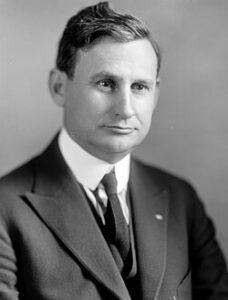
J. Will Taylor, Tennessee’s 2nd district congressman from 1919-1939.
Notably, Taylor was a member of the black-and-tan faction of the Republican party at the time. The black-and-tans started among Black political leaders during the Reconstruction Era but was a multiracial coalition of republicans. By the mid-1920s, with Jim Crowe laws firmly entrenched in the south, the black-and-tans had become the face of Republicans who actually believed in racial equality (not just the abolition of slavery) and supporting progress on Civil Rights. The other faction, the lily whites, were as described, and specifically anti-Black in their posturing. The lily whites wanted to primarily focus on business and economic issues and not be bothered with those pesky equality issues.
That November morning in 1926 was election day. Of the names listed at the top of the article, only Peay and Taylor were on the ballot that year. This was at time when Tennessee governors served two-year terms Taylor was returned to his seat in Congress handily. Peay did the same, becoming the first three-term governor of the state since the Civil War. He also became the first to die in office, which he did in October the following year.
Peay is buried in Greenwood Cemetery in Clarksville. Taylor is buried in Woodlawn Cemetery in LaFollette.
It’s Election Day! Do your civic duty and go vote.
Sources: Tennessee State Museum & Archives, Library of Congress, The Knoxville Journal digital archives
Beth Kinnane writes a history feature for KnoxTNToday.com. It’s published each Tuesday and is one of our best-read features.
Enjoyed this article? Read more of Beth Kinnane’s stories about the people, places, and history that make our community unique.
Follow KnoxTNToday on Facebook, Instagram, X, and LinkedIn. Get all KnoxTNToday articles in one place with our free newsletter. Comments may be sent to news@knoxtntoday.com