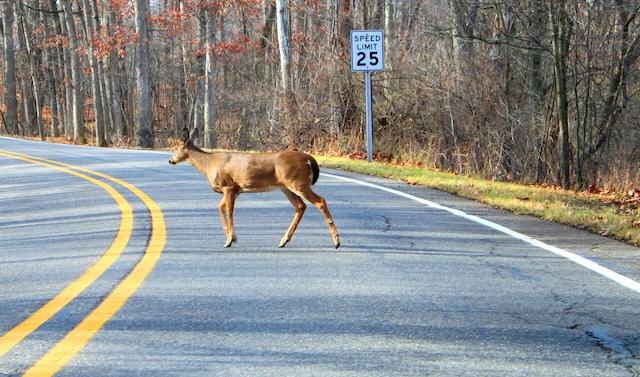
Fall in East Tennessee brings colorful leaves, cooler temperatures and an unwelcome surprise for some motorists: a deer suddenly appearing in the road.
October and November are particularly active months for deer, and drivers across Knox County and surrounding communities should be especially alert. With hunting seasons underway and the annual deer breeding season, known as the rut, approaching its peak, deer are moving more frequently and sometimes unpredictably.
During the rut, bucks travel greater distances searching for mates, often crossing highways and neighborhood streets. Hunting activity and changes in feeding patterns can also influence deer movement.
The Tennessee Wildlife Resources Agency (TWRA) encourages motorists to remain alert, particularly around dawn and dusk, when deer are most active. However, collisions can happen at any hour, even in busy residential areas.
And while avoiding a collision is always the goal, there’s another important question drivers should consider before an accident happens.
Hit a deer? Here’s which part of your auto insurance applies
Many drivers assume their collision insurance will pay for damage if they strike a deer. Surprisingly, that’s usually not the case.
Comprehensive coverage generally pays for damage when your vehicle strikes a deer or another animal.
Comprehensive insurance covers damage caused by events other than a collision with another vehicle or object. These may include animal strikes, theft, vandalism, hail, falling trees and certain weather-related incidents.
If a deer runs into the road and you hit it, your comprehensive coverage typically applies, subject to your deductible and policy terms.
Collision coverage, on the other hand, generally applies if you swerve to avoid a deer and strike a tree, guardrail, utility pole or another vehicle.
That’s an important distinction. Two drivers attempting to avoid the same deer could have their claims handled under different portions of their insurance policies, depending on what actually happens.
Drivers carrying only the liability coverage required by Tennessee law generally will not have insurance protection for damage to their own vehicles in either situation.
Five ways to reduce your risk
While insurance can help with the financial consequences of a deer collision, prevention is much better.
- Slow down in wooded and rural areas. Deer can appear with little warning, especially near tree lines, fields and creek crossings.
- Watch for more than one deer. Deer frequently travel together. If one crosses the road, another may be close behind.
- Be especially cautious at dawn and dusk. Reduced visibility and increased deer activity make these particularly dangerous times.
- Use high beams when appropriate. On dark roads, high beams may help you spot deer earlier, but dim them for approaching vehicles and when following other drivers.
- Brake firmly and stay in your lane. If a collision appears unavoidable, avoid sudden swerving that could send your vehicle into oncoming traffic or a fixed object.
What should you do if you hit a deer?
First, move your vehicle to a safe location if possible, turn on your hazard lights and check for injuries. Call 911 if anyone is injured or the collision creates a roadway hazard.
Do not approach an injured deer. A frightened or wounded animal can be dangerous.
Photograph the damage and accident scene when it is safe to do so, and contact your insurance company to discuss the claims process. Your insurer can explain the applicable coverage, deductible and any documentation needed.
A good time to review your policy
Deer season is a timely reminder to check your auto insurance before you need it.
Review whether your policy includes comprehensive and collision coverage, what deductibles apply and whether the coverage still makes sense for your vehicle’s value.
A deer collision can result in anything from a damaged headlight to a totaled vehicle. Knowing which coverage applies before an accident can prevent an unpleasant financial surprise afterward.
East Tennessee’s beautiful fall scenery is worth enjoying. Just remember that the deer are enjoying the season, too — and they don’t always look both ways before crossing.
Helpful resources: Tennessee Wildlife Resources Agency for wildlife information and Tennessee Department of Commerce and Insurance for consumer insurance guidance.
Insurance coverage varies by company and policy. Drivers should consult their insurance agent or insurer for details about their individual coverage.
Follow KnoxTNToday on Facebook, Instagram, X, LinkedIn and TikTok.
Get all KnoxTNToday articles in one place with our free newsletter. Comments may be sent to news@knoxtntoday.com.