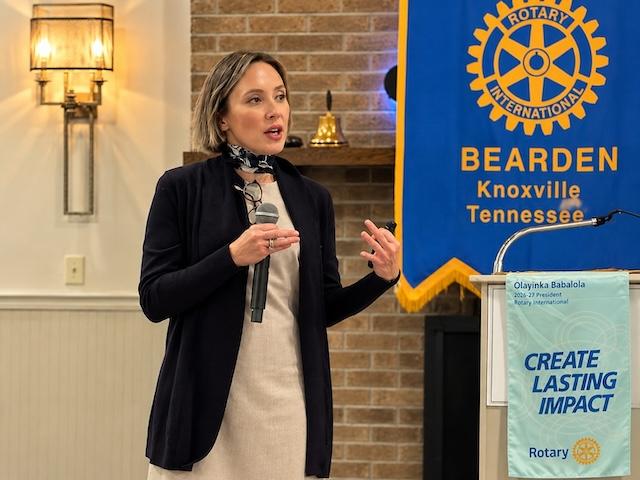
Dr. Monica Crane brought a message of both urgency and optimism to the Rotary Club of Bearden, outlining major advances in Alzheimer’s disease diagnosis and treatment while emphasizing that East Tennessee continues to face a significant shortage of dementia-care providers.
Crane is founder and medical director of the Tennessee Memory Disorders Foundation and Clinic, formerly Genesis Neuroscience Clinic. The Knoxville nonprofit provides evaluation and treatment for Alzheimer’s disease and other neurodegenerative dementias while also training the next generation of health care professionals. Tennessee Memory Disorders Clinic
During her Rotary presentation, Crane explained that dementia is not a single disease. Alzheimer’s disease is the most common cause, but physicians also see Lewy body dementia, vascular dementia, frontotemporal dementia and other disorders. Determining the underlying cause matters because treatment, symptoms and progression can differ.
One of the biggest changes in the field is the ability to diagnose Alzheimer’s disease more accurately. Crane discussed advances in biomarkers and imaging that can help physicians identify the biological changes associated with Alzheimer’s rather than relying solely on symptoms and traditional cognitive testing.
That improved diagnostic ability has become increasingly important as treatment options change.
Crane described the arrival of disease-modifying therapies for Alzheimer’s as an important shift. Unlike older medications intended primarily to help manage symptoms, newer treatments target amyloid associated with the disease. The treatments are not cures and are not appropriate for everyone, she cautioned, but they represent progress in a field that went years without significant new therapeutic options.
Her message also focused on something families can act on now: Don’t dismiss meaningful changes in memory or thinking simply as part of getting older. Some memory lapses occur with normal aging, but persistent changes that interfere with everyday life deserve medical evaluation. An accurate diagnosis also can identify conditions other than dementia that may contribute to cognitive problems. Alzheimer’s Tennessee likewise recommends assessment when concerning changes occur because not all memory problems are caused by dementia. Alzheimer’s Tennessee
Crane also emphasized the importance of overall health and lifestyle. Physical activity, good cardiovascular health, social engagement and continued mental activity all have roles in protecting brain health. What benefits the heart, she noted, generally benefits the brain as well.
But scientific progress alone will not solve the challenge.
East Tennessee and the nation face a shortage of professionals trained to care for an aging population, particularly patients with dementia. That need helped shape Crane’s clinic from the beginning and led to an emphasis on mentoring students and introducing young health care professionals to geriatric and dementia care. The foundation now combines patient care, research, clinical trials, education and community outreach. Tennessee Memory Disorders Clinic
Crane’s presentation ultimately returned to a word families facing a dementia diagnosis don’t always hear enough: hope.
Earlier diagnosis, better testing, expanding research and new treatments are changing what physicians can offer. The advances may not yet provide a cure, but they are giving patients, caregivers and physicians more tools — and more reasons to believe the future of dementia care can look different from its past.
About the speaker: Crane is a fellowship-trained geriatric medicine physician who earned her undergraduate degree from Yale University and medical degree from Jefferson Medical College. She completed her residency and geriatric medicine fellowship at the University of Pennsylvania and is a clinical assistant professor at the University of Tennessee Graduate School of Medicine. Tennessee Memory Disorders Clinic
Follow KnoxTNToday on Facebook, Instagram, X, LinkedIn and TikTok. Get all KnoxTNToday articles in one place with our free newsletter. Comments may be sent to news@knoxtntoday.com.