
In the early autumn of 1877, newly elected President Rutherford B. Hayes went on tour. Hayes, a republican, had been (eventually) declared the winner of the controversial 1876 election between him and Samuel J. Tilden, the democratic governor of New York. At the time, 185 electoral votes were needed to secure the presidency. Tilden had 184, Hayes had 165, and 20 were being disputed over electoral chicanery.
In the end, a senate committee of 15 was formed, and on a party line vote by 8 republicans to 7 democrats, all 20 of the contested electoral votes were awarded to Hayes. Southern democrats had largely supported Tilden believing he would bring an end to the federal occupation of former confederate states. Though there is zero proof that it happened, Hayes’ election has been called The Compromise of 1877 (among other things), with the allegation being that republicans offered the end of reconstruction in exchange for Hayes ascending to the presidency. The election was certified on March 2, 1877, and Hayes was inaugurated three days later.
Hayes’ tour through parts of the Midwest but mostly the South ran from September 7 to October 25. The purpose of the excursion was to encourage reconciliation, 12 years after the end of the Civil War and the end of the reconstruction era once he came into office. Basically, it was a goodwill tour in the hopes of putting all that ill will left over from the war in the rearview mirror. Oh, if only…
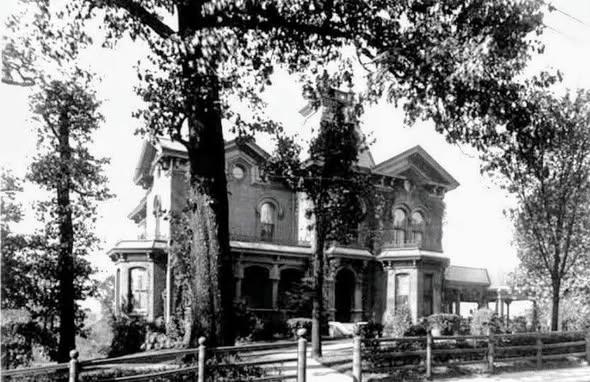
That tour brought him to Knoxville on September 21. A crowd gathered on Gay Street, in stagecoaches, buggies and wagons, on foot and on horseback as he gave his address from a festooned balcony at the Lamar House, what you now know as the Bijou Theatre. The president was also feted at the home of Knoxville businessman and industrialist Charles McClung McGhee, reportedly a garden party with nearly 600 guests.
McGhee’s downtown home sat at Locust and Union Avenue. Or I should say sits. Because it’s still there, it just doesn’t look exactly like it did when it was first constructed by prominent architect Joseph Baumann in 1872. The Victorian manse was still pretty new when our 19th president stopped in for a visit. It didn’t remain in the McGhee family for long. By 1914, it was purchased by the Freemasons and used as a meeting house and temple. It was redesigned to how it appears today.
Now the building, one of the oldest remaining in downtown Knoxville, is under threat of demolition. The Masons are moving their operations elsewhere. The outcry is growing over the future of the building they’ve owned for over a century. Here’s hoping a solution can be found to preserve it for years to come.
Sources: Rutherford B. Hayes Presidential Library & Museum, The Knoxville Journal digital archives.
Beth Kinnane writes a history feature for KnoxTNToday.com. It’s published each Tuesday and is one of our best-read features.
Enjoyed this article? Read more of Beth Kinnane’s stories about the people, places, and history that make our community unique.
Follow KnoxTNToday on Facebook, Instagram, X, and LinkedIn. Get all KnoxTNToday articles in one place with our free newsletter. Comments may be sent to news@knoxtntoday.com.




It would be great if some organization could restore the Masonic Lodge. Is there any effort under way to do that?
Yes it would. No efforts appear to be underway but maybe readers know more.