
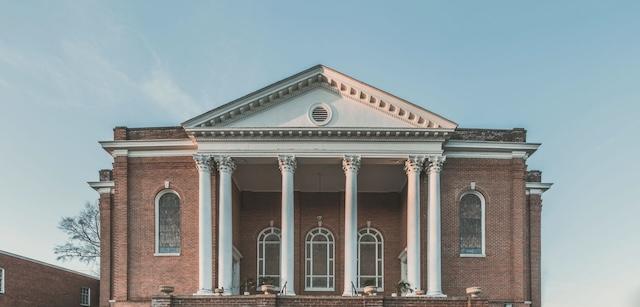
On December 15, 1860, a small group of Christians south of the Tennessee River organized what was then called Holston Baptist Church. Their conviction was simple and demanding: the gospel of Jesus Christ should be proclaimed clearly, faithfully, and locally.
More than 160 years later, that same conviction continues to shape Island Home Baptist Church — even after fire, disruption, and a season of uncertainty forced the congregation to rebuild without relying on the things churches usually lean on most.
In April 2022, Island Home was already in a fragile place. The church had gone more than two years without a senior pastor. Attendance had fallen to fewer than 30 regular worshipers. Records were incomplete. Two members of the pastor search committee had passed away during the process. The congregation was holding on — but barely.
Shortly after new leadership arrived, the church’s historic building caught fire.
For many congregations, a fire marks the beginning of the end. It accelerates decline, disperses remaining members, and quietly closes doors that had already been strained. For Island Home, the fire became an unexpected turning point.
With no sanctuary to return to, worship moved outdoors. A tent was erected on the church’s basketball court. Folding chairs replaced pews. The weather became a weekly concern. There was no comfort of routine or familiarity — only the work of showing up.
And something unusual happened.
Rather than shrinking inward, the church grew.
During the months when Island Home had no building, attendance steadily increased. Today, the congregation numbers roughly 80 members — more than double its size before the fire. The growth did not come through spectacle, rebranding, or a dramatic relaunch. It came through consistency: clear preaching, deliberate discipleship, and a renewed sense of purpose.
That direction was set early.
The new pastor, a Knoxville native with formal theological training, approached the role with restraint rather than urgency. The focus was not stylistic change or rapid expansion, but clarity. “The commitment was not to reinvent the church,” he explained. “It was to give the people the Word of God and let the Word do the work.”
That approach shaped the recovery.
In the years following the fire, Island Home adopted reforms to align more closely with biblical congregationalism and shared elder leadership. Those changes were formalized through a new church constitution in 2024. Membership expectations were clarified. Teaching became more structured. Discipleship is more intentional. Growth was measured not by speed, but by depth.
Some members stayed through the transition. Others did not. New families arrived. Longtime members learned to trust the process again. The church resisted the temptation to rush past necessary rebuilding — relationally or spiritually.
Even now, the rhythm remains simple. Sunday worship centers on Scripture, prayer, congregational singing, and teaching. Children worship alongside adults before moving into age-appropriate instruction. Weekday gatherings focus on theology, church history, and practical Christian living. There is little emphasis on novelty, and no attempt to manufacture momentum.
What has emerged is not a flashy revival story, but something quieter and more durable.
Island Home Baptist Church has endured wars, economic shifts, denominational changes, a global pandemic, and now a fire. Through each season, its defining feature has not been its building, but its persistence.
That persistence reflects the same commitment made in 1860: to worship Jesus faithfully and to make Him known—in Knoxville and beyond.
The fire did not force Island Home to reinvent itself.
It forced the church to remember who it was.
Det. Brandon Burley (Ret.), M.P.A., is a freelance writer for KnoxTNToday.
Follow Detective Burley on Facebook.
Follow KnoxTNToday on Facebook and Instagram. Get all KnoxTNToday articles in one place with our Free Newsletter.

