
I once had a friend who, during her first year of teaching science, found a praying mantis nest, took it to school as a science lesson, and upon returning to her classroom on Monday, found hundreds of hatched tiny praying mantises.
Chaperoning high school dances, a fellow teacher used to walk among the tightly clinched couples, telling them to leave room for Jesus. While attending college, looking over my shoulder to park my straight-shift car, a girl ran in front of my car and, as I let out the clutch, was hit by my car and fell. She got up, said sorry, and ran on to class.
During a B&B Happy Hour, I once met a woman whose doctor uncle gave her and her friend helpful pills to ease their upcoming 10-hour flight to Turkey. Following the uncle’s advice, the girls waited until they were seated on the plane before taking the pill, but after a delay, it was announced that the plane had engine problems, and they had to move. Despite a few wobbles on the walk to the next plane, the girls thought they were fine until a meal was served and one girl noticed the other girl buttering her hand instead of the roll.
Entertaining as this all is, you might be wondering what thread connects all these accounts. The connection is that they’re all stories. Stories are in every culture, but perhaps more concentrated in some areas than others. As a daughter of the South, I assumed everyone grew up hearing stories about their families, tongue-in-cheek stories, or perhaps cautionary tales. However, upon meeting a northern friend of one of our sons, I later learned the friend had asked what was up with all the stories. I felt like a former Hindu student of mine whose classmate asked him why his mother had a red dot on her forehead, to which the Hindu replied, “Why doesn’t your mother have one?”
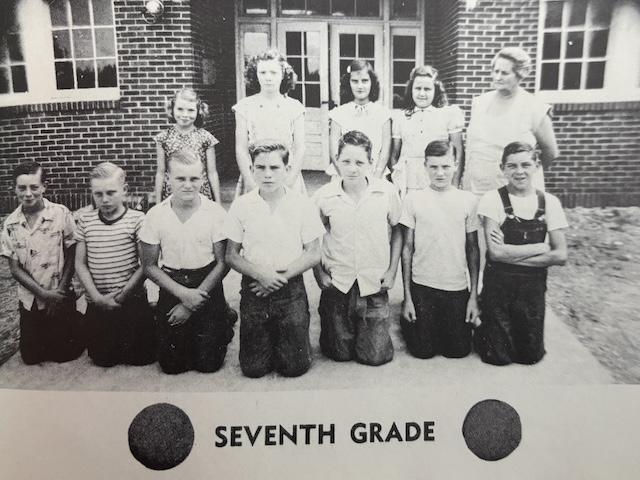
When I was teaching and would become distressed by the job, I would remind myself that my grandmother’s first teaching job was on an island in the Hiwassee River, where she lived with one family or another during the school week and then returned home via a rowboat for the weekend. I cannot imagine. I would also remind myself that one of my grandmother’s teaching posts was a one-room schoolhouse where she not only taught grades 1-12 but also cooked beans or soup on the wood-burning stove and fed the children for lunch. In that same school, my grandmother kept a 3-year-old child for a friend so the friend could earn desperately needed money for her family. That child is still alive and remembers sitting on various laps during reading class.
Stories: a daily substance we use for learning, entertainment, guidance, or sometimes a tool for healing or courage. A case in point is a dear friend of mine whose husband of many years suddenly left her for a woman their daughter’s age. For several years, my friend kept retelling that dreadful tale until the healing, peace, or whatever she needed from the story was achieved. Whatever kinds of stories are told or heard, they stay in the air, in the mind, in the heart, often repeated or sometimes dusted off in remembrance. Pay attention to the stories, because as a former employee of my husband once said after doing some work for Dan’s incredibly talkative mother, “She has a lot to say, and all of it is important. “
Cindy Arp, teacher/librarian, retired from Knox County Schools. She and husband Dan live in Heiskell.
Follow KnoxTNToday on Facebook and Instagram. Get all KnoxTNToday articles in one place with our Free Newsletter.

