As we continue to move toward our nation’s semiquincentennial, I’m still focusing on elements of the Revolutionary War effort of attaining independence and the related contributions and connections of families of the Fork, the Knox County lands between the French Broad and Holston Rivers.
Whew! My eyes are burning. Although we obviously have a lot of Revolutionary War period connections to families in the Fork, tracing the lines isn’t always easy. This week, I was about to panic because none of the leads I was chasing were proving to be fruitful. I researched many names and hit dead ends before finding the jackpot with James Brock. But it was down to the wire, and I was working two ends against the middle.
Lots of men by the name of James Brock fought in the Revolution, but which one was the one who eventually owned land along Swan Pond Creek in the Fork after the war? These Brock men hailed from several different places. One was a seaman from Massachusetts on the frigate Boston during the war in 1779, but he was reported as drowned that same year. Was the Brock name originally Le Brock? James Le Brock was also from Massachusetts and served in the Revolution from 1781 to 1782. Another James Brock was a Patriot in South Carolina who butchered 47 head of cattle for the troops in 1779, then served in the militia from 1780 to 1782. Yet another James Brock served in the Vermont militia, protecting the frontier along Lake Champlain.
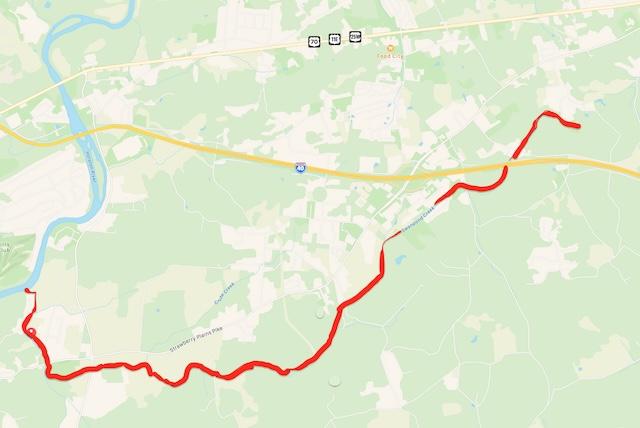
During the early 1790s and on into the early 1800s, several Brock men bought and sold land along Swan Pond here in the Fork, often conducting transactions with Francis A. Ramsey. North Carolina awarded a James Brock 640 acres along Swan Pond for his service in the Continental line, but where is that military record?
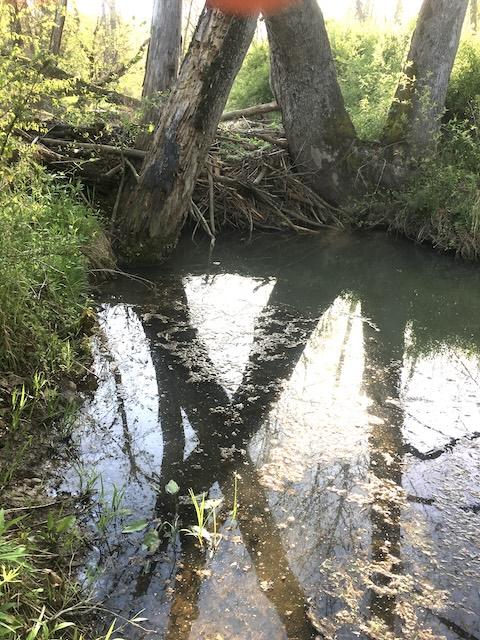
Beaver dam on Swan Pond Creek, creating a pond and wetlands still today
What I do know is that in 1791, our James Brock owned land that adjoined George Brock’s 200 acres along Swan Pond Creek in the heart of the Fork. In May of 1792, James got 200 acres on Swan Pond from Philip Koontz. He must have been a land speculator, for he bought and sold hundreds of acres in several Tennessee counties. The Swan Pond lands he held were bought at different times by other family members, such as George Brock Robertson who was the son of Willoughby and Mary (Brock) Robertson, and Peerson (Pearson) Brock, who rode with James in the local militia. Records show that James and Pearson both served as privates of the mounted infantry in the Knox County militia for Dr. James Cozby’s regiment in the Hamilton District, protecting the frontier of this territory before Tennessee became a state. They each earned only $3.75 for five days of service, but their contribution to the establishment of our nation was priceless.
Though he evidently moved elsewhere, our James Brock had children who were born here, and subsequent generations remain here, where James’ claim to fame and land claims have been forgotten in the Fork.
Jan Loveday Dickens is an educator, historian, and author of Forgotten in the Fork, a book about the Knox County lands between the French Broad and Holston Rivers, obtainable by emailing ForgottenInTheFork@gmail.com.
Follow KnoxTNToday on Facebook and Instagram. Get all KnoxTNToday articles in one place with our Free Newsletter.


My father was James C. Brock Jr. He grew up in Kodak/Strawberry plains, the Tuckeehoe area, TN. Very interesting article. I would love to read more.