
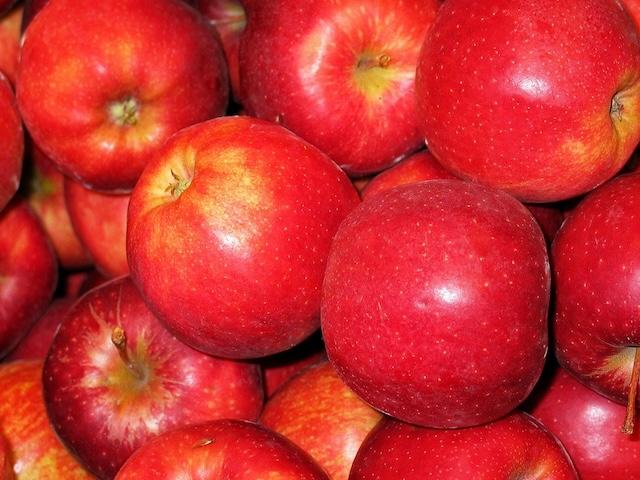
It’s finally September. While I know some of you have already begun indulging in pumpkin spice, September means apples for me; fresh apples, baked apples, caramel apples, apple cider, apple pies.
Apples are grown in all 50 states and are the quintessential American fruit, even though they are not native to North America. Domesticated apples were brought to the Americas by European settlers. One man in particular was so famously responsible for spreading apples in the New World that his story became a folk legend.
John Chapman, later known as Johnny Appleseed, was born in Leominster, Massachusetts, on September 26, 1774. As a young man, he traveled to Ohio, bringing with him seeds he collected from cider mills in Pennsylvania. He established a nursery to sell apple seedlings to settlers on the frontier. To establish ownership of a homestead, settlers had to plant 50 apple and 20 peach trees. As settlements pushed further west, so did Chapman, first in Ohio, then Illinois, and eventually Indiana, establishing orchards wherever he traveled.
He was viewed as an eccentric man, wearing a coffee sack for a shirt and badly worn-out shoes or no shoes at all. He was a missionary for the Swedenborgian religion whose beliefs led him to be a vegetarian and go to great lengths to care for animals. Although he ran his orchards as a business, he was famously generous, selling his trees for a small price, bartering with settlers who could not pay, or even giving them away.
Chapman planted all his trees from seed because his religious beliefs forbade grafting. Planting from seed meant there was no way of knowing what type of apple you would get, and most would be inedible. This did not matter because frontier apples were destined to become hard cider. Cider provided a safe drink in pioneer areas with bacteria-infested waters. Cider could also be distilled into vinegar, which could be used to preserve food through pickling.
Because Chapman planted from seed, each tree was a chance to find an apple better suited to growing in North America. His efforts were a genetic gift to this nation. Varieties such as red and Golden Delicious were developed out of his work. Most of the apples, though, were only good for cider and were destroyed during prohibition. Chapman’s legacy is still remembered, though, and can be celebrated on Johnny Appleseed Day each year on September 26.
Crystal Kelly is a feature writer for Bizarre Bytes with those unusual facts that you only need to know for Trivial Pursuit, Jeopardy, or to stump your in-laws.
Follow KnoxTNToday on Facebook and Instagram. Get all KnoxTNToday articles in one place with our Free Newsletter.

